▣Photo coming soon
You May Also Consider
Compare with these sandstones
These are the alternatives UK buyers most often weigh against Tandur Grey.
Tandur Grey Limestone · South India
Predominant grey tones with a naturally flat riven surface — the southern counterpart to Kota Blue, and arguably the most popular Indian limestone in the UK and Ireland.
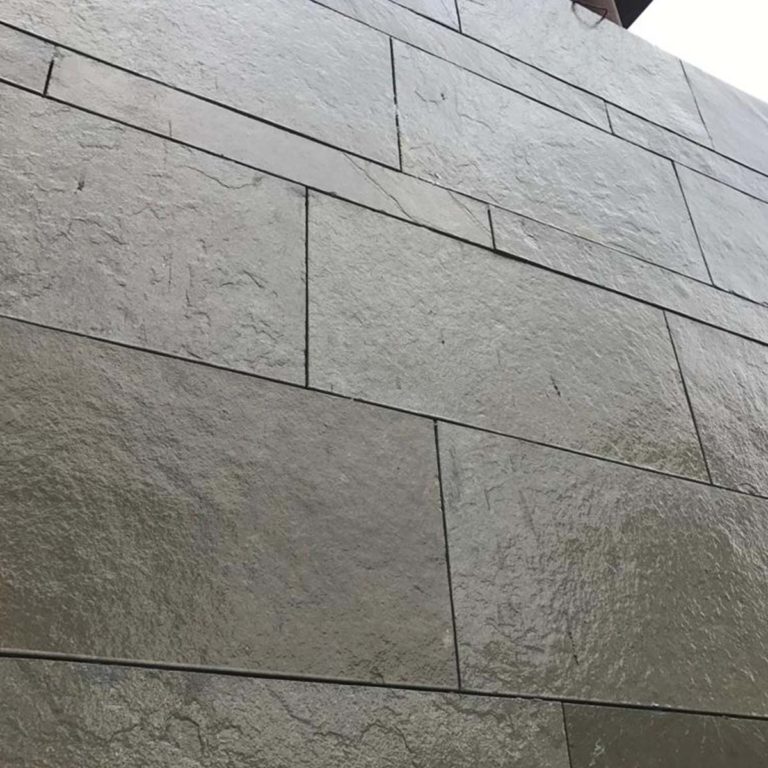
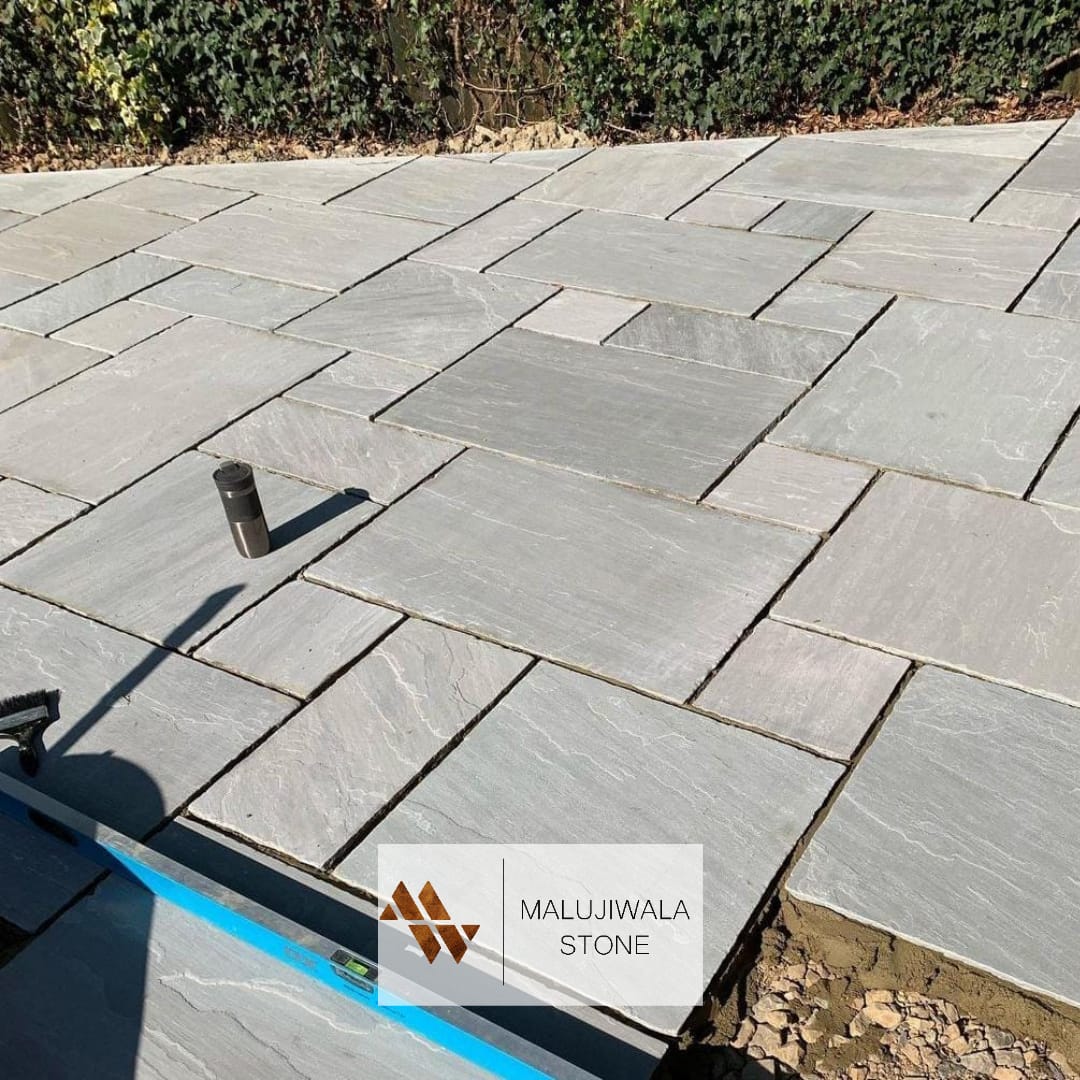
Hand-split to a riven surface with predominant grey tones. Every slab carries unique patterns, tonal variations and slight colour differences — that is its charm.
About the Stone
Tandur Grey Limestone — also sold as Tandoor Grey, Tandur Blue, Tandoor Blue or Lime Grey — is one of the most popular Indian limestones in the world, and particularly beloved in the UK and Ireland. It displays predominant grey tones over a naturally flat riven surface, with unique patterns and tonal variation across every slab.
It is the southern half of a pair. Indian limestone comes principally from two regions: the north, which gives us Kota Blue, and the south, which gives us Tandur Grey. The two share a colour family and are frequently mistaken for one another — but look closely and they are entirely different products in grain, texture and character. The same north–south pairing exists in yellow: Kota Brown from the north, Tandur Yellow from the south.
Practically, it behaves like limestone rather than sandstone: less riven, more smooth, with merely 2–3mm of surface relief against sandstone’s 5mm. That flatness makes it fast to lay and comfortable underfoot, while the natural texture keeps grip. It takes tumbling, half-honing and brushing well, and is used across flooring, pathways, paving slabs, swimming pool decks, pier caps, copings, circle kits, setts, cobbles and walling.
Standard 600 Series patio packs (900×600, 600×600, 600×290, 290×290mm) cover approximately 15–17.5 m². Opus pattern packs (400×600, 400×400, 400×200, 200×200mm) also available.
Limestone behaves differently to sandstone. A few honest notes that will save you real trouble later.
Never use acid on limestone. This is the one rule that matters most. Limestone is calcium carbonate, so acidic cleaners and patio cleaners react chemically with the stone itself — the damage is permanent and irreparable, not a stain you can lift. If you take nothing else from this page: pH-neutral only, on Tandur Grey and on every limestone.
Use a slurry primer underneath. Paint a slurry primer onto the back of each slab before bedding. It prevents salt and mineral staining leaching up from the mortar bed — a common cause of patchy discolouration that appears weeks after laying and cannot be reversed.
Mix your crates. Sort through all crates on arrival and draw evenly from each so colour variation is distributed across the whole area. Set aside any slabs with heavier chipping or markings to use as cuts.
Sawn edges chip — that is normal. Limestone paving has machine-sawn edges rather than hand-dressed ones. Small chips to corners, edges or the back are an unavoidable result of production and transport, and are not a defect. Once laid and pointed, they are almost never visible.
Order 10% extra. Standard for any natural stone — covers cuts, breakage and undercounted measurements.
A neutral grey that works with any planting, furniture or architecture.
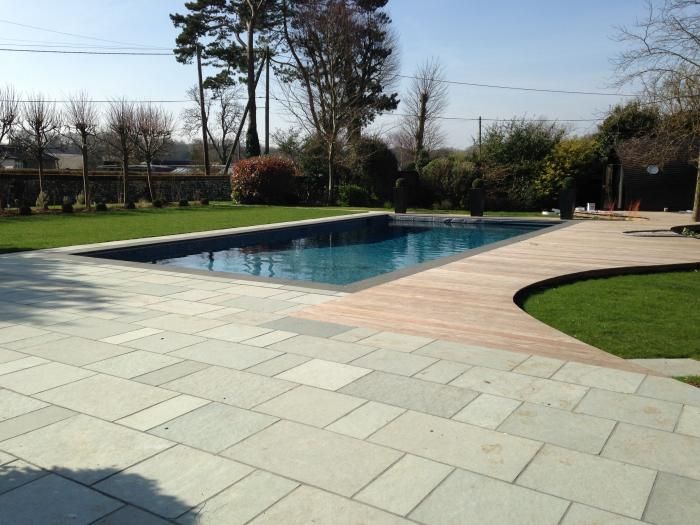
A long-standing favourite for swimming pool surrounds.
Hard-wearing enough for driveways, corridors and heavy foot traffic.
Circle kits, setts, cobbles, kerbs, pier caps and walling to match.
Care & Maintenance
Sweep with a soft broom and wash occasionally with a mild, pH-neutral detergent. Never use an acid-based cleaner on Tandur Grey, either as a wash or to shift mortar stains — the chemical reaction between acid and limestone permanently damages the surface of the stone. There is no fixing it afterwards.
Sealing is recommended. A breathable, impregnating sealer helps resist staining and organic growth through wet British winters while letting the stone breathe. Reseal every two to four years depending on exposure.
Geography and grain. Indian limestone comes from two regions — Kota Blue from the north, Tandur Grey from the south. They share a grey-blue colour family and are often confused, but examined closely they are entirely different products in texture, grain and character. The same north–south pairing exists in yellow: Kota Brown and Tandur Yellow.
Yes, noticeably. Limestone slabs are less riven and more smooth than most riven Indian sandstone: sandstone carries up to 5mm of riven where limestone has merely 2–3mm. That makes Tandur Grey flatter, faster to lay and more comfortable underfoot, while keeping natural grip.
Tandoor Grey, Tandur Blue Limestone, Tandoor Blue Limestone and Lime Grey. It is the same stone across all of them.
Natural split (riven), tumbled, half-honed and brushed. Edges can be hand-cut or machine-cut. Beyond paving we supply steps, cobbles, kerbs, pool coping, window sills, pier caps, copings, balustrading and circle kits.
Never. Limestone is calcium carbonate and acid attacks it chemically, causing permanent, irreparable surface damage. Use only pH-neutral cleaners — including when trying to remove mortar stains.
Yes. It is durable indoors and outdoors in climates with freezing temperatures, which is why it is so widely specified across the UK, Ireland, Canada, Russia and northern Europe.
Tell us the thickness, quantity and destination — we'll come back with USD/sqft pricing and confirmed lead times. No agents in between.
These are the alternatives UK buyers most often weigh against Tandur Grey.
Speak to our team for pricing, samples, MOQ details and shipping options to your country. Direct from India since 1996.