Agra Red Indian Sandstone · Quarry-Direct
Deep iron-oxide red with warm orange and brown undertones. The same sandstone used in Agra Fort and Delhi's Red Fort — still standing, still unweathered, after four centuries.
A hard-wearing red sandstone with remarkable colour conformity — the red comes from iron oxide (hematite) laid down in the bedding planes millions of years ago. It doesn't fade to grey the way dyed or pigmented products do.


About the Stone
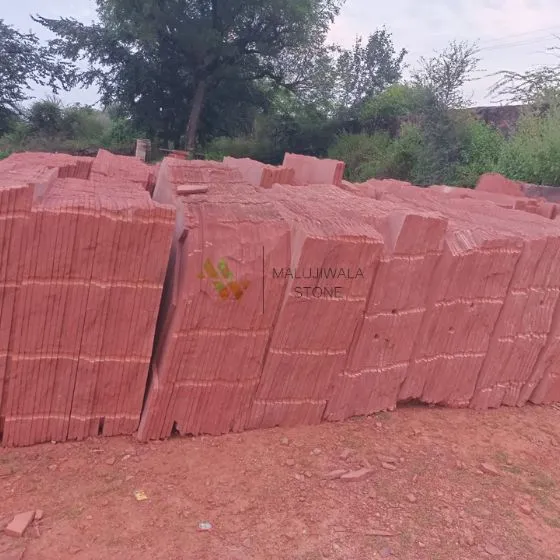
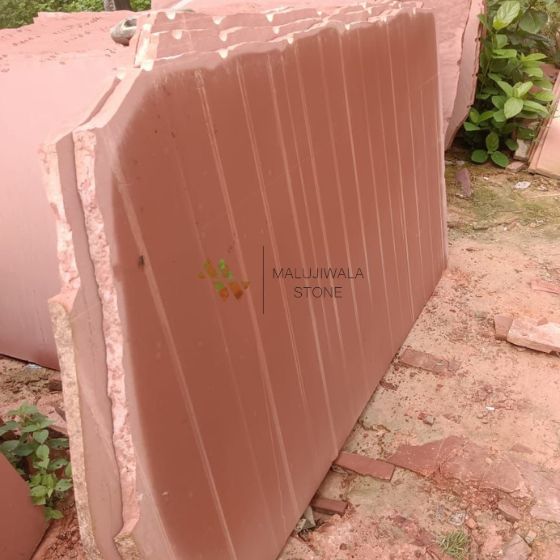
Agra Red Sandstone — also widely known as Dholpur Red — is a vivid red sandstone quarried in the Dholpur district of Rajasthan, near the city of Agra from which it takes its name. Its rich red colour comes from red hematite, an iron oxide compound naturally present in the bedding planes of the rock. The colour is in the stone, not on it, which is why it holds its tone for generations.
This is the stone behind some of the most recognisable architecture on earth. Agra Fort, Delhi's Red Fort, and the complex surrounding the Taj Mahal were all built from it — structures that have stood through four centuries of monsoon, sun and frost with remarkably little weathering. Indian embassies in Germany, Dubai and Abu Dhabi have used it, and it's specified for façades across Korea, Russia, the UAE, USA, Turkey and Europe.
Technically it's a quartz-rich sandstone cemented with silica, calcium carbonate and iron oxide, with a Mohs hardness of around 6.5–7 and low water absorption. It is hard-wearing yet easy to carve and cut — the combination that made it a favourite of Mughal stonemasons, and that makes it equally practical for modern paving, cladding, jali work and ornamental stone today. It is also known as Barauli, Karauli, Koaroli and Morning Glory Sandstone.
Agra Red takes finishes better than almost any sandstone we handle — one reason its decorating versatility is so hard to match. All processed in-house at our Kota units.
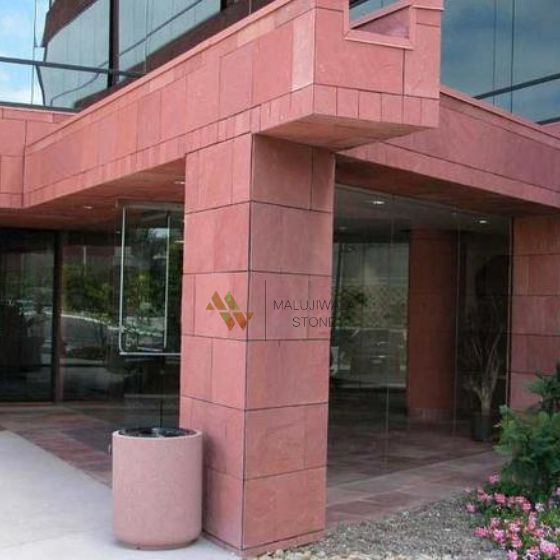
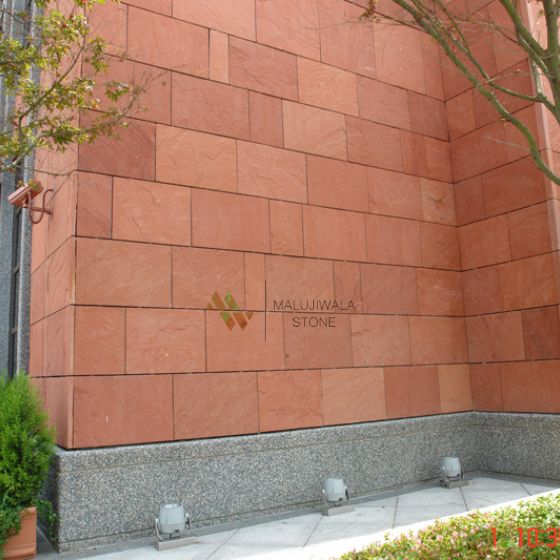
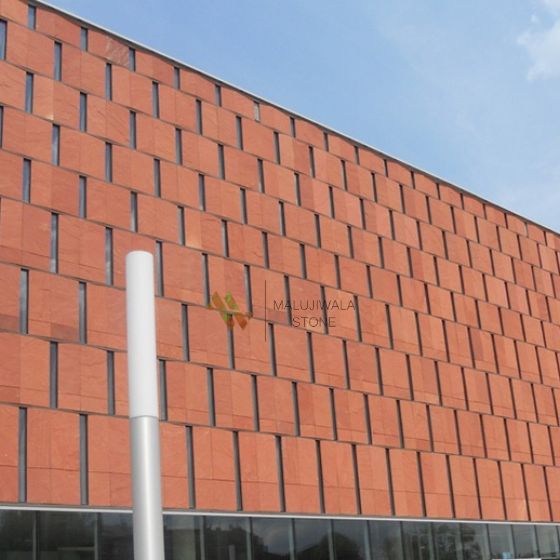
The classic application — consistent colour makes it a genuine architectural specification stone.
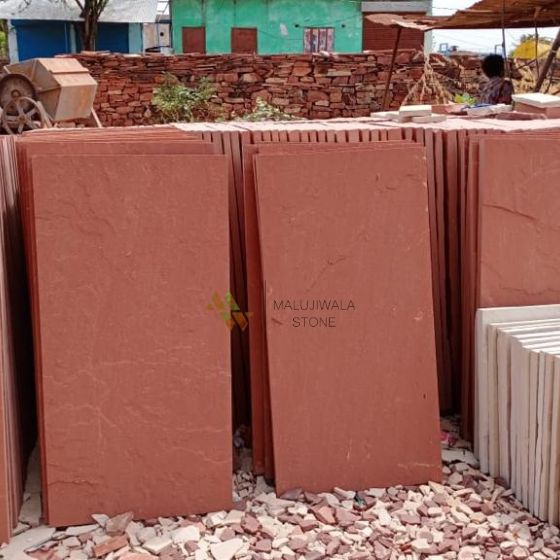
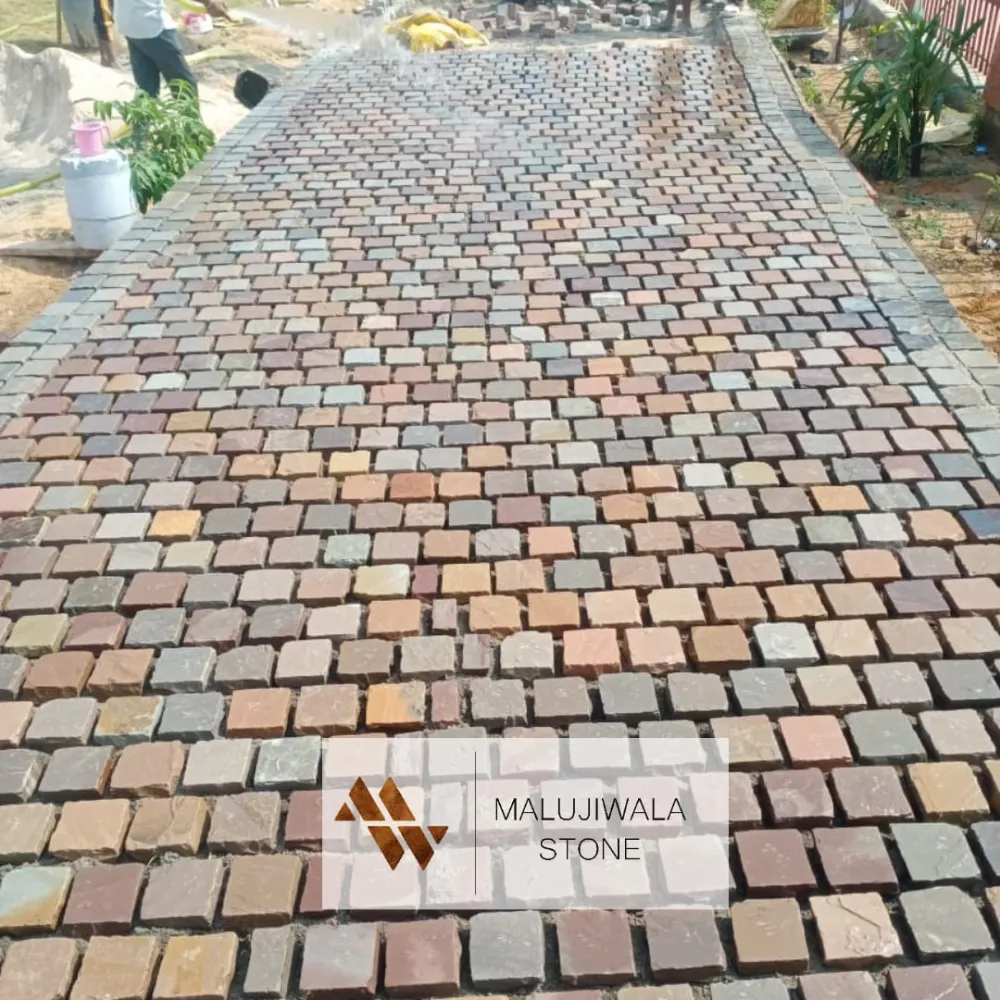
A warm red patio that stays warm — ideal for courtyards and Mediterranean-style gardens.
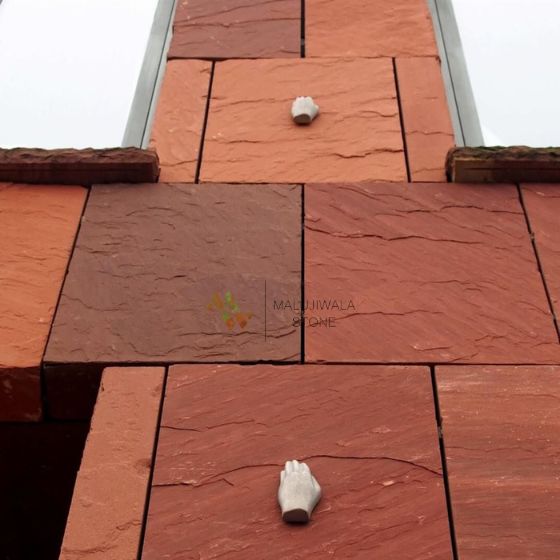
Decorative screens, columns, mouldings and artefacts — it carves cleanly and holds fine detail.
Proven over centuries — the reason it remains the heritage-restoration stone of choice.
Care & Maintenance
Agra Red is a low-maintenance stone with a genuinely proven track record — the forts built from it have needed remarkably little intervention across four centuries of Indian weather. For domestic use, sweep with a soft broom and wash occasionally with a mild, pH-neutral detergent. Never use acidic cleaners on natural stone; they cause permanent damage to colour and structure.
Sealing is optional. Its low water absorption means it copes well unsealed, but a breathable impregnating sealer helps resist staining in high-traffic areas and keeps the red reading deep and saturated. Because the colour is mineral, not applied, Agra Red does not fade the way pigmented or dyed products do.
It is highly stable. The red comes from hematite — a natural iron oxide within the stone's bedding planes — not from any dye or surface pigment, so it cannot wash or wear off. The Agra Fort and Delhi's Red Fort have stood in this stone for over 400 years with very little weathering. Like all natural stone it will gently patinate outdoors, but it does not fade to grey.
Yes. Agra Red is quarried in the Dholpur district of Rajasthan and takes its trade name from the nearby city of Agra. It is also sold as Dholpur Red Stone, Agra Stone, Barauli, Karauli, Koaroli and Morning Glory Sandstone.
Yes. With low water absorption (under 2%), a hardness of 6.5–7 Mohs and compressive strength of 90–140 N/mm², it resists frost and freeze-thaw well. It is widely specified for façades in cold climates including Russia, Europe and North America.
Yes — it is one of the best. It is hard-wearing yet easy to carve and cut, holding fine detail cleanly. That combination is precisely why Mughal stonemasons used it for the decorative jali screens, columns and mouldings you see at Agra Fort. We also produce CNC-carved murals in it.
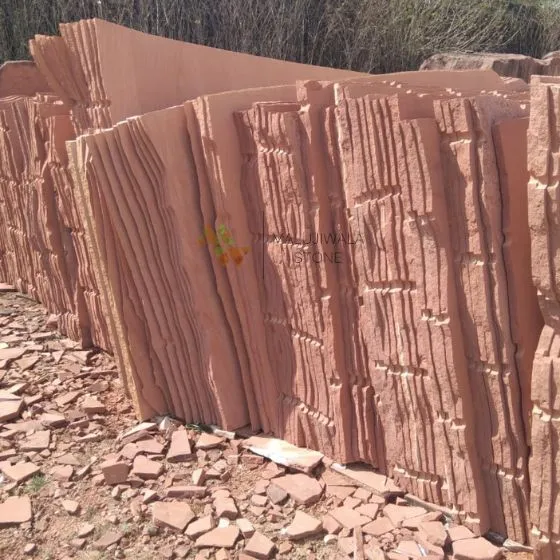
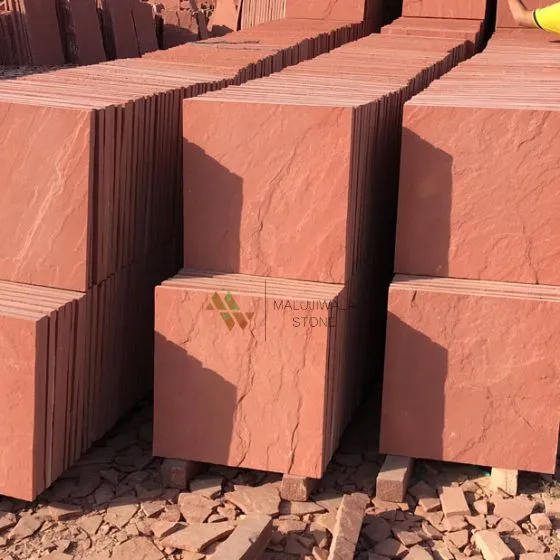
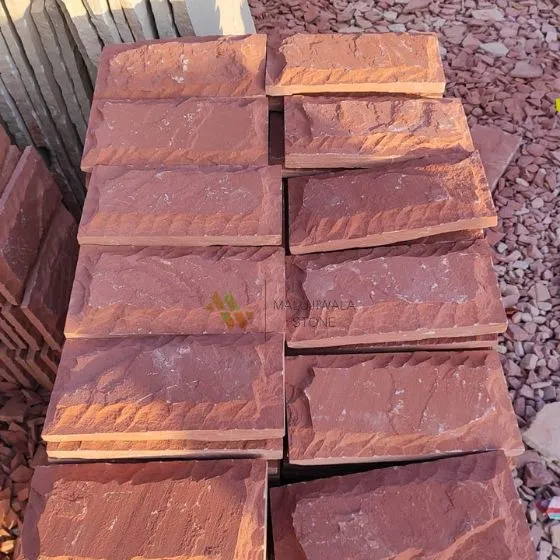
Agra Red is unusually responsive to finishing. We supply natural cleft (riven), honed, sawn, sandblasted, bush-hammered, tumbled, leather and brushed. Edges can be hand-dressed, machine-cut, chamfered, pencil, half or full bullnose, or rebated to specification.
Optional. Its low absorption means it performs well unsealed, but a breathable impregnating sealer helps resist staining in high-traffic or food-and-drink areas and keeps the colour reading deep. Avoid acidic cleaners either way.
Paving, cladding, cut-to-size or carved. Tell us the finish, thickness, quantity and destination — we'll come back with USD/sqft pricing and confirmed lead times.
After a warm or red-toned scheme? These are the alternatives UK buyers most often weigh against Agra Red.
Speak to our team for pricing, samples, MOQ details and shipping options to your country. Direct from India since 1996.