Stone Steps · Solid 6″ Treads
One block. One step.
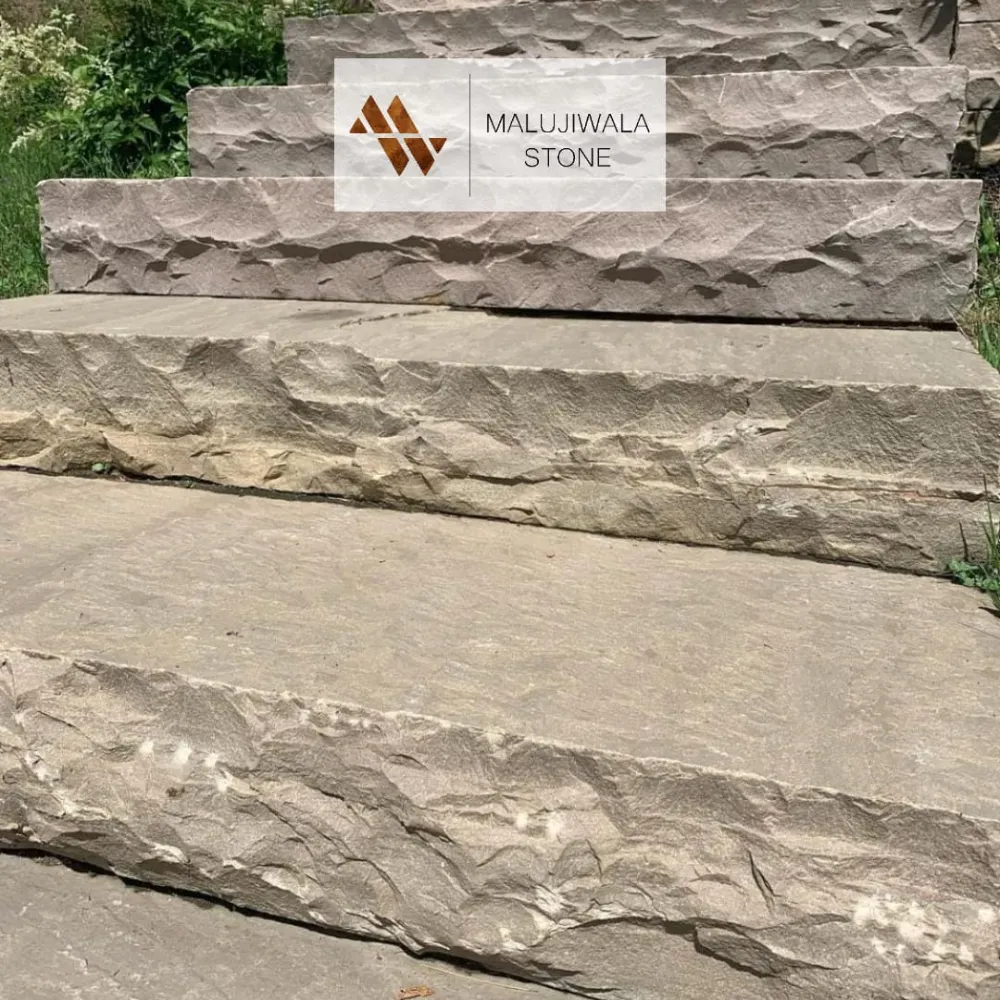
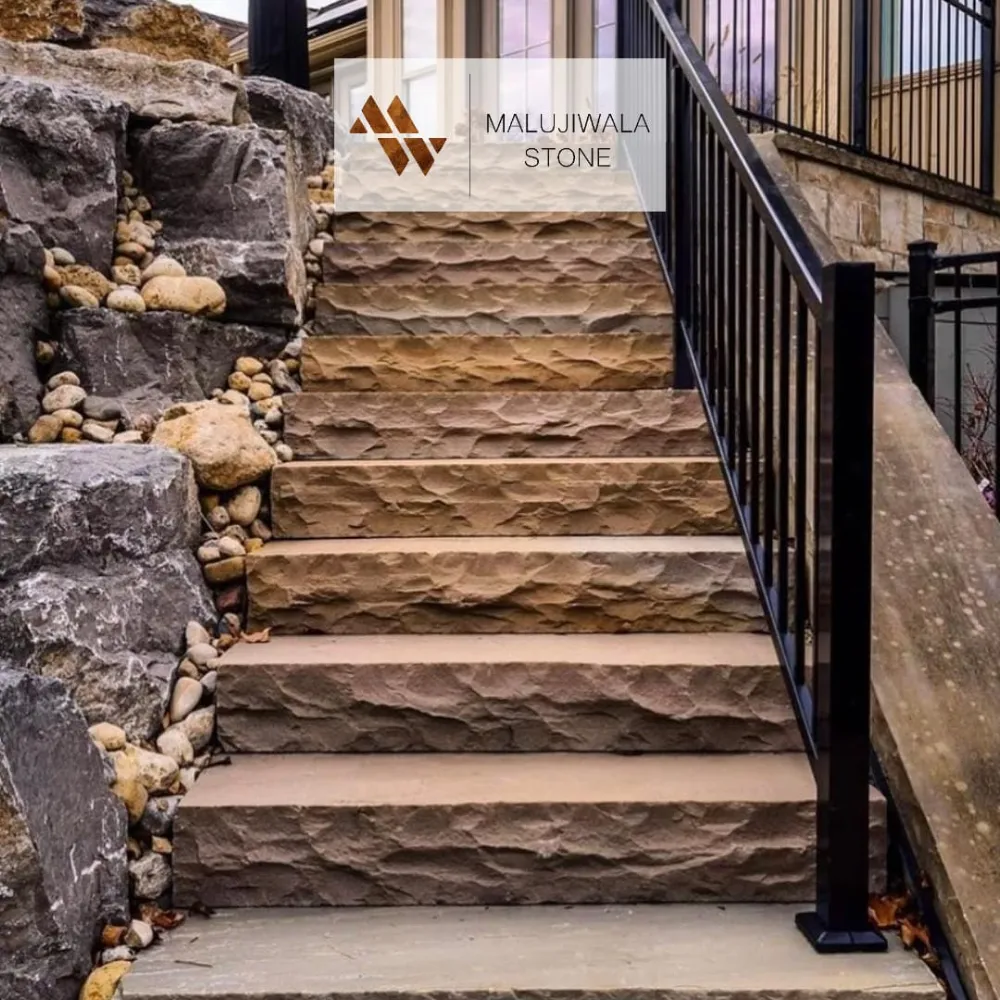
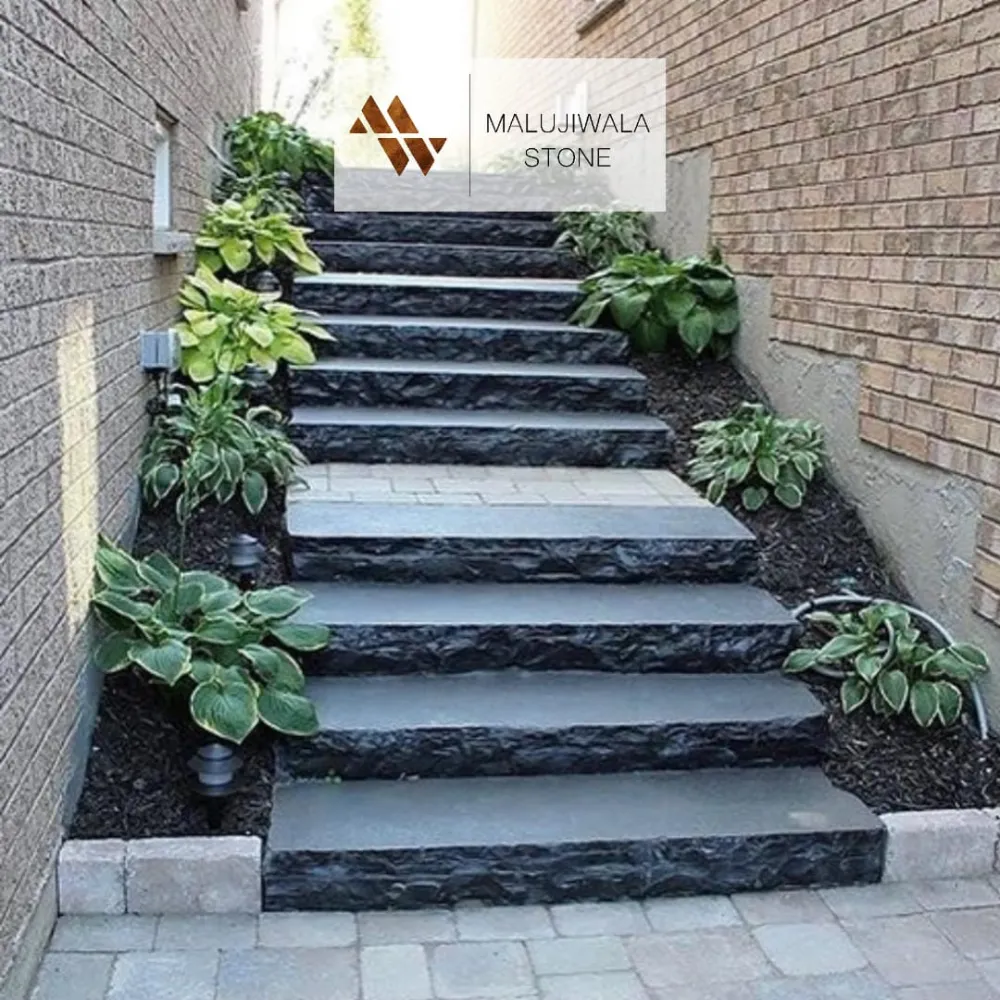
Solid 6″ sandstone treads cut from a single block — not a tread bonded to a riser. Six pieces to a crate, in five stone colours. The detail that makes an entrance.
Stone Steps · Solid 6″ Treads
Solid 6″ sandstone treads cut from a single block — not a tread bonded to a riser. Six pieces to a crate, in five stone colours. The detail that makes an entrance.
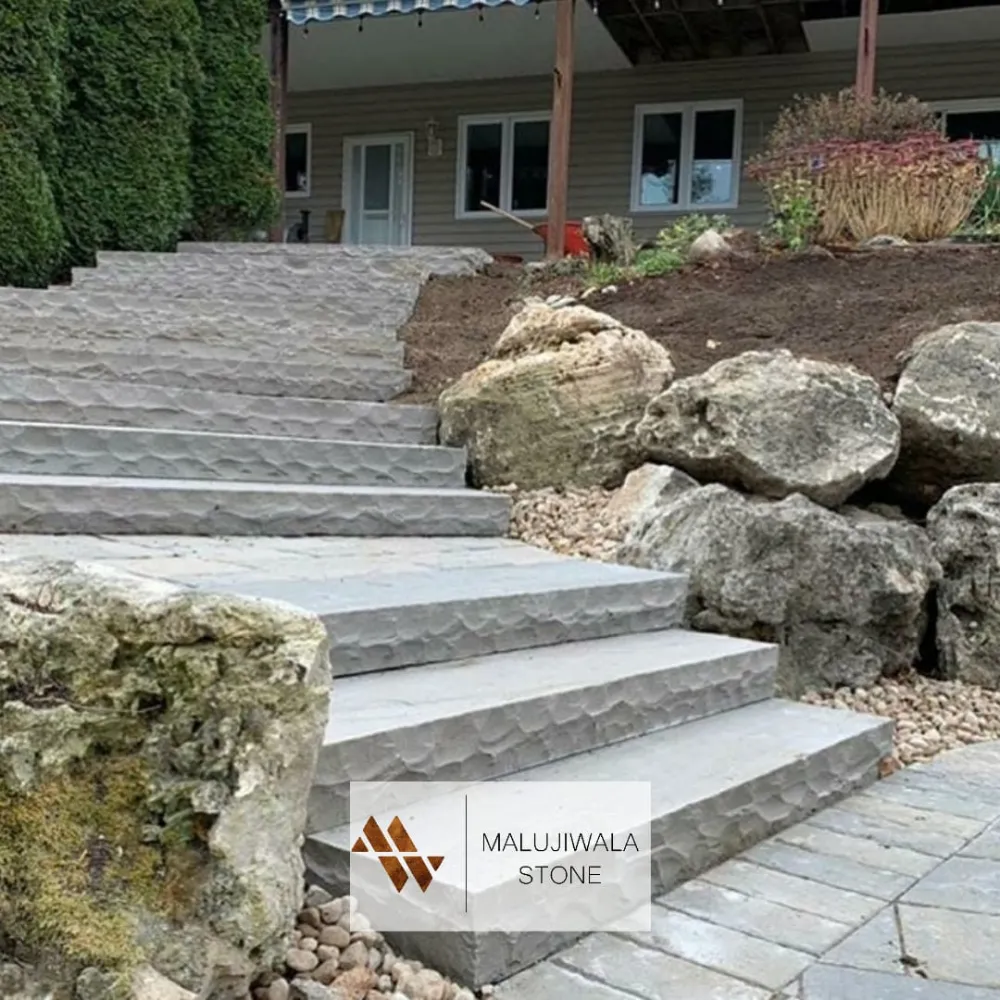
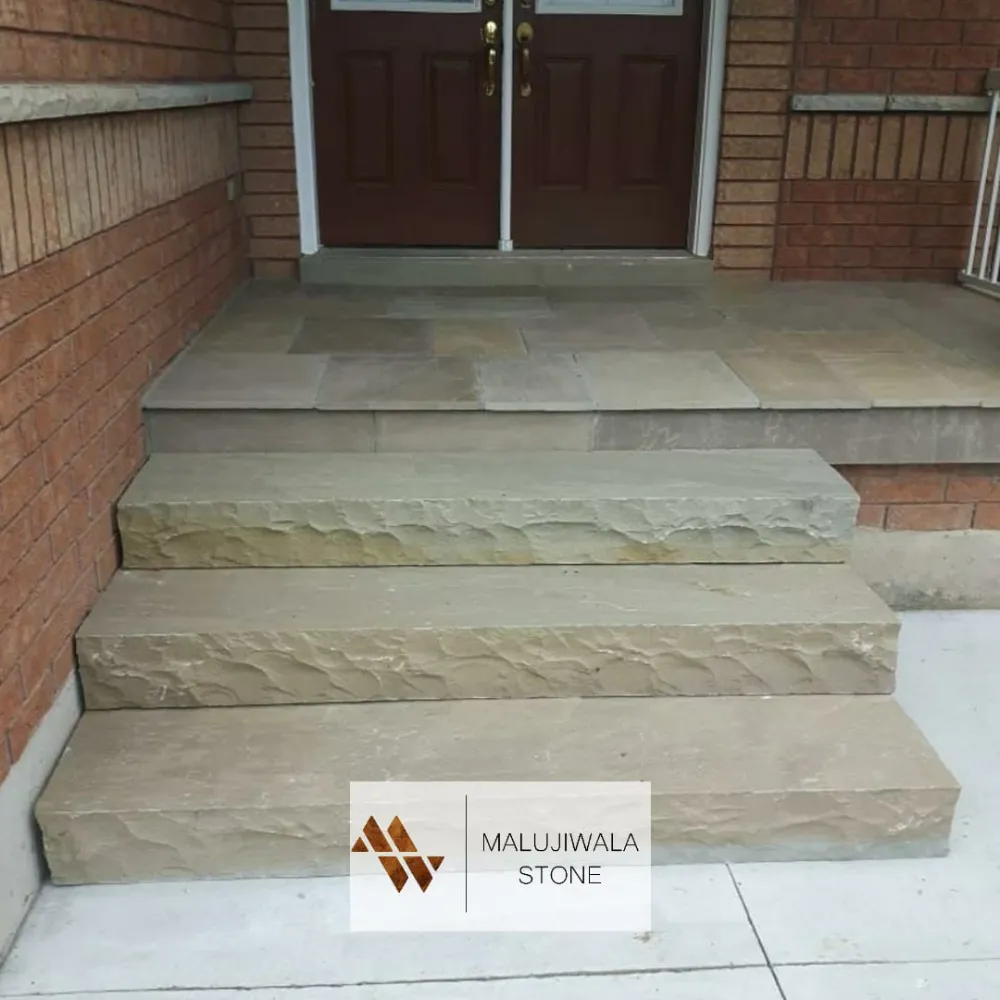
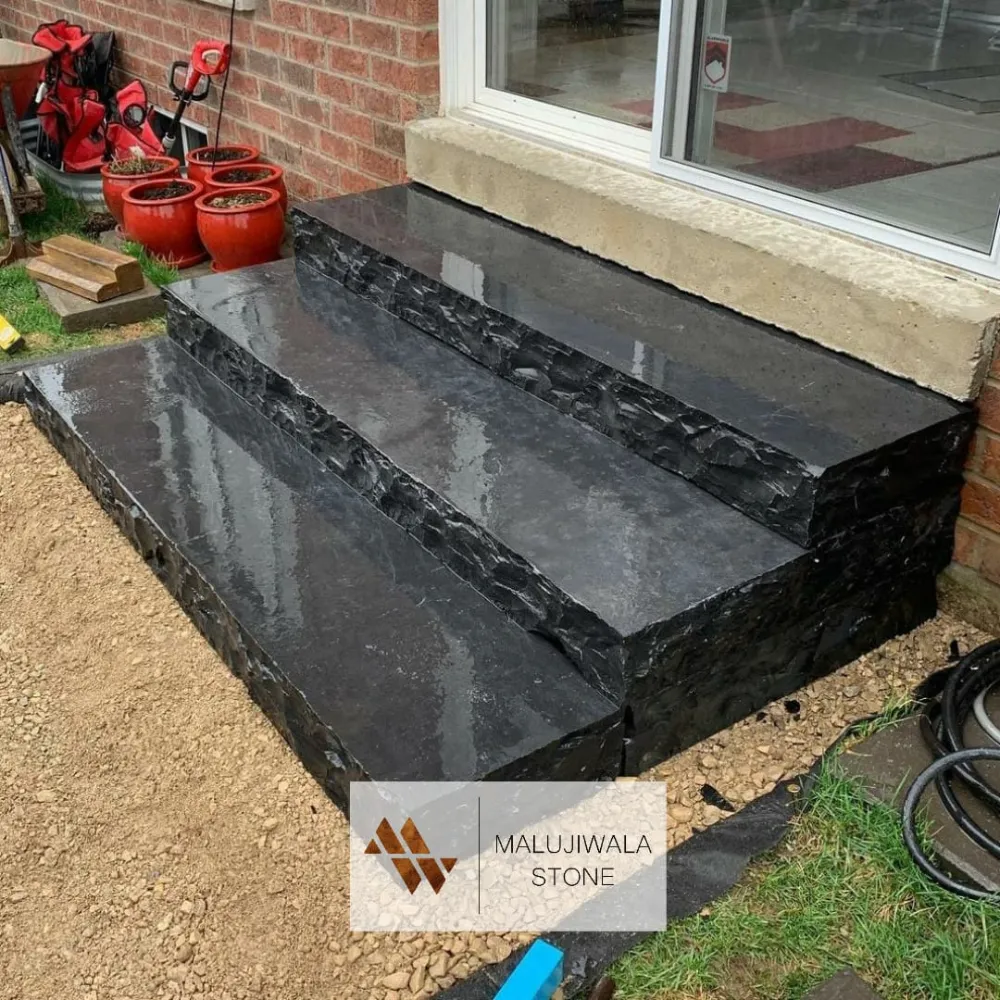
Natural stone steps are suited well for both front and backyard applications. They can provide a hint of luxury to your landscape unmatched by any other material.
About the Stone
Natural stone steps are suited well for both front and backyard applications. They can provide a hint of luxury to your landscape unmatched by any other material. An old concrete stairway can be transformed with natural stone steps easily. Whether it is a natural winding staircase in a hillside or a more formal set of cut steps at the front door, stone steps can make a strong statement and dramatic focal point in your landscape.
Ours are cut solid at 6 inches thick from a single block — a genuine monolithic tread rather than a thin slab bonded onto a riser. That matters more than it sounds. A solid tread has no joint to fail, no bond line to open up over a decade of freeze-thaw, and it sits under its own weight rather than relying on adhesive. It is why stone steps in old churchyards are still square after two hundred years, and why a well-cut set will outlast the house they lead into.
The cut of the step matters almost as much as the texture and colour. We supply top natural, bottom calibrated, with hand-dressed or sawn edges to your specification — in 16″ × 48″, 60″ and 72″ lengths, six pieces to a crate. Stone steps can quickly enhance your backyard entrance, add them to your garden, shed or greenhouse, to accentuate the natural look and feel of your property.
Six pieces to a crate. Square footage per crate: 16″×48″ gives 32 sq ft, 16″×60″ gives 40 sq ft, and 16″×72″ gives 48 sq ft. Custom lengths cut to order.
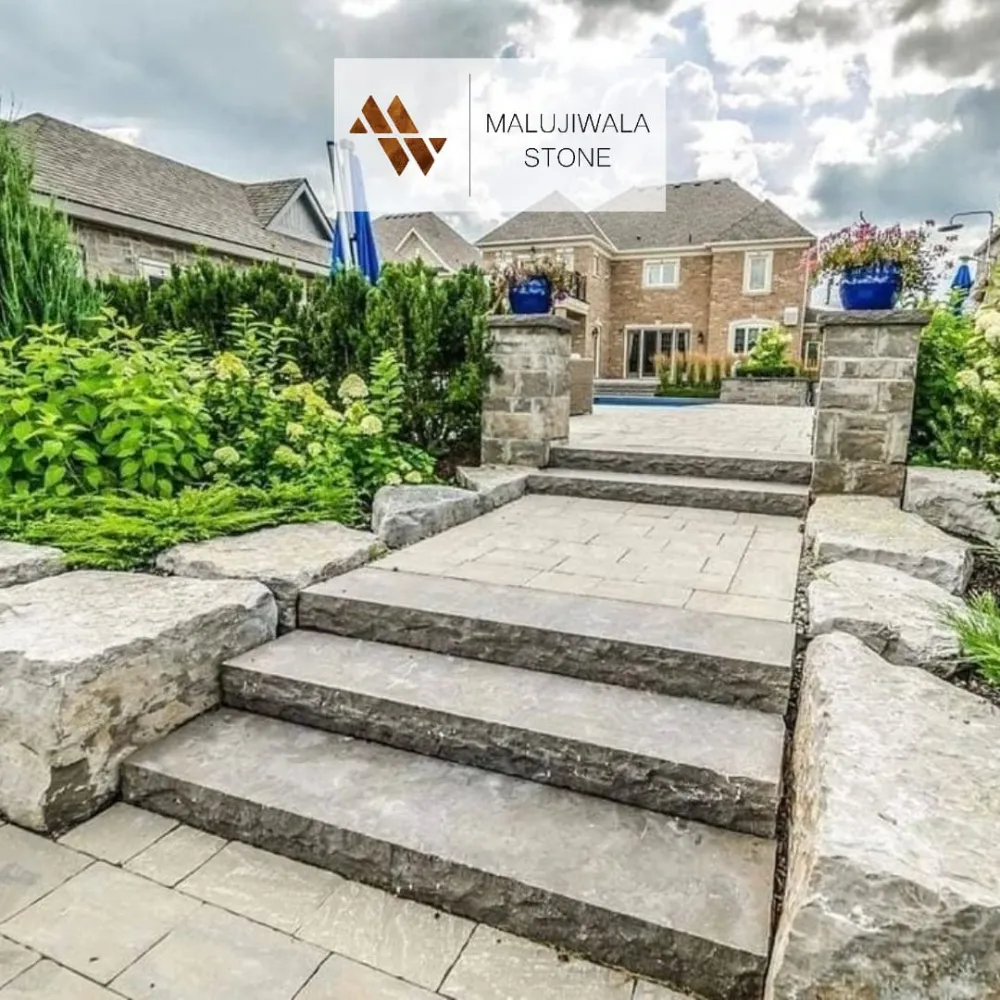
Slate Grey blends with garden planting yet reads dark enough to stand out against lighter architecture. Blue Ice runs cooler underfoot in summer.
A few honest notes that will save you real trouble later.
Weight is the whole design problem. A 16″×72″×6″ sandstone tread weighs roughly 400 lbs. That is a two-person lift at minimum and realistically a machine job. Plan access before delivery — a step you cannot physically get to the back garden is an expensive ornament in your driveway.
Compacted base, every time. Excavate and lay a compacted MOT Type 1 sub-base under each tread, then bed on mortar. Stone steps that settle unevenly become a trip hazard, and at 400 lbs a piece you do not lift and re-lay them casually. Get the base right the first time.
Set a consistent rise. Uneven risers are the most common fault in a stone stair and the most dangerous — people trip on the step that is different, not the step that is steep. Calculate your total rise, divide evenly, and cut the base accordingly rather than shimming as you go.
Falls matter on treads. Give each tread a slight fall forward so water sheds rather than pools. In a freezing climate a pooling tread becomes an ice tread, and that is a liability on a front entrance.
Functional and decorative, for residential, commercial and public buildings.
Garden pathways, retaining walls and terraced gardens — a natural, rustic feel.
Fountains, waterfalls and ponds — a natural and elegant touch.
Timelessness and durability that fits the historical value of a site.
Care & Maintenance
Sweep and wash occasionally with a mild, pH-neutral detergent. Never use acidic cleaners — on limestone treads like Kota Black the damage is permanent, and on sandstone it etches the surface.
Keep the treads clear of leaves and organic matter, particularly through autumn. A wet leaf on a stone step is genuinely slippery, and it is the leaves rather than the stone that cause almost every slip. In freezing climates, grit rather than salt: rock salt attacks the mortar joints over time.
16 inches deep by 48, 60 or 72 inches long, at 6 inches thick, six pieces to a crate. Square footage per crate: 16x48 gives 32 sq ft, 16x60 gives 40 sq ft, 16x72 gives 48 sq ft. Custom lengths are cut to order.
Solid. Each step is cut monolithic at 6 inches thick from a single block. There is no bond line to fail, no joint to open up through freeze-thaw, and the tread sits under its own weight rather than relying on adhesive. It is the reason stone steps last generations.
A 16x72x6 inch sandstone tread runs roughly 400 lbs. Plan machine access before delivery. This is the single most common thing people underestimate about stone steps.
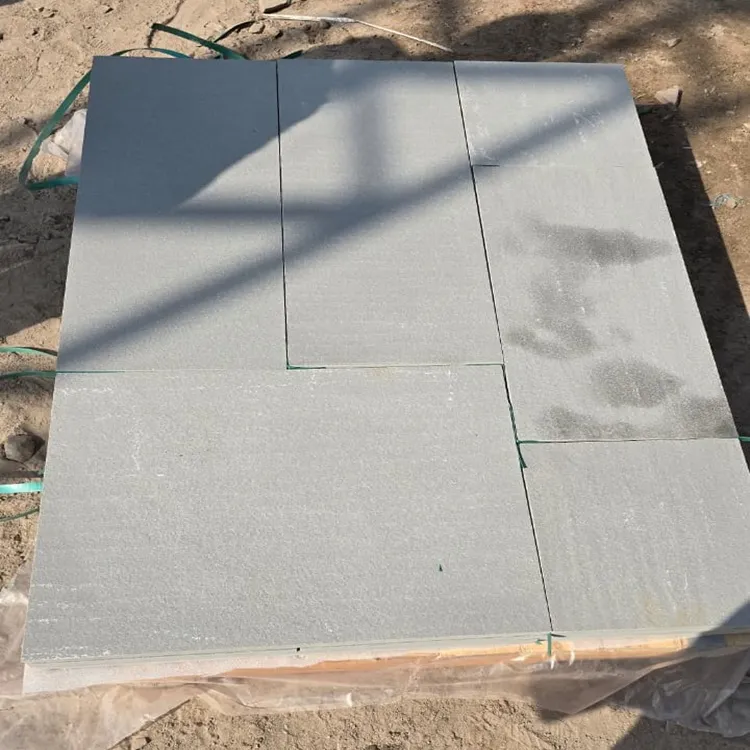
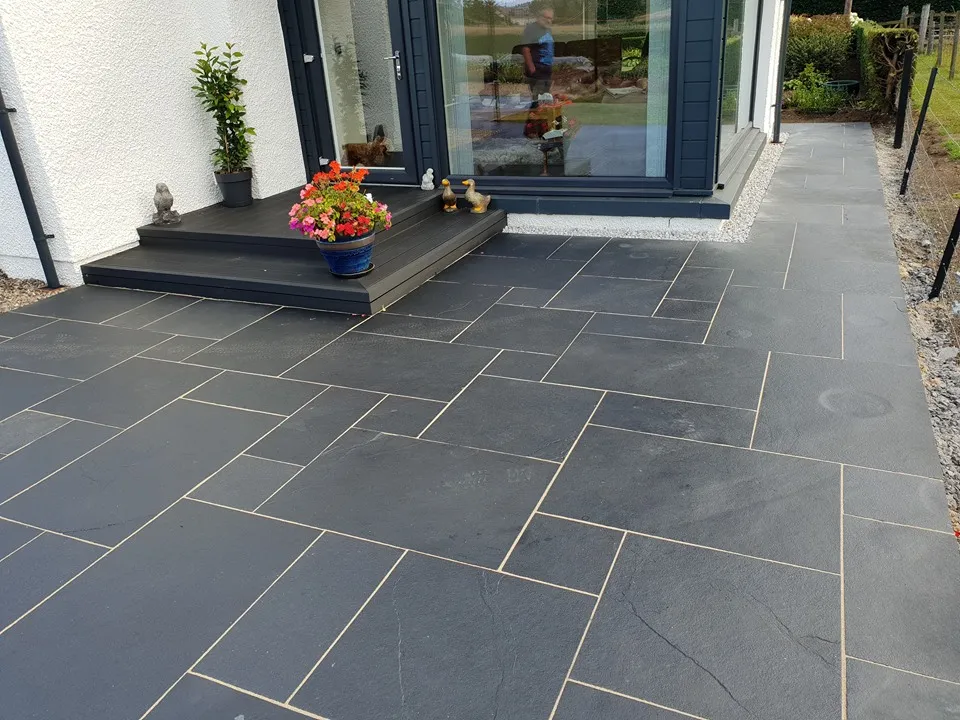
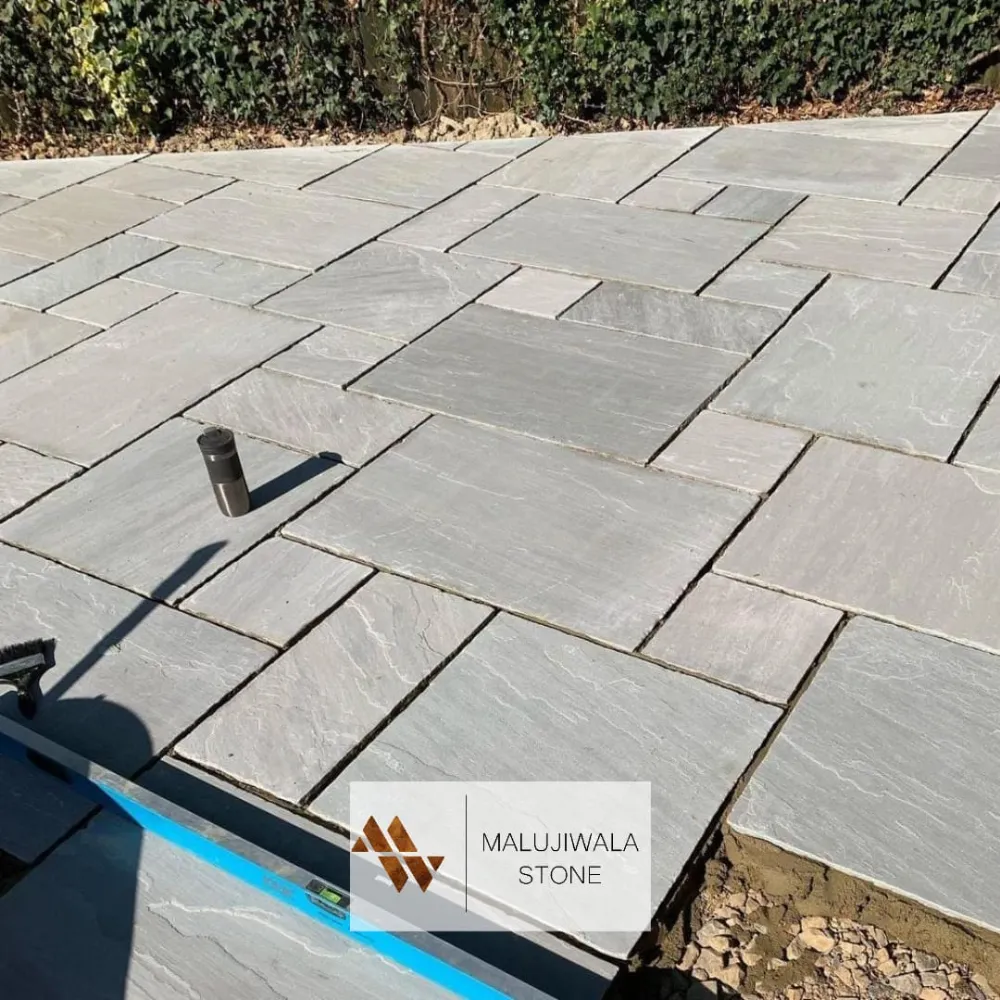
Five as standard: Blue Ice, Lavender, Slate Grey, Kota Black and Hampton Black. Slate Grey features unique tones of light to medium grey with a slight hint of brown, and blends particularly well with garden patio environments while still standing out against lighter architecture.
Top natural, bottom calibrated, with hand-dressed or sawn edges to your specification. The calibrated bottom is what lets them bed evenly.
Yes. Steps are used for interior decoration, particularly in traditional or rustic-themed homes, providing a sense of warmth and coziness. They are equally at home in a hillside garden staircase or a formal front entrance.
Tell us the thickness, quantity and destination — we'll come back with pricing and confirmed lead times. No agents in between.
These are what buyers most often pair with stone steps.
Speak to our team for pricing, samples, MOQ details and shipping options to your country. Direct from India since 1996.