Tandur Yellow Limestone · South India
Honey warmth, Cotswold calm.
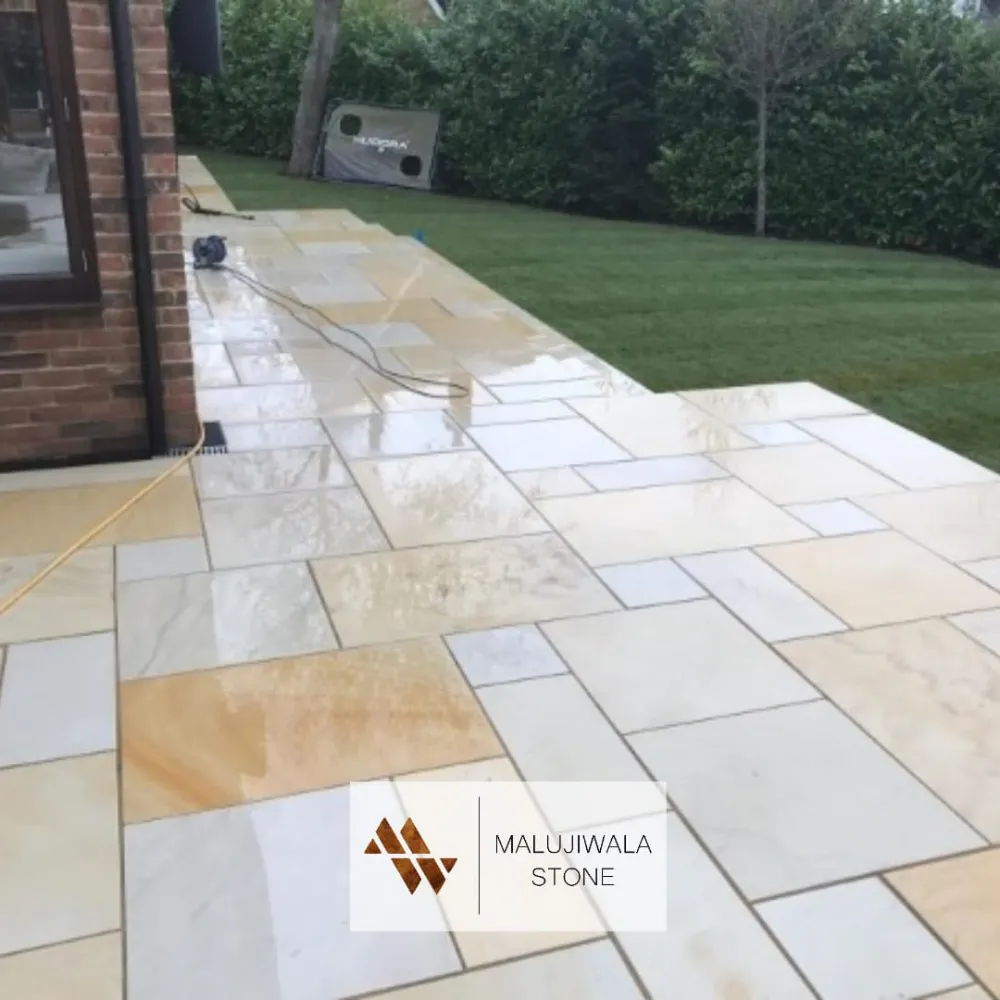
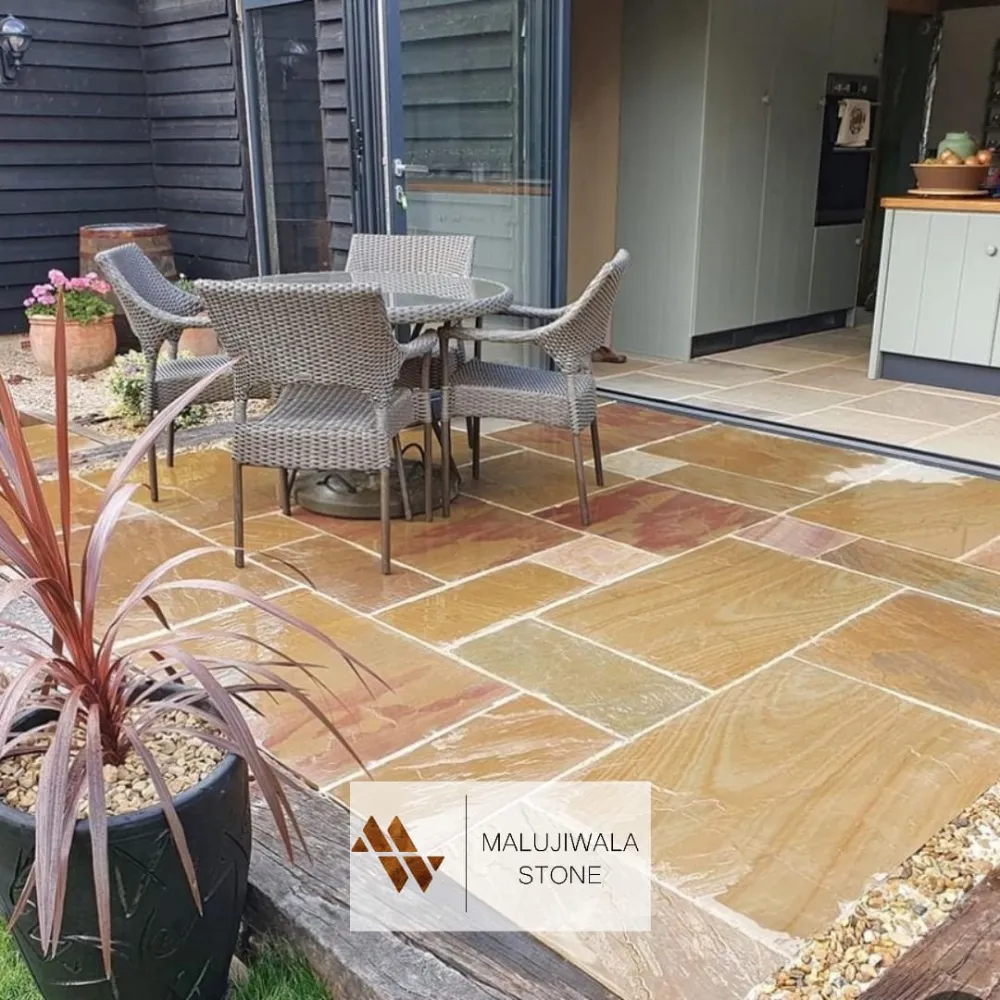
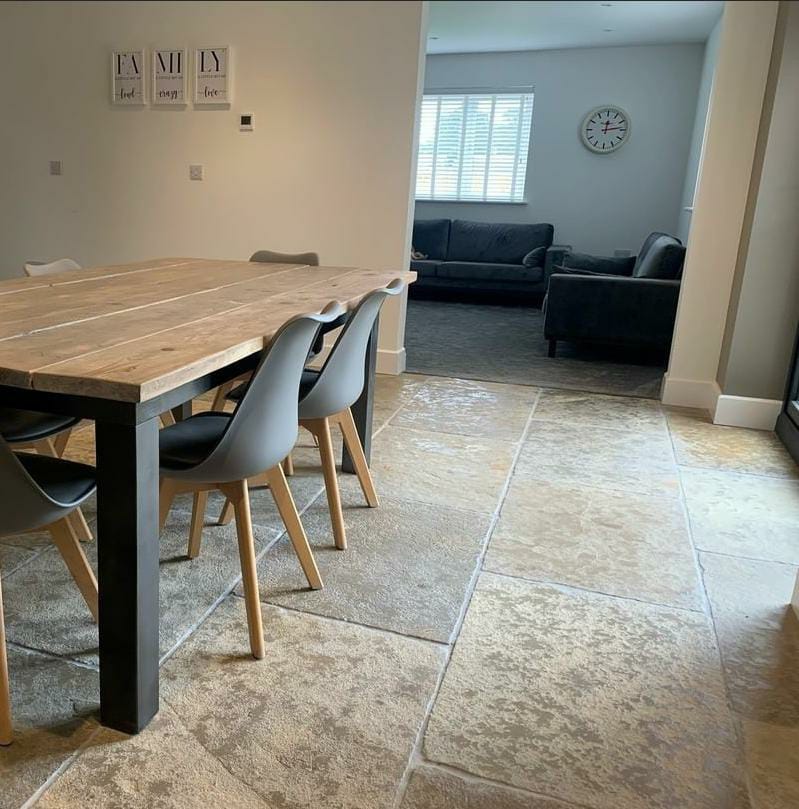
A consistent warm honey-yellow with cream and beige tones — remarkably uniform for natural stone, and a long-standing favourite in the Cotswolds.
Tandur Yellow Limestone · South India
A consistent warm honey-yellow with cream and beige tones — remarkably uniform for natural stone, and a long-standing favourite in the Cotswolds.
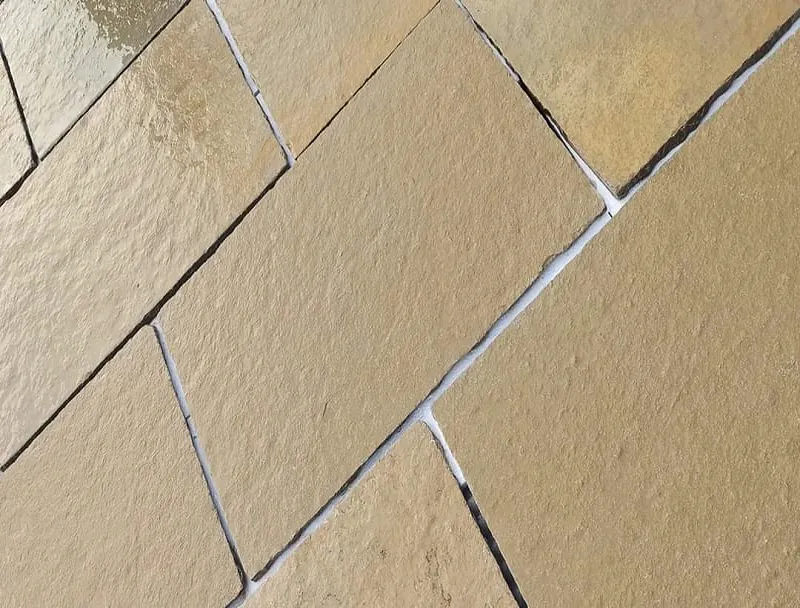
Very consistent in colour — sometimes described as Tai Yellow. Not as riven as sandstone, with a smooth texture and surface that gives a beautiful professional finish.
About the Stone
Tandur Yellow Limestone is a warm honey-coloured limestone from southern India, and one of the most consistent natural stones we export. Sometimes described as Tai Yellow, it displays a blend of warm honey, cream and beige tones — with far less colour variation than most Indian stone, which is precisely why designers reach for it when a scheme needs calm rather than drama.
It is not as riven as sandstone. The surface is smooth and lightly textured — an “orange peel” relief that gives a clean, modern look where a subtler finish is wanted. It has been especially popular in the Cotswolds area of the UK, where that honey tone sits naturally against the local vernacular stone, and it works equally well in contemporary schemes.
It is known internationally by a long list of names — French Vanilla Limestone, Yellow Limestone, Shahabad Yellow, Kota Yellow, Madras Yellow, Pistachio Limestone and Vintage Tandoor among them. With low porosity that minimises water absorption — reducing the risk of moss, staining and discolouration — it is durable and sturdy enough for patios, pathways and garden landscapes without demanding much maintenance in return.
Standard 60 Series packs (90×60, 60×60, 60×29, 29×29cm) cover approximately 15–19 m². 22mm calibrated, or 25–40mm non-calibrated in hand-cut and sawn-cut to order. 56 Series also available.
Limestone behaves differently to sandstone. A few honest notes that will save you real trouble later.
Never use acid on limestone. This is the one rule that matters most. Limestone is calcium carbonate, so acidic cleaners and patio cleaners react chemically with the stone itself — the damage is permanent and irreparable, not a stain you can lift. If you take nothing else from this page: pH-neutral only, on Tandur Yellow and on every limestone.
Use a slurry primer underneath. Paint a slurry primer onto the back of each slab before bedding. It prevents salt and mineral staining leaching up from the mortar bed — a common cause of patchy discolouration that appears weeks after laying and cannot be reversed.
Mix your crates. Sort through all crates on arrival and draw evenly from each so colour variation is distributed across the whole area. Set aside any slabs with heavier chipping or markings to use as cuts.
Sawn edges chip — that is normal. Limestone paving has machine-sawn edges rather than hand-dressed ones. Small chips to corners, edges or the back are an unavoidable result of production and transport, and are not a defect. Once laid and pointed, they are almost never visible.
Order 10% extra. Standard for any natural stone — covers cuts, breakage and undercounted measurements.
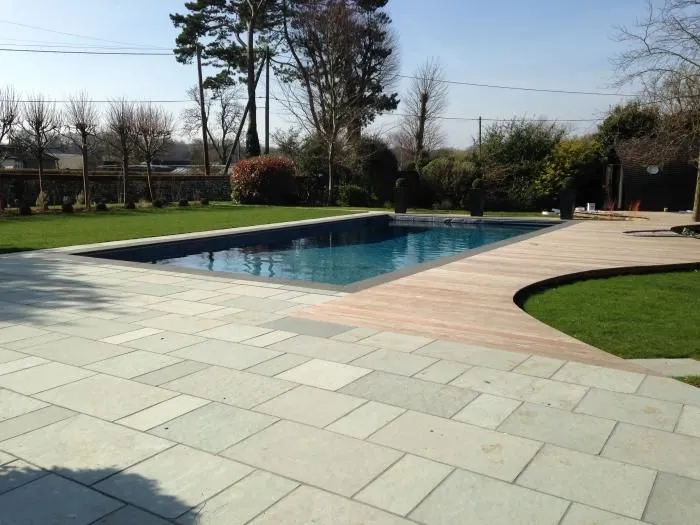
A warm, bright patio — particularly at home in period and Cotswold-style gardens.
Consistent colour makes it a strong interior floor across large areas.
Great value across airports, malls, stations, schools and civic buildings.
Full bullnose steps, window sills, pier caps and copings to order.
Care & Maintenance
Sweep with a soft broom and wash occasionally with a mild, pH-neutral detergent. Never use an acid-based cleaner on Tandur Yellow, either as a wash or to shift mortar stains — the chemical reaction between acid and limestone permanently damages the surface of the stone. There is no fixing it afterwards.
Sealing is recommended. A breathable, impregnating sealer helps resist staining and organic growth through wet British winters while letting the stone breathe. Reseal every two to four years depending on exposure.
Unusually so. Tandur Yellow is one of the most consistent natural stones we export — a warm honey tone with cream and beige, and far less variation than typical Indian sandstone. It is still natural stone, so some variation exists, but it is the stone to choose when you want calm and uniformity.
Its honey tone sits naturally alongside the local Cotswold stone, so it reads as belonging rather than imported. Combined with its smooth surface and professional finish, it has become a long-standing favourite for period properties in that part of the UK.
Many. Tandoor Yellow, Yellow Limestone, French Vanilla Limestone, Shahabad Yellow, Kota Yellow, Madras Yellow, South Yellow, Vintage Tandoor, Abbey Limestone and Pistachio Limestone are all the same stone in different markets.
They look similar at a glance and are often confused. Kota Brown (also called Kota Yellow) comes from northern India; Tandur Yellow comes from the south. Look closely and they are entirely different products in texture and tone — the northern and southern limestones simply happen to share a colour family.
Never. Like all limestone it is calcium carbonate and reacts chemically with acid, causing permanent surface damage. pH-neutral cleaners only.
Yes. It has low porosity, which minimises water absorption and reduces the risk of moss, staining and discolouration, and it is frost-resistant. It has been laid across UK gardens for years.
Tell us the thickness, quantity and destination — we'll come back with pricing and confirmed lead times. No agents in between.
These are the alternatives UK buyers most often weigh against Tandur Yellow.
Speak to our team for pricing, samples, MOQ details and shipping options to your country. Direct from India since 1996.