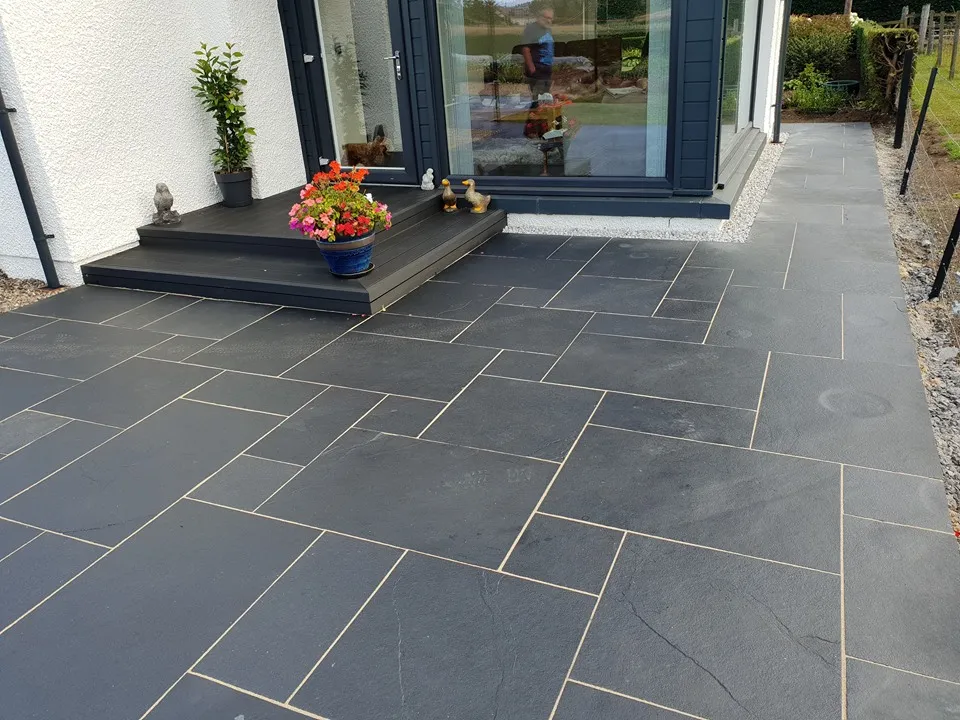
Kota Black Limestone · Kadappa Black
Charcoal dry, jet black wet.
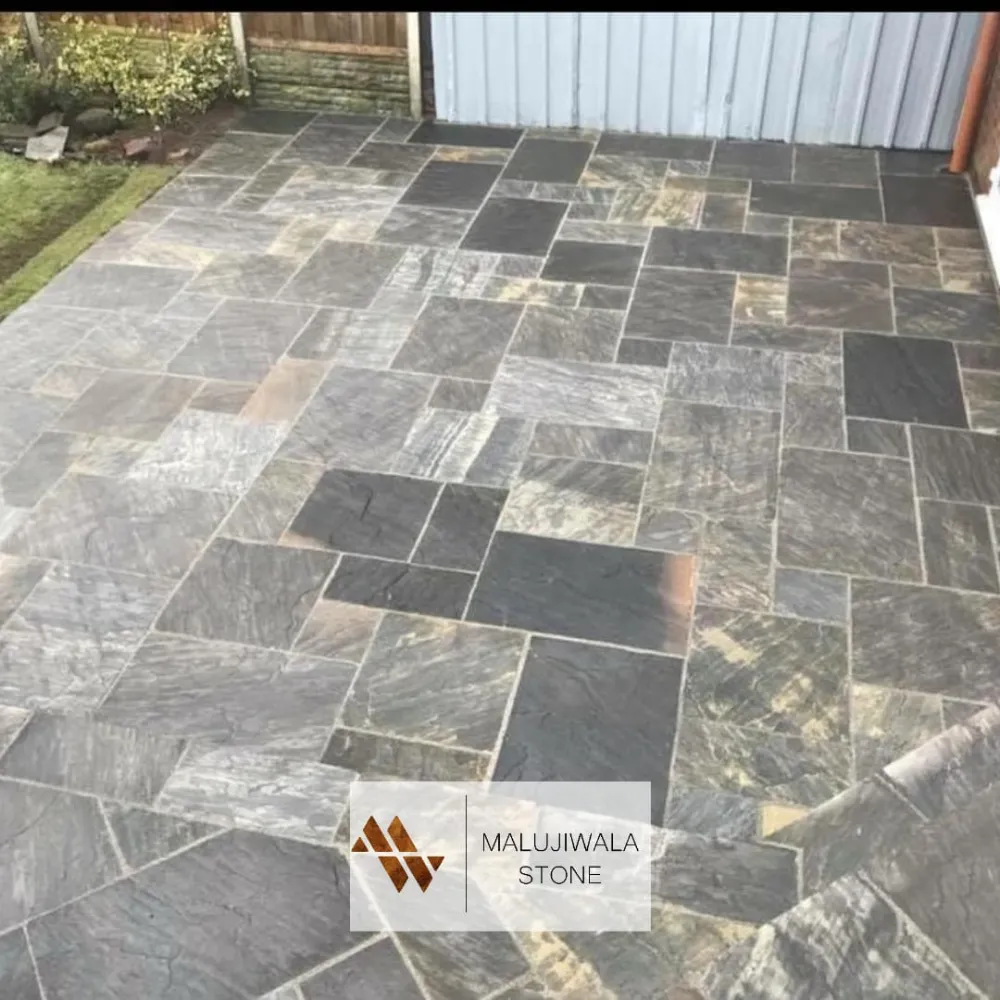
A high-calcium limestone of dark grey to black, 95% calcite, with occasional white and pink streaks. One of the most affordable routes to a modern dark stone patio.
Kota Black Limestone · Kadappa Black
A high-calcium limestone of dark grey to black, 95% calcite, with occasional white and pink streaks. One of the most affordable routes to a modern dark stone patio.
A relatively uniform dark grey to black — unusual for a limestone. Sawn edges and that particular colouration make it ideal for modern garden design and stylish interiors.
About the Stone
Kota Black Limestone — known across the trade as Kadappa Black, Cuddapah Black, Midnight Black or simply Black Limestone — is a high-calcium limestone that has proven durable in all climates. It has a typical calcareous texture, usually smooth, with a relatively uniform dark grey to black colour that is genuinely unusual for a limestone.
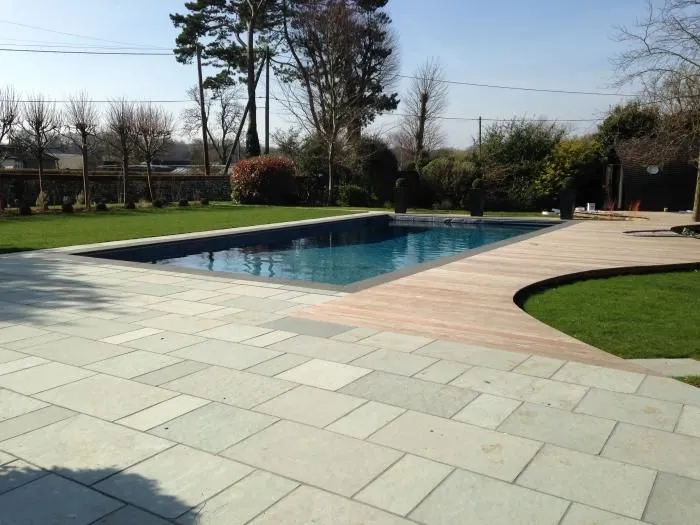
Geologically it is around 95% calcite, with quartz and opaque minerals making up the rest, and a slate-like structure that makes it very hard. Its uniform texture allows frequent white or pink streaks — these are natural calcite veins, entirely normal, and they have no effect on the strength or durability of the slab. The slightly cracked surface makes it naturally frost-resistant and non-slip, which is why it works so well for patios, driveways and pool surrounds.
The honest headline: Kota Black is one of the most affordable ways to achieve a modern dark stone patio. It appears charcoal grey when dry and turns deep black when wet or sealed. Sawn edges and that clean, dark colouration make it an ideal material for contemporary garden design and elegant interiors — and it lays alongside lighter stones beautifully for contrast.
Standard mixed packs cover approximately 15–18.5 m², calibrated to 22mm. Common sizes 300×600, 450×600, 600×600 and 900×600mm. Antique, tumbled and honed finishes available.
Limestone behaves differently to sandstone. A few honest notes that will save you real trouble later.
Never use acid on limestone. This is the one rule that matters most. Limestone is calcium carbonate, so acidic cleaners and patio cleaners react chemically with the stone itself — the damage is permanent and irreparable, not a stain you can lift. If you take nothing else from this page: pH-neutral only, on Kota Black and on every limestone.
Seal it, or accept the silver. This is the single most important decision with Kota Black, and most disappointment comes from not knowing it. The black pigment is susceptible to ultraviolet light: left unsealed outdoors, the stone sun-bleaches and mellows to a soft silver-grey over time. That can look lovely — but if you want it to stay black, you must use a colour-enhancing sealer with UV protection, applied after laying and cleaning. Decide which you want before the slabs go down.
Use a slurry primer underneath. Paint a slurry primer onto the back of each slab before bedding. It prevents salt and mineral staining leaching up from the mortar bed — a common cause of patchy discolouration that appears weeks after laying and cannot be reversed.
Mix your crates. Sort through all crates on arrival and draw evenly from each so colour variation is distributed across the whole area. Set aside any slabs with heavier chipping or markings to use as cuts.
Sawn edges chip — that is normal. Limestone paving has machine-sawn edges rather than hand-dressed ones. Small chips to corners, edges or the back are an unavoidable result of production and transport, and are not a defect. Once laid and pointed, they are almost never visible.
Order 10% extra. Standard for any natural stone — covers cuts, breakage and undercounted measurements.
The most affordable route to a dark contemporary patio.
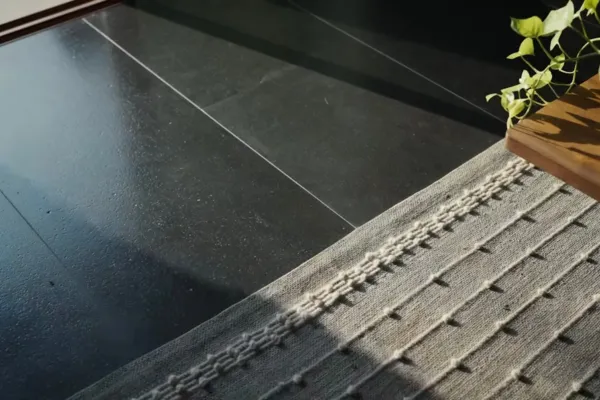
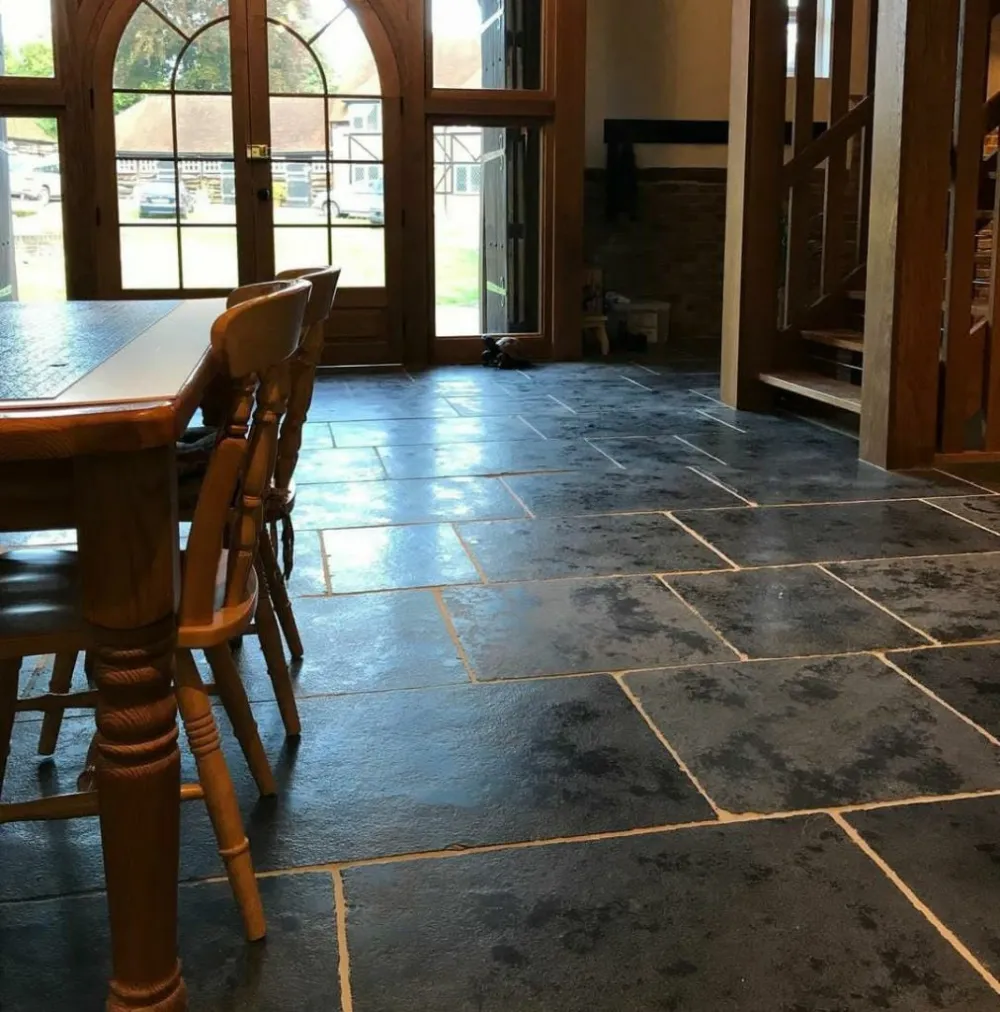
Antique and honed finishes for elegant, dark interior floors.
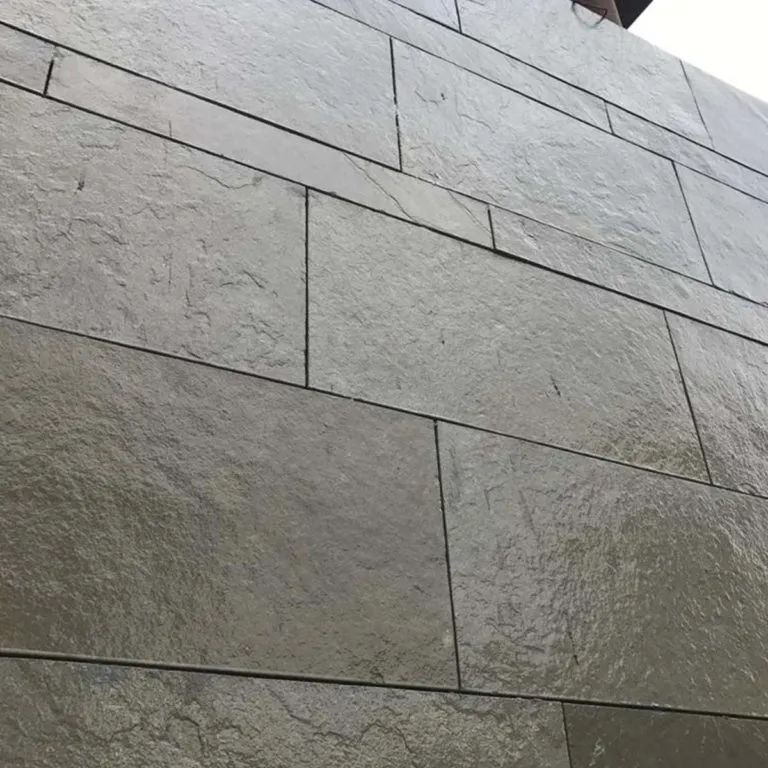
Lintels, cladding and countertops — it cuts and carves easily.
Lays with lighter stones to create contrasts of colour and texture.
Care & Maintenance
Sweep with a soft broom and wash occasionally with a mild, pH-neutral detergent. Never use an acid-based cleaner on Kota Black, either as a wash or to shift mortar stains — the chemical reaction between acid and limestone permanently damages the surface of the stone. There is no fixing it afterwards.
On Kota Black specifically, sealing is not just protective — it is a colour decision. A colour-enhancing sealer with UV protection locks in the black pigment against sun-bleaching. Without it, expect a gradual mellow to silver-grey.
Sealing is recommended. A breathable, impregnating sealer helps resist staining and organic growth through wet British winters while letting the stone breathe. Reseal every two to four years depending on exposure.
Because it is dry, unsealed, or both. Kota Black appears charcoal grey when dry and turns deep black when wet or sealed. The pigment is also UV-sensitive: left unprotected outdoors it sun-bleaches to a soft silver-grey over time. Use a colour-enhancing sealer with UV protection to lock in the black.
Natural calcite veins. Kota Black is roughly 95% calcite, and fine white or pink streaks through the slab are a normal feature of the stone. They do not affect its durability, strength or performance in any way.
Yes. The same stone is sold as Kota Black, Kadappa Black, Cuddapah Black, Midnight Black, Carbon Black and simply Black Limestone. Names vary by market; the stone does not.
No. The slightly cracked surface gives it natural slip resistance, and the stone is naturally frost-resistant — which is why it is used for patios, driveways and pool surrounds across the UK.
Never. It is a limestone — calcium carbonate — and acid reacts chemically with it. The surface damage is permanent and cannot be repaired. Use only pH-neutral cleaners, including for mortar stains.
Yes, and it is one of its best uses. The antique and honed finishes give a dark, sophisticated interior floor. Seal it before use and it is straightforward to maintain.
Kota Stone comes in four colours, and each has its own page with photos and rates: Green Kota Stone from ₹21, Kota Blue from ₹25 and Kota Brown (Kota Honey) from ₹85 per sq ft + GST. Kota Black starts at ₹40 per sq ft + GST.
Tell us the thickness, quantity and destination — we'll come back with pricing and confirmed lead times. No agents in between.
These are the alternatives UK buyers most often weigh against Kota Black.
Speak to our team for pricing, samples, MOQ details and shipping options to your country. Direct from India since 1996.