The Quartzite Collection
Two of the most sought-after quartzites in American kitchens: the warm, cloud-soft veining of Taj Mahal and the crystalline white of Cristallo. Natural stone that looks like marble and works like quartzite.
This collection is deliberately small. Two quartzites, chosen for the look American kitchens ask for most: Taj Mahal for warmth and calm, Cristallo for light and drama. Both are natural stone, so every slab is its own, and both are harder-wearing than the marble they are so often mistaken for.
Warm · soft · cloud-veined
Taj Mahal Quartzite
A warm greige ground with veining that drifts rather than cuts. Calm enough to live
with every day.
Explore Taj Mahal
Cool · crystalline · luminous
Cristallo Quartzite
White to silver, with long gray and soft gold veins and a glassy depth that
catches the light.
Explore Cristallo
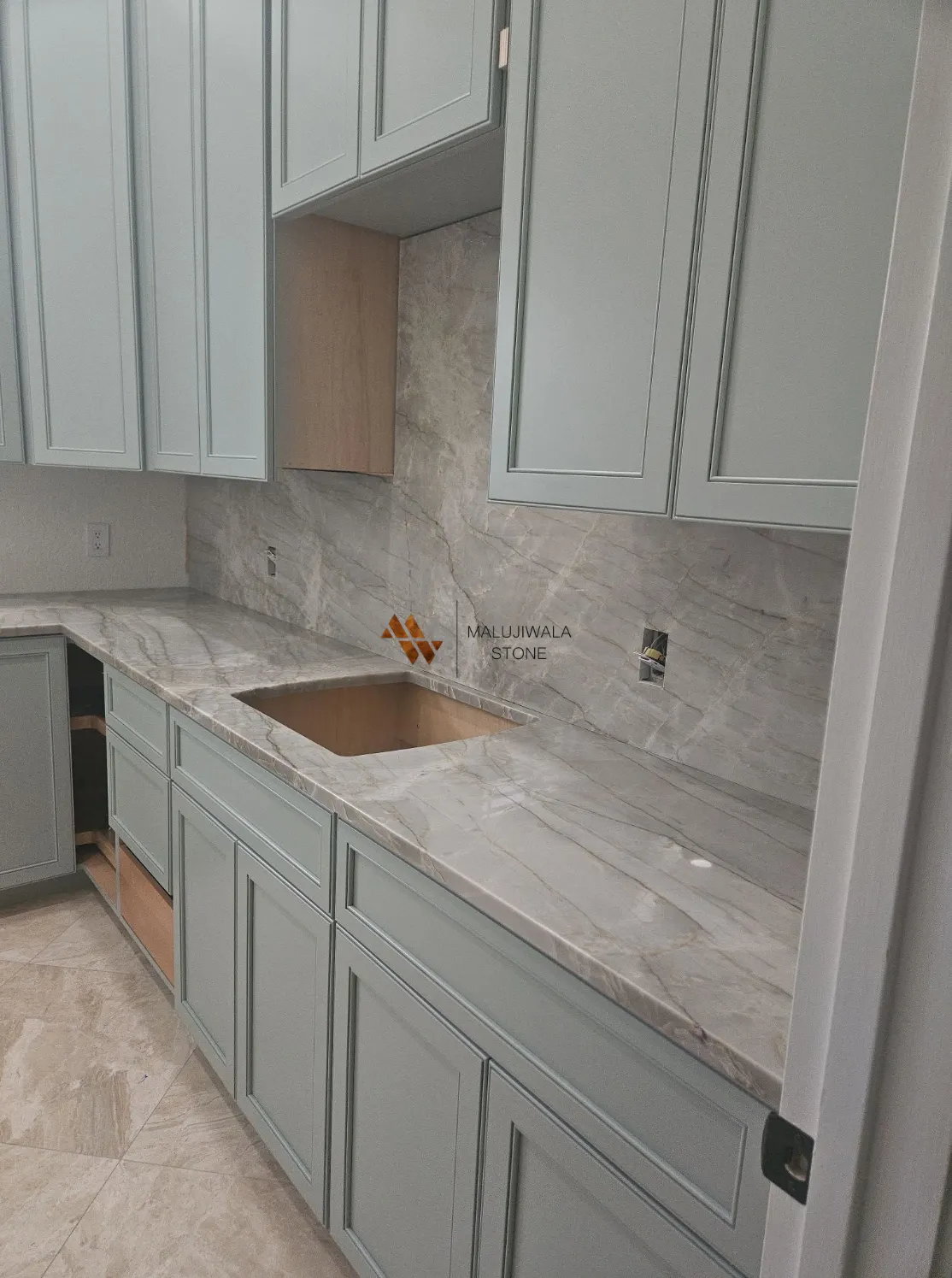
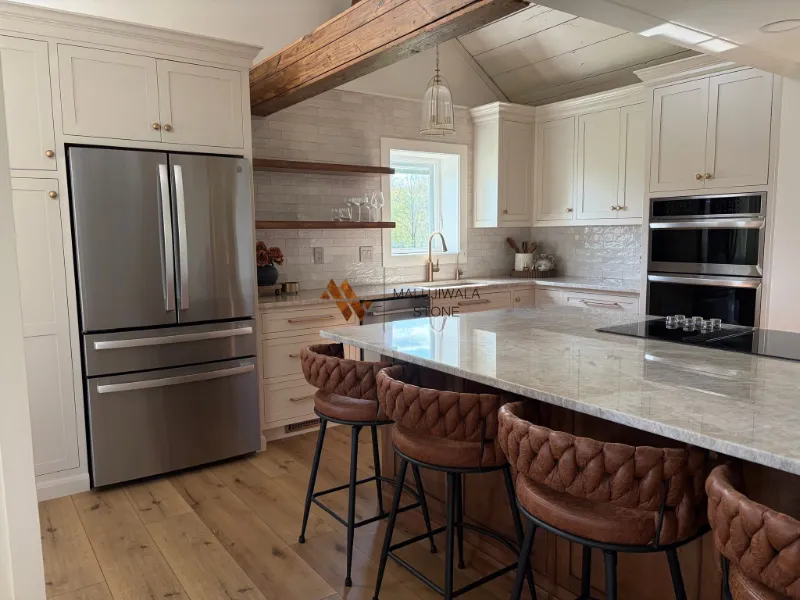
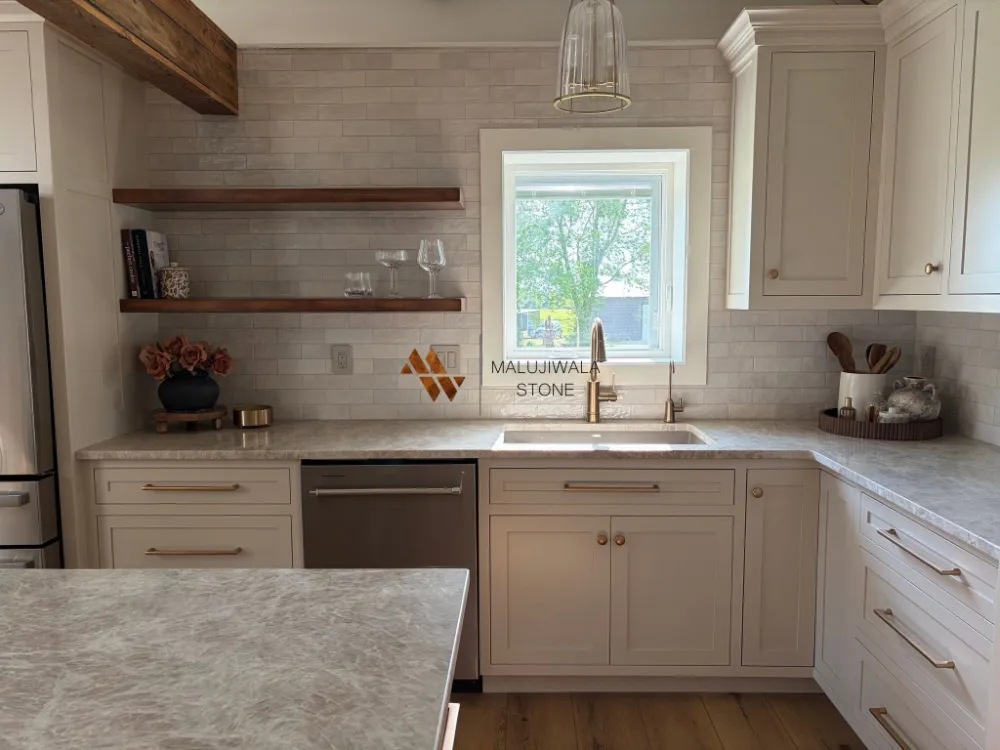
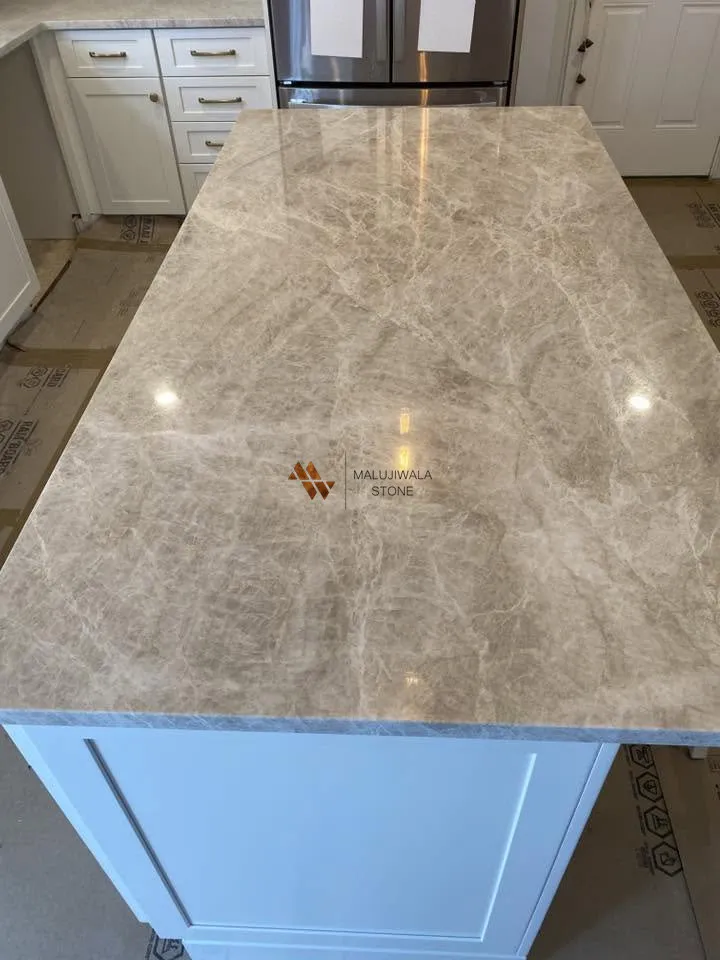
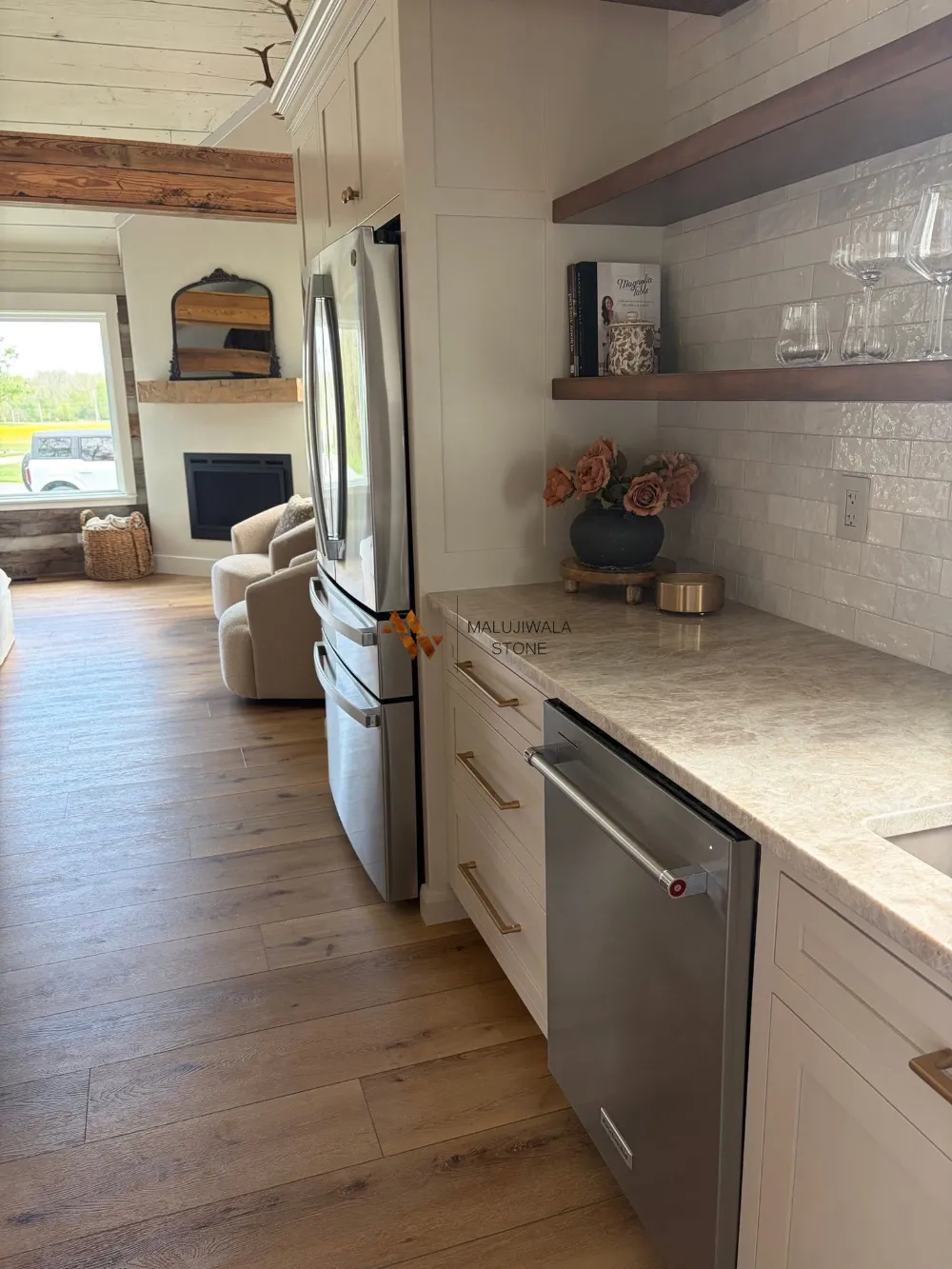
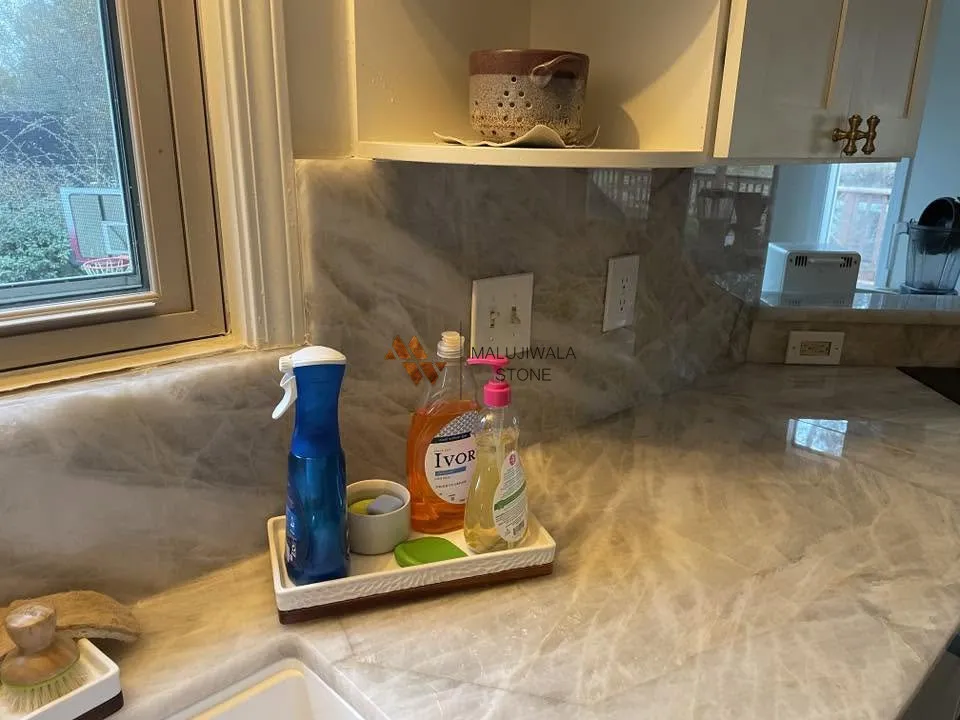
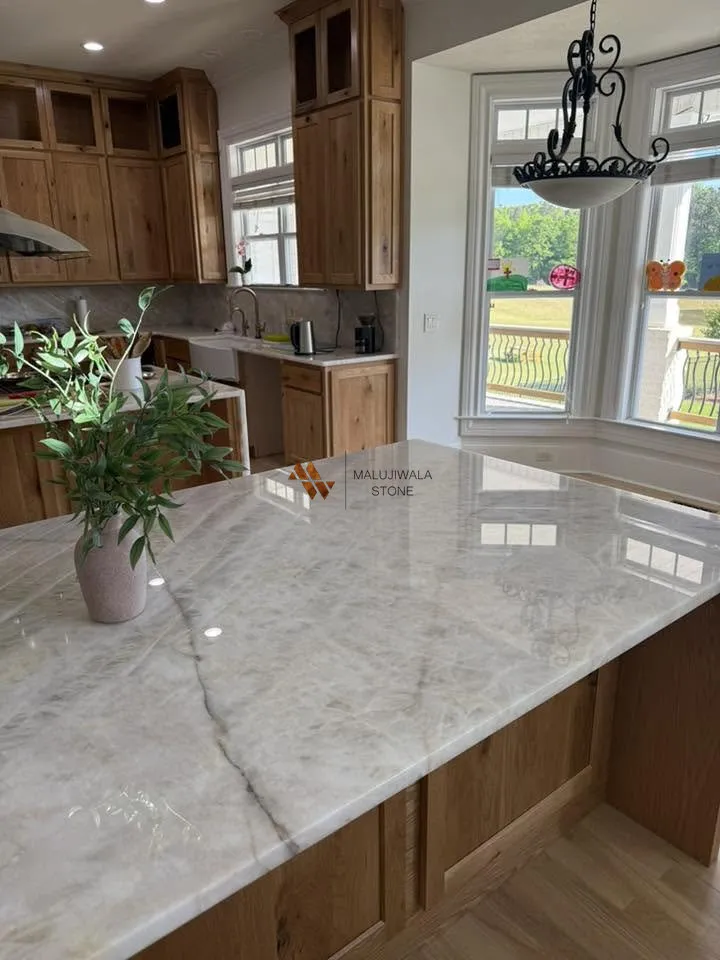
Taj Mahal is the quartzite people mistake for marble. Its ground is a warm greige, somewhere between cream, taupe and soft gray, crossed by cloud-like veining that drifts across the slab rather than cutting through it. It sits as easily beside white shaker cabinets as beside sage green, walnut or brass.
The difference is underneath. Quartzite is a dense, quartz-rich stone, so Taj Mahal stands up to heat, scratches and daily kitchen use far better than marble does, and it holds its polish in a busy family kitchen.
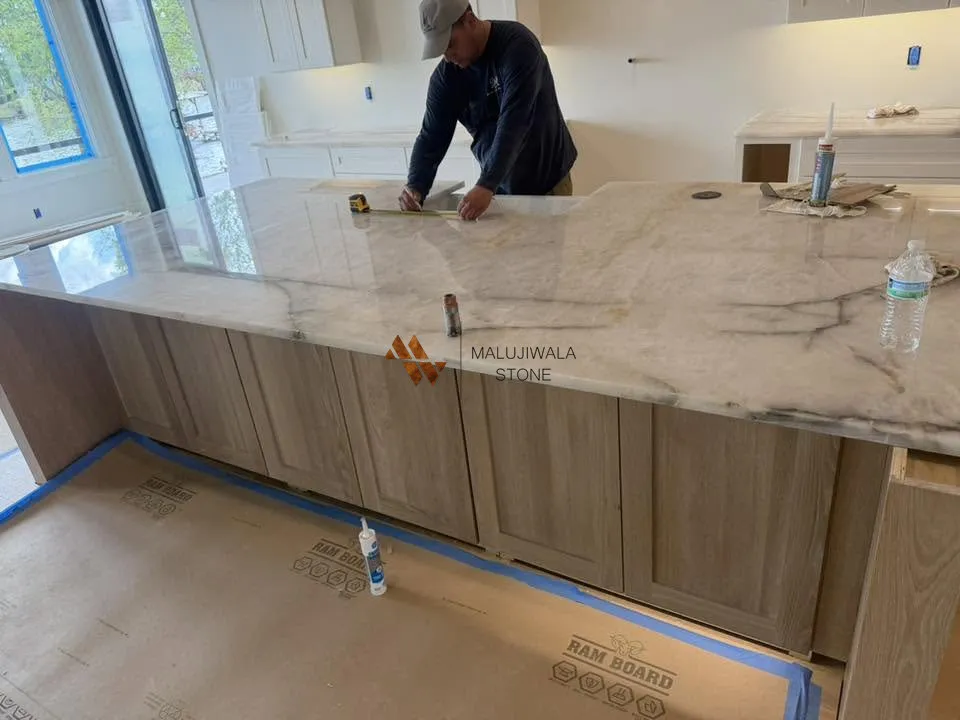
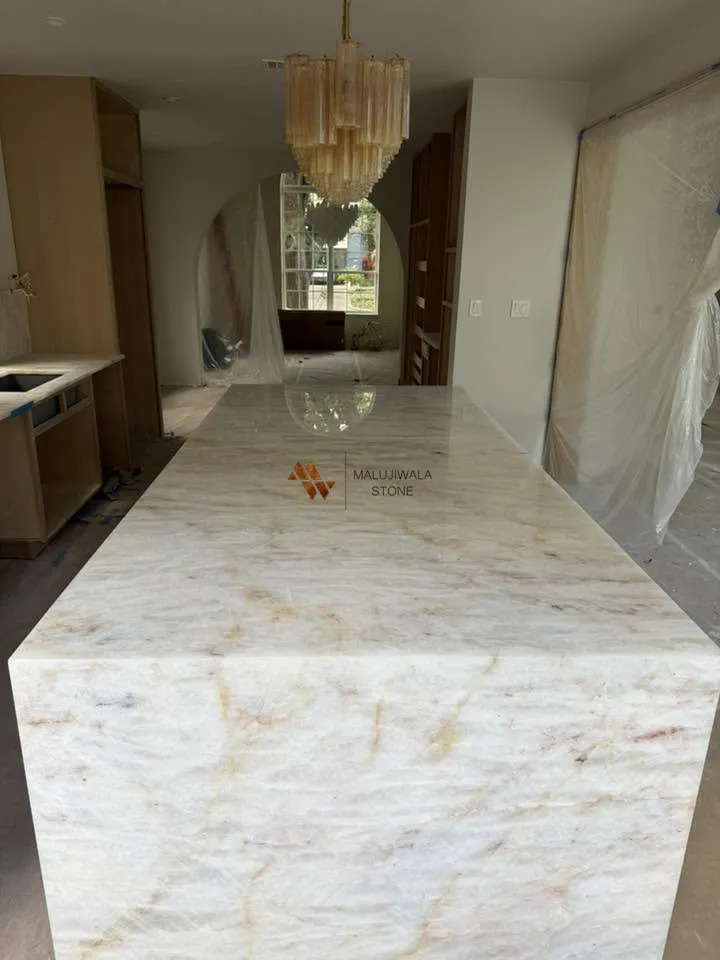
In the photographs below it runs as islands, perimeter countertops and full-height backsplashes, where a continuous run of the same soft veining does most of the design work on its own.
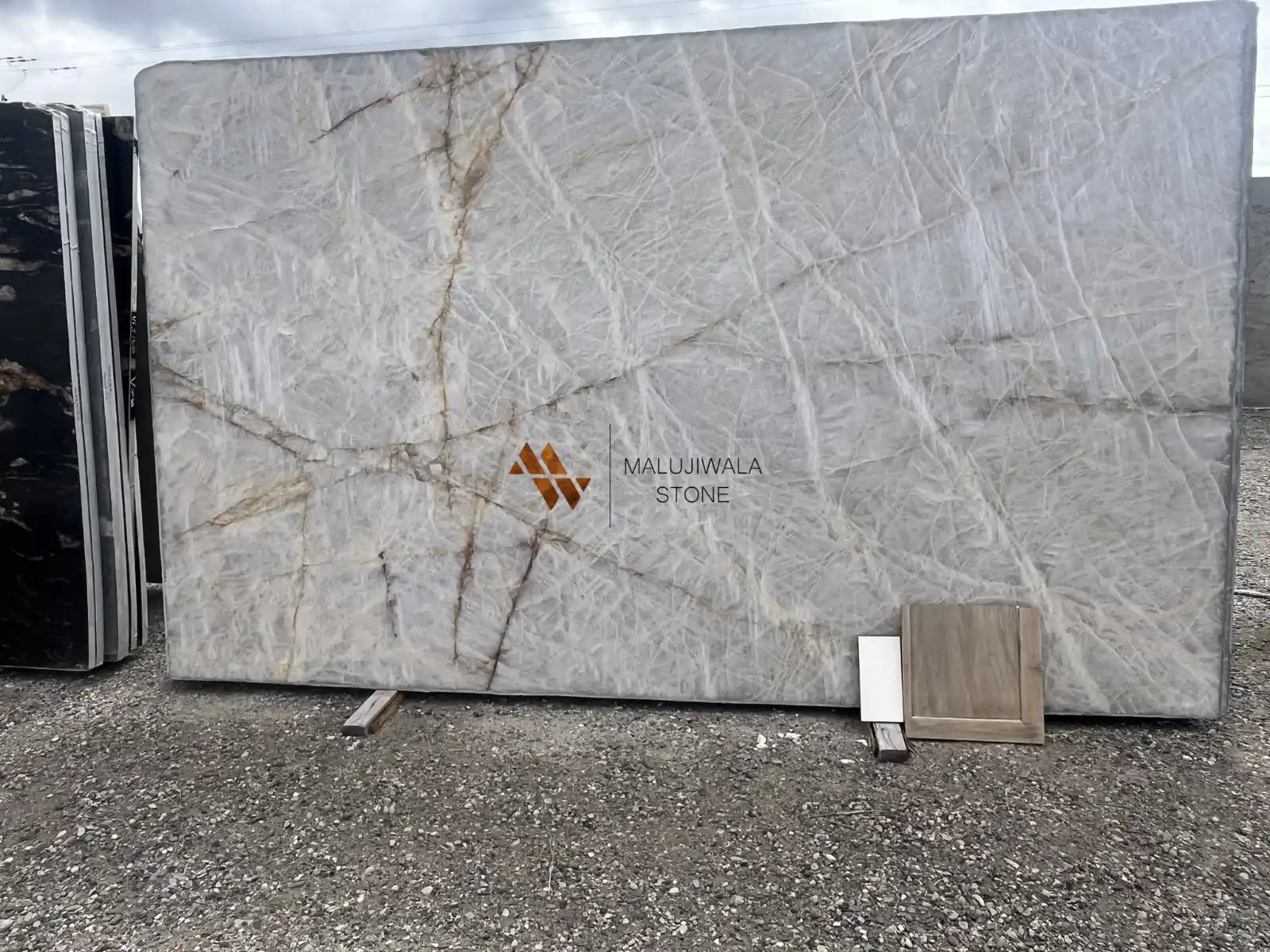
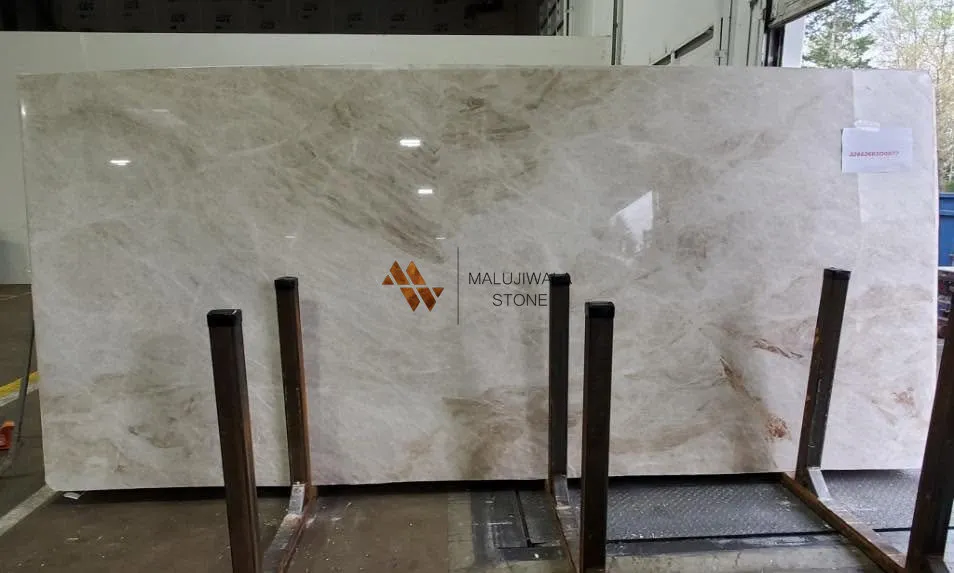
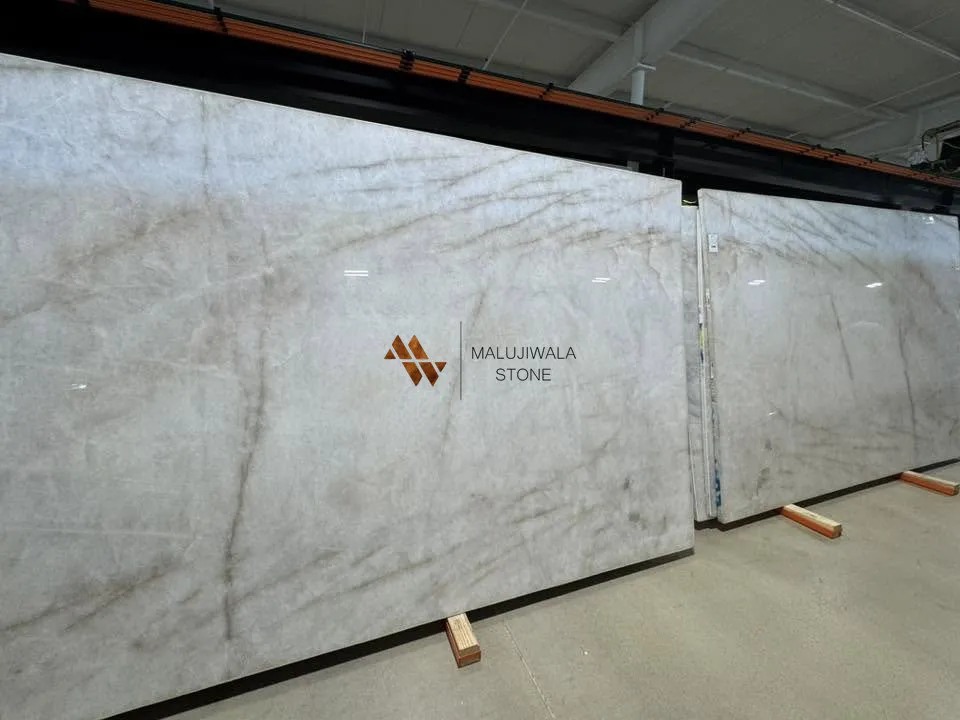
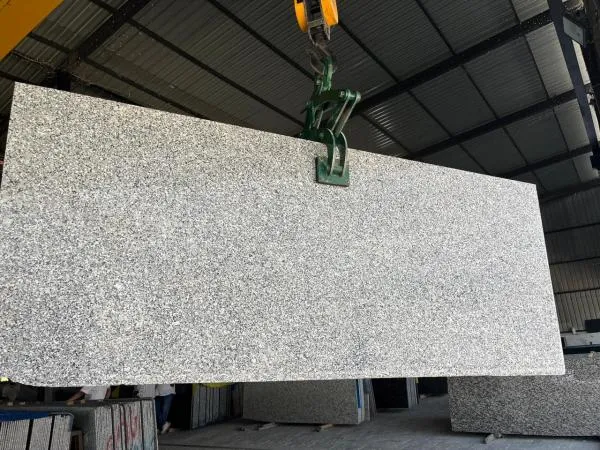
Cristallo is a white-to-silver quartzite with a glassy, crystalline depth. Gray and soft gold veins cross the slab in long, open lines — you can see them in the full slab at the top of this page — so no two runs of countertop look quite the same.
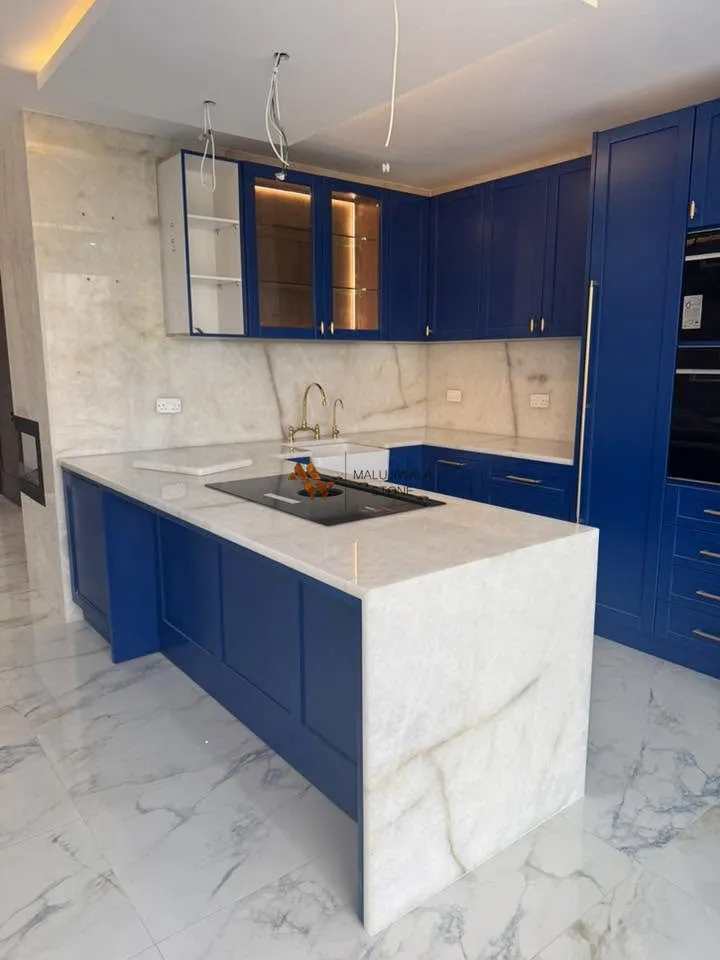
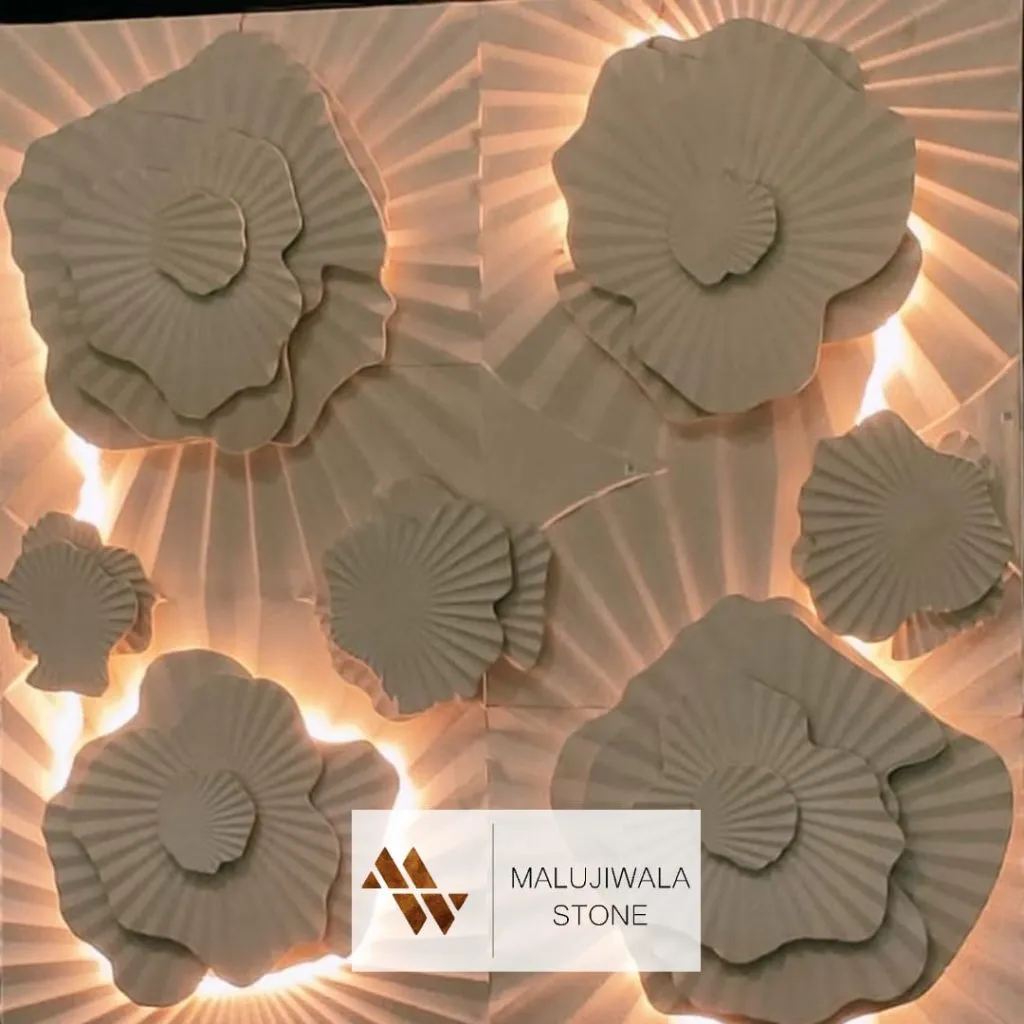
It is known for its translucency. Much Cristallo lets light pass through, which is why it is so often backlit in bars, feature walls and statement islands. If backlighting is part of your plan, tell us at the start so the slab can be chosen with that in mind.
It is just as convincing against deep navy cabinetry, as in the kitchen pictured, as it is against warm white oak. The stone brings the light; the cabinets decide whether it reads crisp or soft.
Both are quartzites, so the choice is about mood, not performance. Taj Mahal warms a room and forgives it; Cristallo brightens it and asks for attention.
| Quality | Taj Mahal | Cristallo |
|---|---|---|
| Temperature | Warm | Cool |
| Ground color | Cream, taupe and soft gray | White to silver-gray |
| Veining | Soft and cloud-like, low contrast | Long gray and gold lines, more contrast |
| Mood | Calm, quiet, easy to live with | Bright, crisp, gallery-like |
| Cabinets | White, cream, sage, walnut | Navy, charcoal, white oak, high gloss |
| Metals | Brass, bronze, warm nickel | Polished nickel, chrome, matte black |
| Where it shines | Family kitchens, primary baths | Statement islands, bars, feature walls |
Quartzite starts life as sandstone. Heat and pressure fuse its quartz grains into one of the hardest natural stones used for countertops. Here is how it compares with the two surfaces it is most often weighed against.
| Quality | Quartzite | Marble | Engineered quartz |
|---|---|---|---|
| What it is | Natural stone, fused quartz grains | Natural stone, calcite-based | Factory-made, crushed quartz bound in resin |
| Lemon, wine, vinegar | True quartzite resists etching | Etches, leaving dull marks | Resists etching |
| Hot pans | Tolerates heat well | Tolerates heat well | Resin can scorch or discolor |
| Sunlight | Color stays stable | Color stays stable | Resin can yellow in direct sun |
| Each slab | One of a kind | One of a kind | A repeating pattern |
| Sealing | Recommended, periodically | Needed, regularly | Not needed |
Some stones sold in the US as quartzite are really dolomite or marble, and they etch. We would rather you test our stone than take our word for it. Ask for a sample and try these three checks yourself.
Draw the edge of the sample firmly across a piece of glass. True quartzite is harder than glass and scratches it; marble and dolomite will not.
Leave a slice of lemon or a few drops of vinegar on the polished face for fifteen minutes, then wipe it off. A dull ring means the stone etches.
Put a few drops of water on the surface. If the stone darkens within a few minutes, it needs sealing — which tells you how to care for it, not whether it is quartzite.
Buying natural stone from overseas should not mean buying blind. Every order starts with the slabs you would actually receive, not a catalog photograph.
Quartzite for your inventory or a specific job, with photographs of each slab so you can plan the layout before it ships.
Help choosing between Taj Mahal and Cristallo for a scheme, and slabs matched to the veining your client signed off on.
Consistent stone across multiple kitchens or units, quoted as one order.
Which stone, roughly how many square feet or slabs, the thickness and finish you are specifying, and the city or US port it is going to.
We send photographs and video of the slabs we would ship, and can walk you through them on a live video call.
Price, lead time and payment terms are agreed for your order and confirmed in writing.
Packed in strapped wooden crates and photographed before sailing, then shipped by sea container to your US port.
Taj Mahal is sold as a quartzite and is widely treated as a true one in the US stone trade. Stone varies from block to block, though, so we encourage every buyer to test a sample: the glass, lemon and water tests on this page take about fifteen minutes.
Taj Mahal is warm: a cream-to-taupe greige with soft, cloud-like veining. Cristallo is cool: white to silver-gray, with long gray and gold veins and a crystalline, translucent depth. Taj Mahal suits calm, everyday kitchens; Cristallo suits statement islands, bars and feature walls.
Cristallo is known for its translucency and is often backlit. Translucency varies from slab to slab, so if a piece will be backlit, tell us at the start and the slab can be chosen for it.
No. Quartzite is a natural stone, quarried from the earth. Quartz countertops are engineered in a factory from crushed quartz bound with resin. Quartzite has natural, one-of-a-kind veining, and it is not affected by hot pans or sunlight the way resin can be.
Yes. Like most natural stone it has some porosity, so it should be sealed after installation and resealed from time to time. The water test tells you when: if a few drops darken the stone, it is time.
With warm water and a pH-neutral stone cleaner. Avoid bleach, ammonia and acidic or abrasive cleaners, which wear down the sealer. Quartzite is harder than steel, so use a cutting board: it protects your knives more than the stone.
We send photographs and video of the specific slabs we would ship, and can walk you through them on a live video call. Small samples can be sent by courier for the glass, lemon and water tests.
Fabricators, stone yards, designers, architects and builders. Tell us about the project and we will quote for it.
Per project. The price depends on the slabs you select, the quantity, the thickness and the finish. Send your approximate square footage and we will quote.
Slabs travel by sea container, packed in strapped wooden crates that are photographed before sailing. Freight is quoted separately, and onward trucking from the port is usually arranged by your customs broker or freight forwarder.
Send the details listed here and we will come back with photographs of available slabs and a quote for your project. Messages sent during the US evening reach us in the morning India time, and most enquiries are answered the same day.
Walk through the actual Taj Mahal and Cristallo slabs on a live video call before anything is crated.