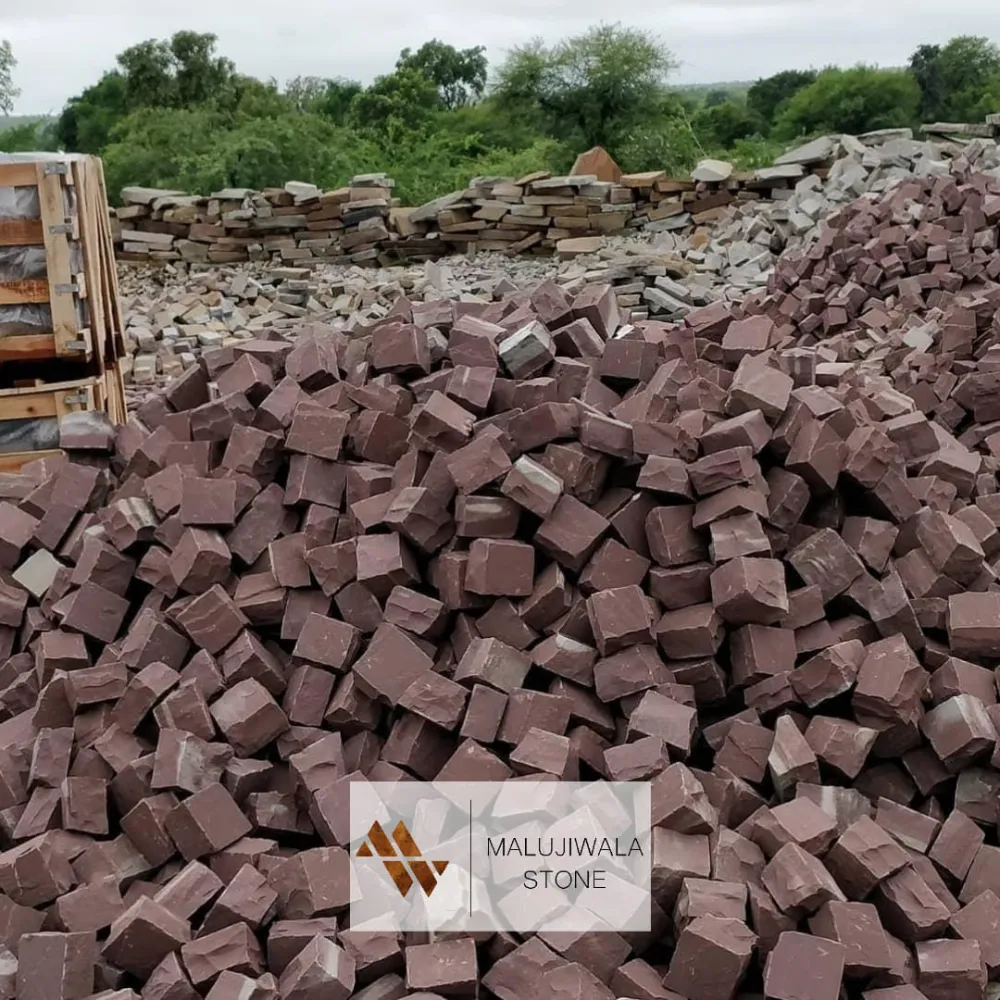
Chocolate Red Cobbles · Red Mandana
Acid-proof, in cobble form.
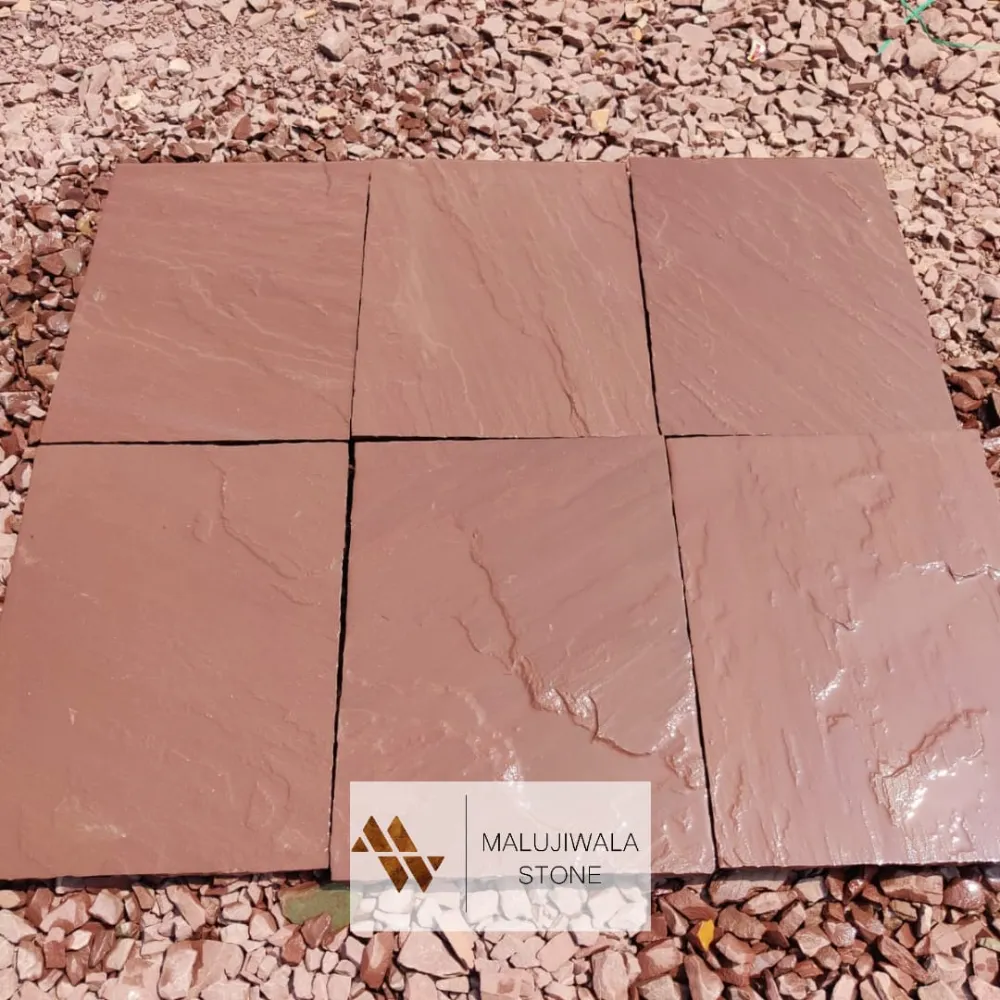
Red Mandana cobbles are resilient, resistant to cracks, and offer an acid-proof surface. Cut from the same stone we supply to dairy plants and chemical works — now for your driveway.
Chocolate Red Cobbles · Red Mandana
Red Mandana cobbles are resilient, resistant to cracks, and offer an acid-proof surface. Cut from the same stone we supply to dairy plants and chemical works — now for your driveway.
Red cobbles exhibit durability, sleek design, and cost-effectiveness. The red stone cobbles are resilient, resistant to cracks, and offer an acid-proof surface — and can be intricately shaped as desired.
About the Stone
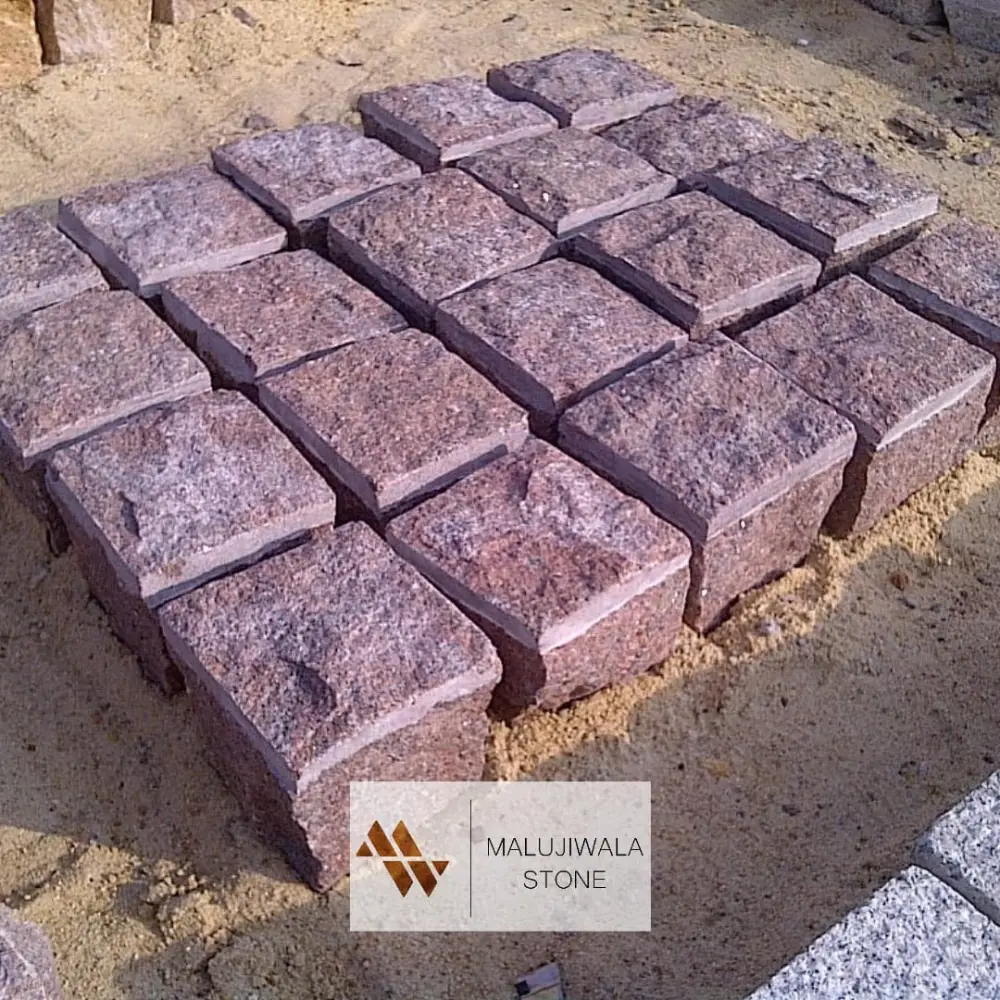
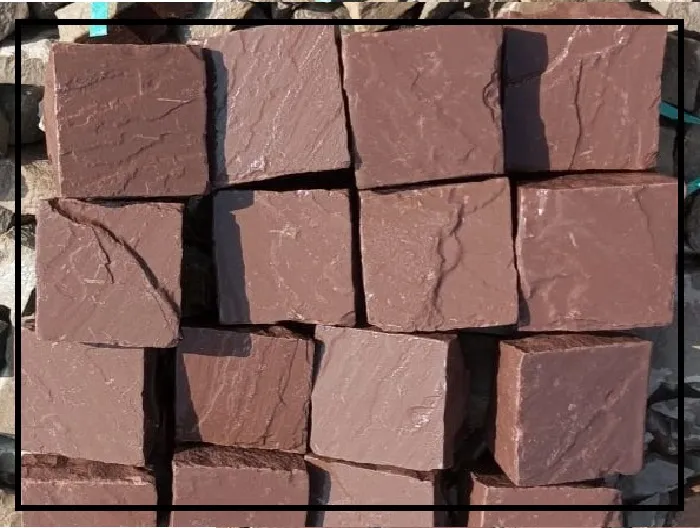
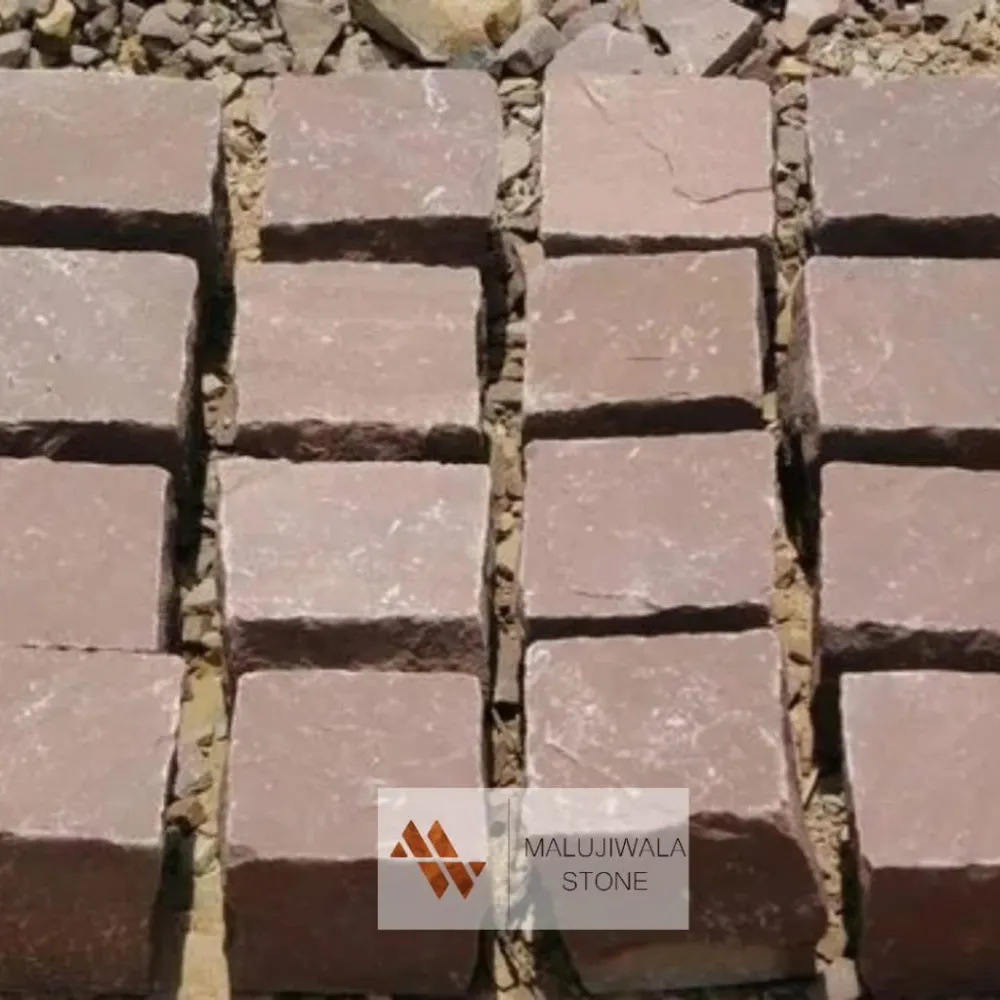
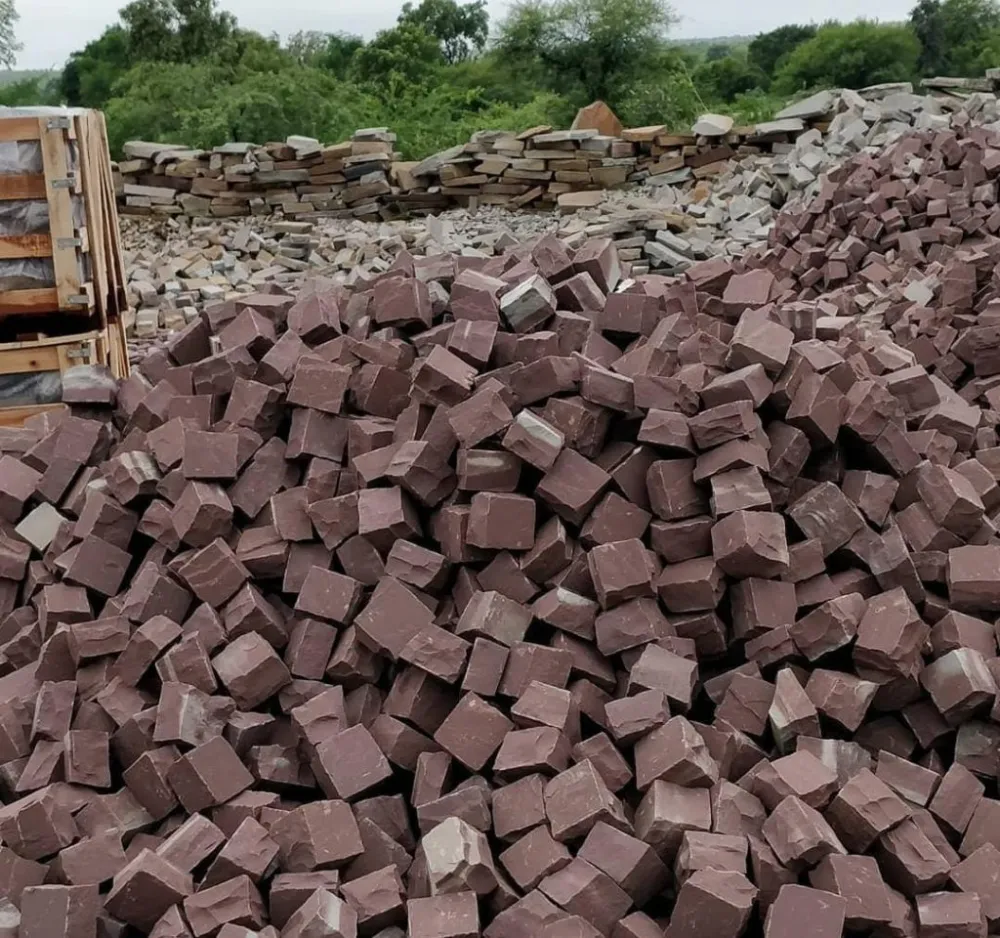
Chocolate Red Cobbles — cut from our Red Mandana Stone — exhibit durability, sleek design, and cost-effectiveness. The red stone cobbles are resilient, resistant to cracks, and offer an acid-proof surface. These cobblestones can be intricately shaped as desired.
The acid-proof property is not marketing: it occurs naturally in the stone, which is why Red Mandana is the industry benchmark for flooring in dairy plants, pharma API units, bottling plants, battery manufacturing and chemical industries across India. Spill acid on it and it will not react. At cobble scale that translates into a driveway surface genuinely indifferent to whatever leaks out of a car.
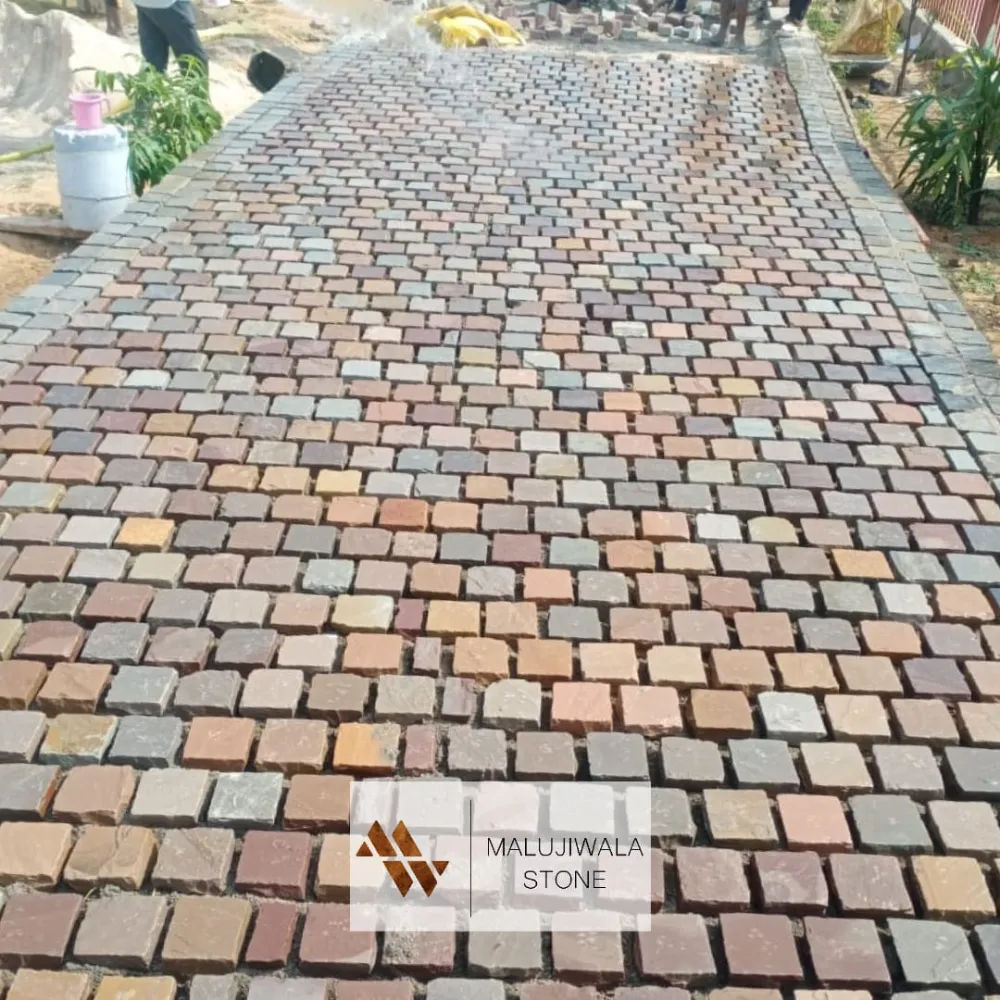
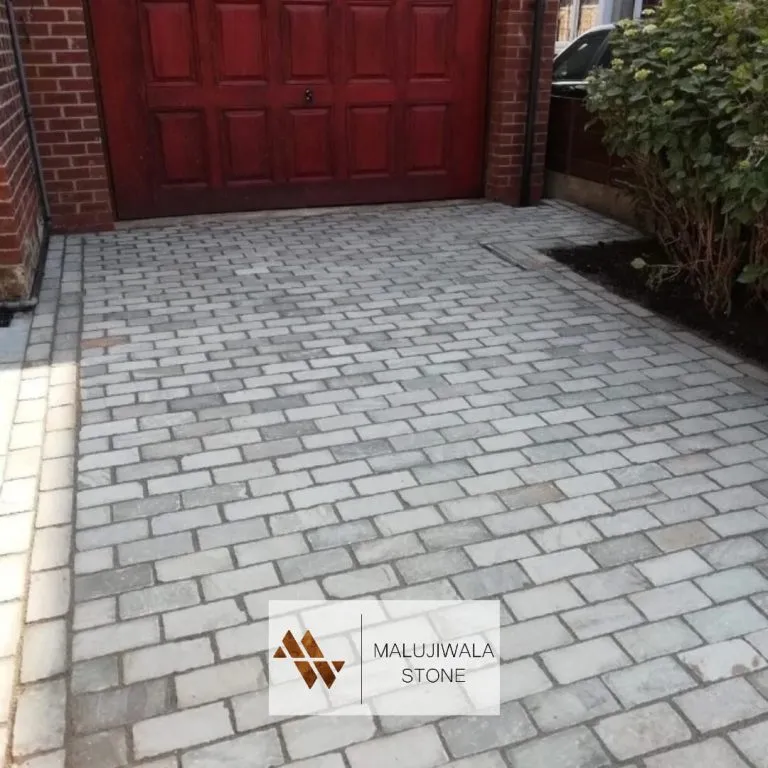
Due to their natural origin, structures constructed using this stone maintain their integrity over numerous years. These Mandana Red Sandstone cobbles are used for pathway paving, driveway paving, street scaping and public roads. We are India’s largest manufacturer of Red Mandana, with a unit in Kota Ramganjmandi dedicated entirely to it.
Standard sizes 4×4×3, 4×4×2, 5.5×5.5×3 and 8×8×3 inches — and can be customised. Coverage per 1,000 kg is roughly 40 m² divided by thickness in cm.
Cobbles live or die on the base beneath them. A few honest notes that will save you real trouble later.
The base is everything. Cobbles are rigid units — unlike gravel or block paving they cannot shift and settle gracefully. Once a cobble surface sinks or heaves, the whole thing looks wrong and the only real fix is lifting it and starting again. For a footpath, excavate to roughly 200mm and lay 100mm of compacted MOT Type 1. For a driveway, excavate 250–300mm and lay a minimum 200mm sub-base — 250mm on clay soil. Compact in layers of no more than 100mm at a time.
Full mortar bed — never spot-bed a driveway. Every cobble must sit on a full semi-dry mortar bed of 30–40mm, mixed around 4:1 sharp sand to cement. Spot-bedding on five dabs is the single most common cause of failed cobble driveways in the UK. Set each unit by hand and tap down with a rubber mallet.
Leave a finger-width joint. Natural split cobbles vary in size by their nature — they are not sawn to identical dimensions like concrete block paving. Trying to butt them tight is next to impossible and looks worse, not better. A finger-width joint (roughly 8–10mm on a driveway, 5–8mm on a border) is the trade guide. Stagger the perpendicular joints.
Point them properly. A brush-in resin jointing compound gives the most durable, weed-resistant result and leaves the stone face clean. Traditional sand-cement pointing is cheaper in materials but far slower, and if the mix is too wet it will stain the stone permanently. Whichever you choose, keep the surface swept clean as you go.
Order 10% extra. Standard for any natural stone — covers cuts, breakage and future repairs. Keep the offcuts.
Acid-proof and crack-resistant — indifferent to fluid spills.
Warm red paths that hold their colour and their integrity for years.
Used for street scaping and making public roads across India.
Where chemical spillage is a real possibility — the benchmark stone.
Care & Maintenance
Once laid and cured, Chocolate Red Cobbles need almost nothing from you. An annual jet wash keeps them looking fresh — but keep the pressure low, under about 1500 PSI, or you will blast the jointing straight out and create the very problem you were trying to avoid.
Sweep with a soft broom and wash with a mild, pH-neutral detergent. Spot-clean spills rather than letting them sit. Avoid acidic cleaners: they can etch natural stone, and on limestone-based cobbles the damage is permanent. If a joint washes out over the years, top it up rather than leaving it — open joints let water under the bed and that is how movement starts.
One genuine advantage here: because Red Mandana is naturally acid-proof, it tolerates the acidic substances that etch other natural stone. That said, we still recommend pH-neutral cleaning as good practice — the acid resistance is your insurance policy, not your cleaning method.
Yes, and naturally — not by any coating or treatment. Red Mandana is the benchmark flooring stone for dairy plants, pharma API units, bottling plants and chemical industries across India precisely because spilled acid does not react with it. In a driveway that means fluid spills are a non-issue.
Another name for Red Mandana Stone. It is also called Lal Mandana, particularly in Gujarat. Malujiwala Stone is the largest manufacturer of it in India.
Machine cut, hand cut and tumbled. Tumbled edges give a softened, aged look that suits period properties and cottage gardens; machine-cut gives crisp, contemporary lines.
Yes. Mandana Red Sandstone cobbles are used for pathway paving, driveway paving, street scaping and making public roads. They are resilient and resistant to cracks under sustained traffic.
Standard sizes are 4x4x3, 4x4x2, 5.5x5.5x3 and 8x8x3 inches, and they can be customised. These cobblestones can also be intricately shaped as desired.
Wooden crates at 1,100–1,250 kg each, 22–24 crates per container, 27.5 MT gross in a 20ft container. Loose stuffing is also possible.
Tell us the thickness, quantity and destination — we'll come back with pricing and confirmed lead times. No agents in between.
These are the alternatives buyers most often weigh against Chocolate Red Cobbles.
Speak to our team for pricing, samples, MOQ details and shipping options to your country. Direct from India since 1996.