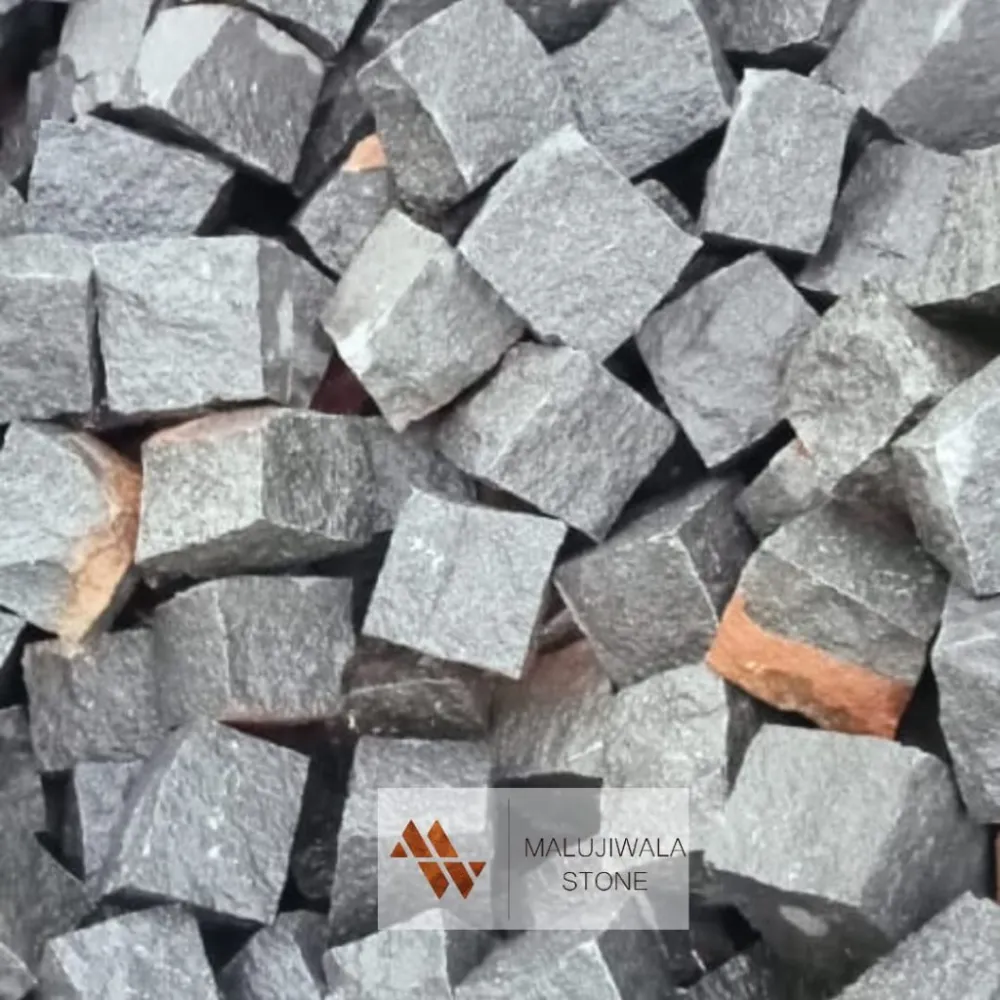
Granite Cobbles · Grey · Black · Red · Yellow
The toughest stone there is.
Hand-chiselled granite cobbles in grey, black, red and yellow — tapered top to bottom for the perfect setting. The hardest-wearing natural paving on the market.
Granite Cobbles · Grey · Black · Red · Yellow
Hand-chiselled granite cobbles in grey, black, red and yellow — tapered top to bottom for the perfect setting. The hardest-wearing natural paving on the market.
Granite cobbles are hand-chiselled natural paving stones, tapered from top to bottom surface which provides the perfect setting. Available in grey, black, red and yellow.
About the Stone
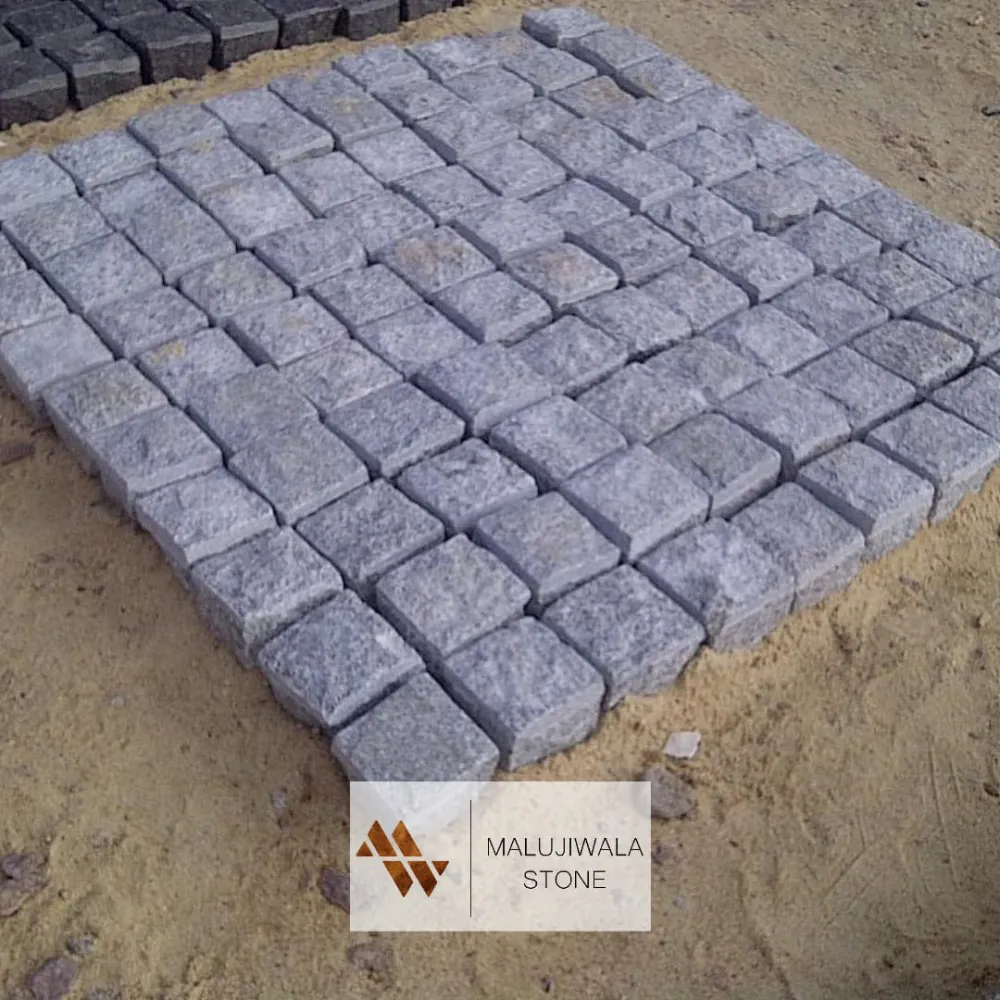
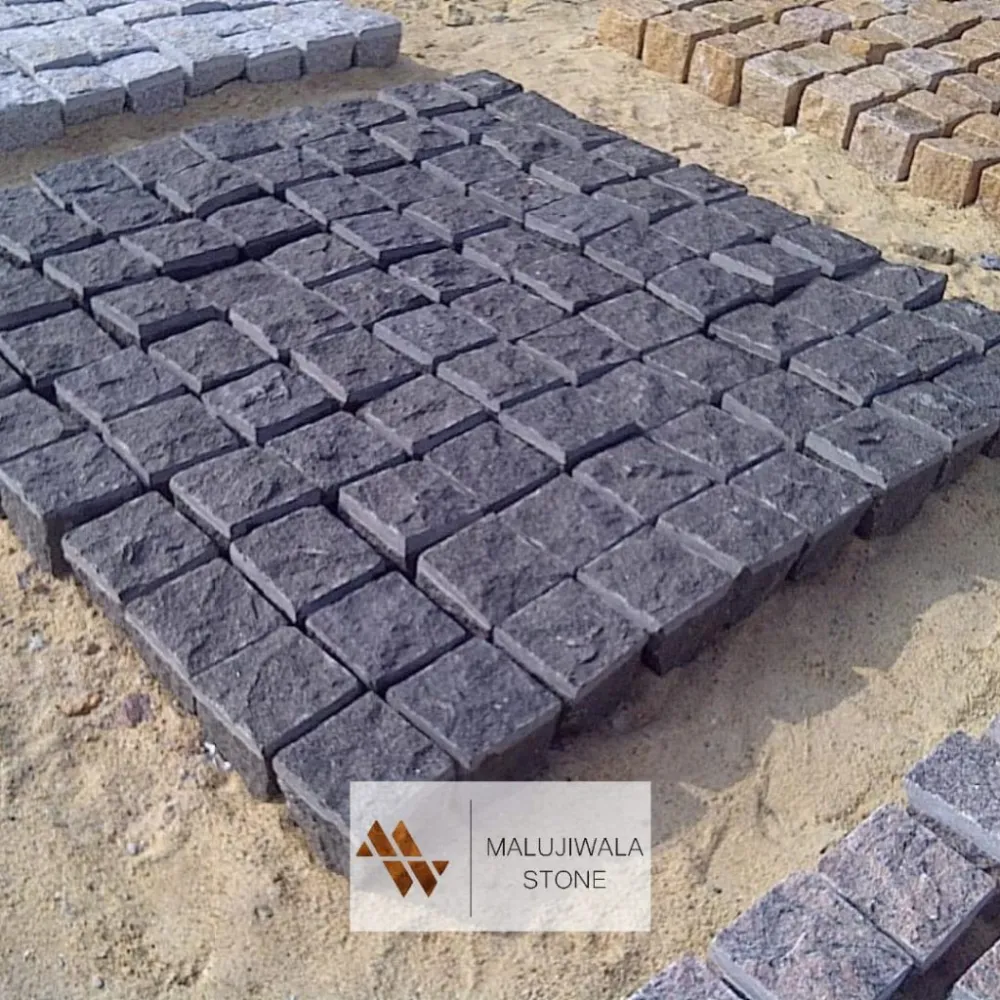
Granite Cobbles in Black, Grey, Pink and Yellow are hand-chiselled natural paving stones. Each cobble is tapered from top to bottom surface, which provides the perfect setting — that taper is what lets the mortar key properly under each unit and is a mark of correctly produced granite setts.
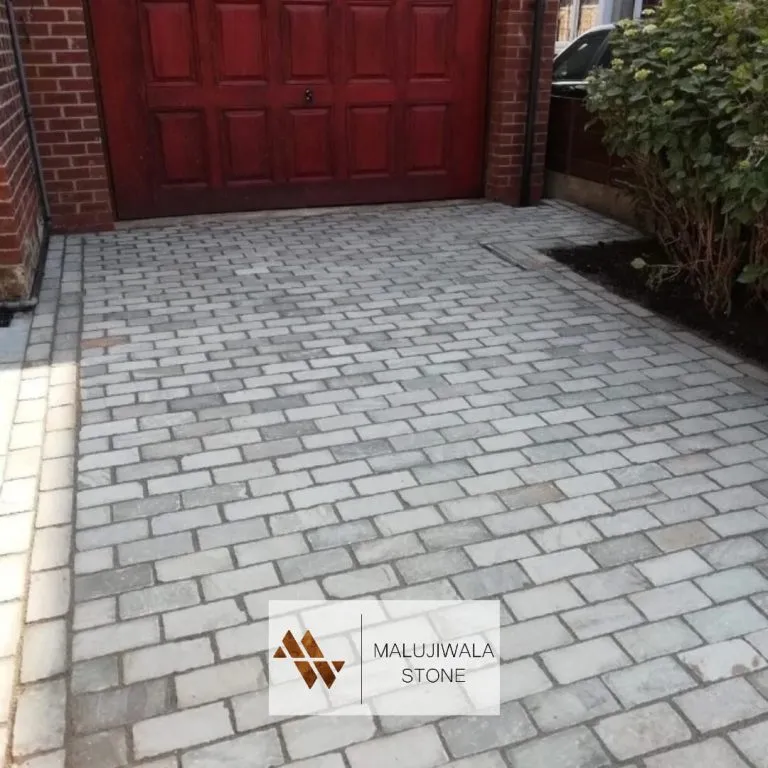
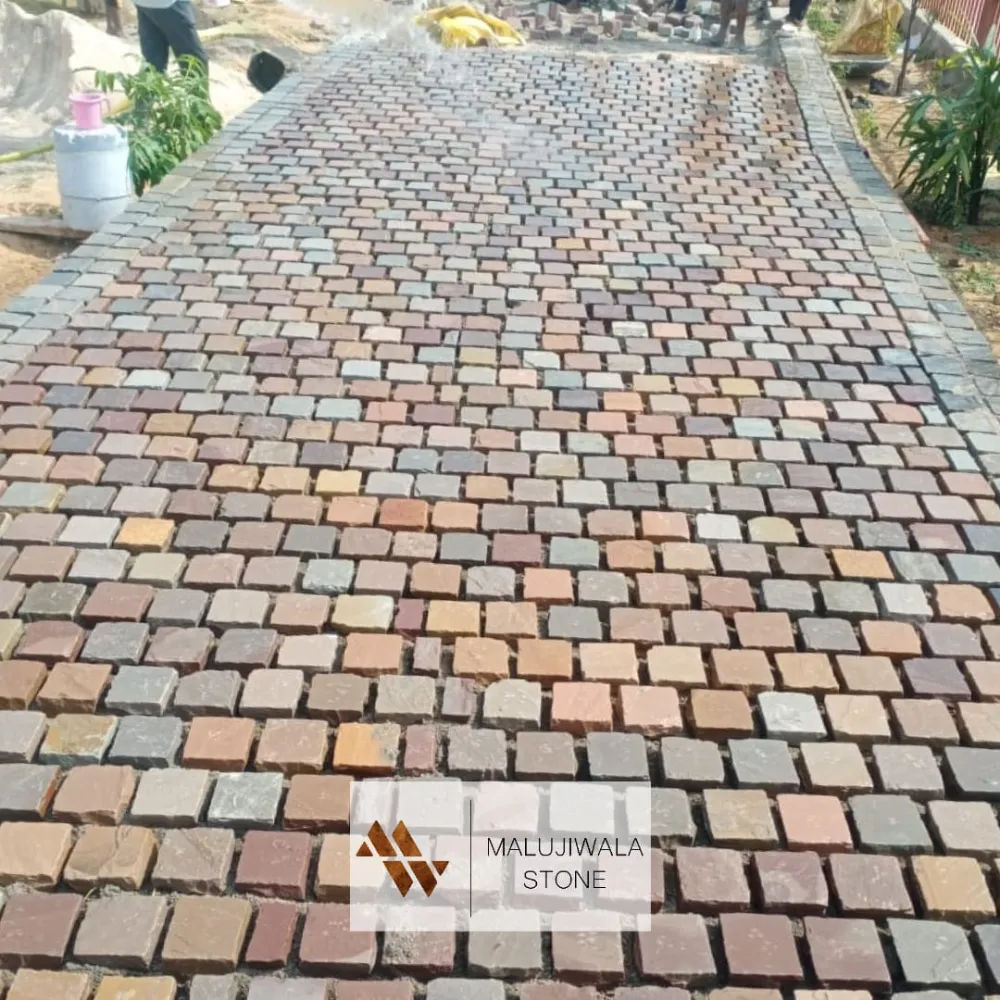
Granite setts and sandstone setts are used on low, medium and heavy traffic areas as landscaping stones. Cobblestone pavers are laid in different patterns which produce anything from a modern to an ancient look. Granite is the toughest natural stone on the market: a well-laid granite sett driveway will last fifty years or more without issue.
Malujiwala Stone Company, India — your destination for a captivating assortment of natural stone pavers. Among our offerings, the Grey Granite Cobblestone stands as a pure emblem of nature’s artistry, finding purpose in pavement roads, streets, driveways, and charming cobblestone pavers. Our global reach encompasses the supply of Black, Yellow, Pink and Grey cobblestones. The standard dimension is the classic 10×10cm, and we seamlessly process custom sizes to align with specific requirements.
Standard sizes 4×4×4, 4×4×2, 6×6×4 and 8×4×4 inches, plus the classic 10×10cm. Coverage per 1,000 kg is 40 m² divided by thickness in cm — use the middle thickness for the calculation. Pieces per 1,000 kg = 400,000 ÷ (L×B×H) in cm.
Cobbles live or die on the base beneath them. A few honest notes that will save you real trouble later.
The base is everything. Cobbles are rigid units — unlike gravel or block paving they cannot shift and settle gracefully. Once a cobble surface sinks or heaves, the whole thing looks wrong and the only real fix is lifting it and starting again. For a footpath, excavate to roughly 200mm and lay 100mm of compacted MOT Type 1. For a driveway, excavate 250–300mm and lay a minimum 200mm sub-base — 250mm on clay soil. Compact in layers of no more than 100mm at a time.
Granite is unforgiving of a bad base. A well-laid granite sett driveway lasts 50+ years. A poorly prepared one starts shifting within two winters — and because granite itself never fails, every problem you will ever have with it comes from underneath. Do not economise on excavation depth.
Full mortar bed — never spot-bed a driveway. Every cobble must sit on a full semi-dry mortar bed of 30–40mm, mixed around 4:1 sharp sand to cement. Spot-bedding on five dabs is the single most common cause of failed cobble driveways in the UK. Set each unit by hand and tap down with a rubber mallet.
Leave a finger-width joint. Natural split cobbles vary in size by their nature — they are not sawn to identical dimensions like concrete block paving. Trying to butt them tight is next to impossible and looks worse, not better. A finger-width joint (roughly 8–10mm on a driveway, 5–8mm on a border) is the trade guide. Stagger the perpendicular joints.
Point them properly. A brush-in resin jointing compound gives the most durable, weed-resistant result and leaves the stone face clean. Traditional sand-cement pointing is cheaper in materials but far slower, and if the mix is too wet it will stain the stone permanently. Whichever you choose, keep the surface swept clean as you go.
Order 10% extra. Standard for any natural stone — covers cuts, breakage and future repairs. Keep the offcuts.
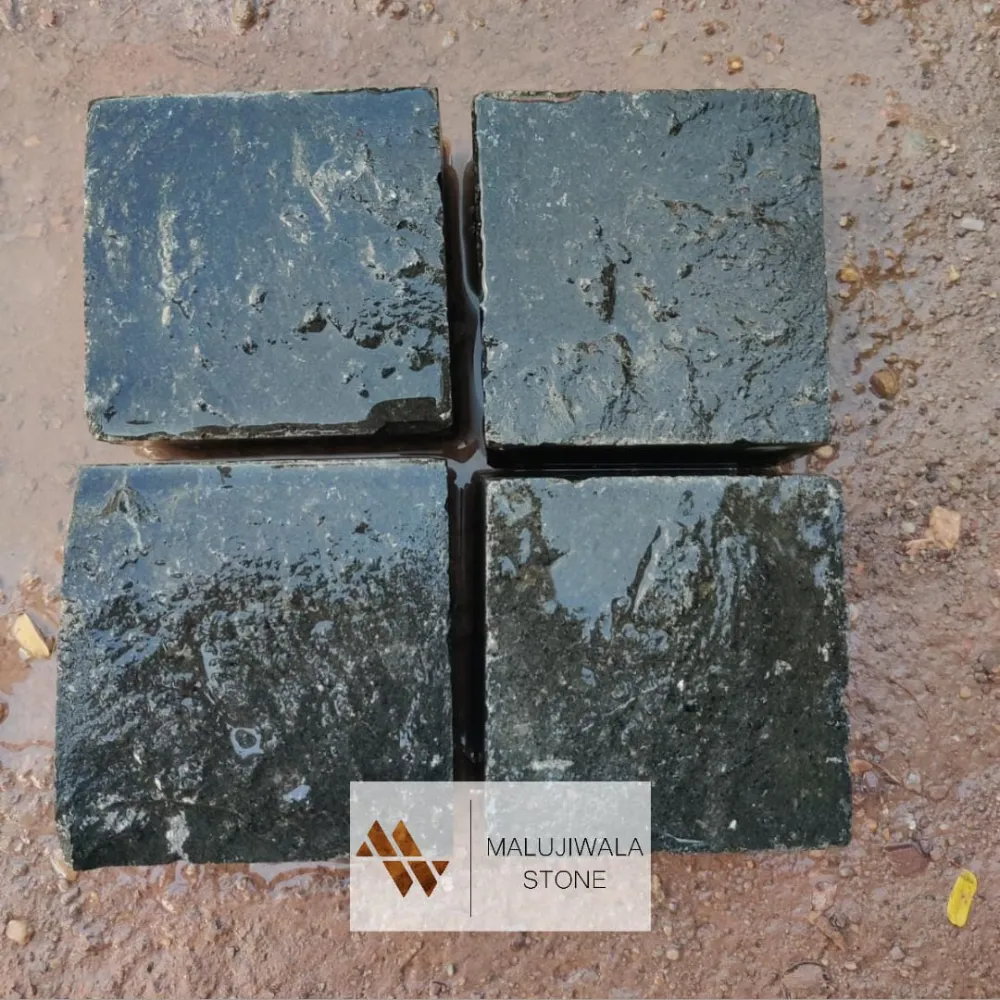
The toughest option — black granite especially suits big driveways.
Pavement roads and streets — low, medium and heavy traffic areas.
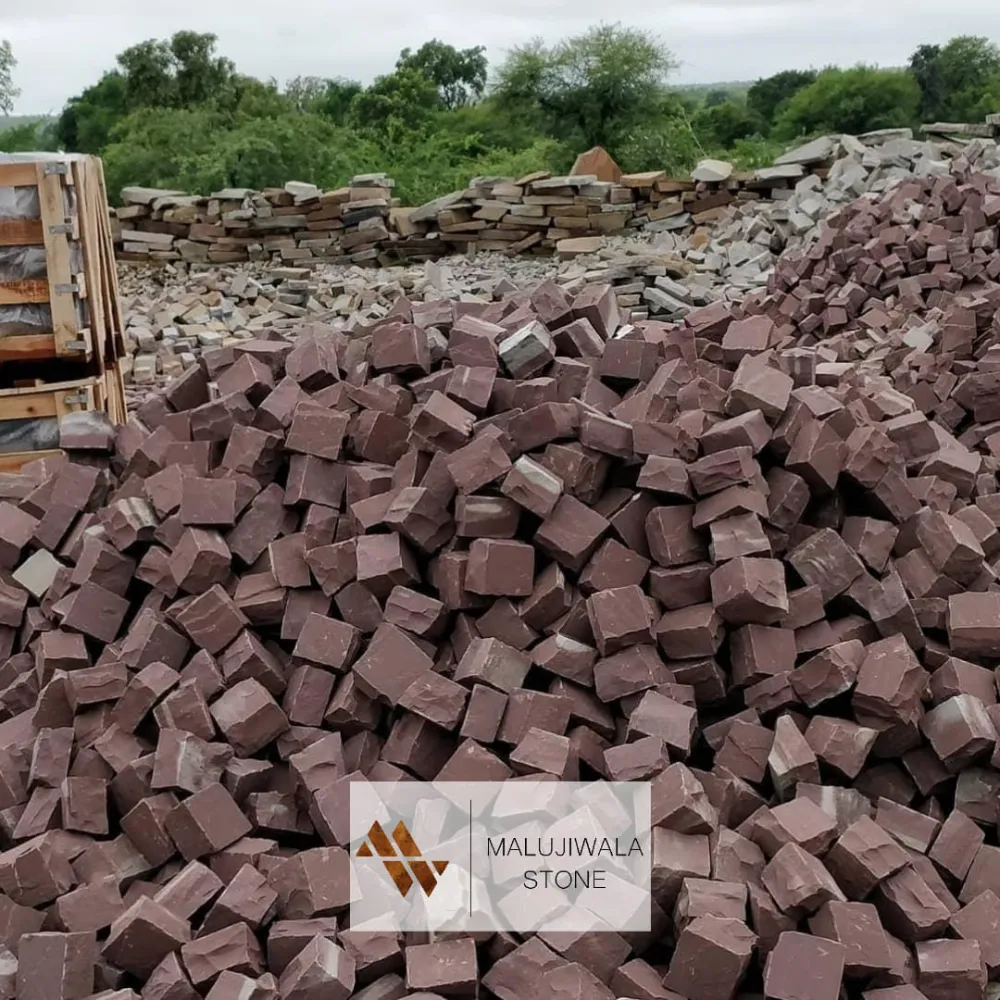
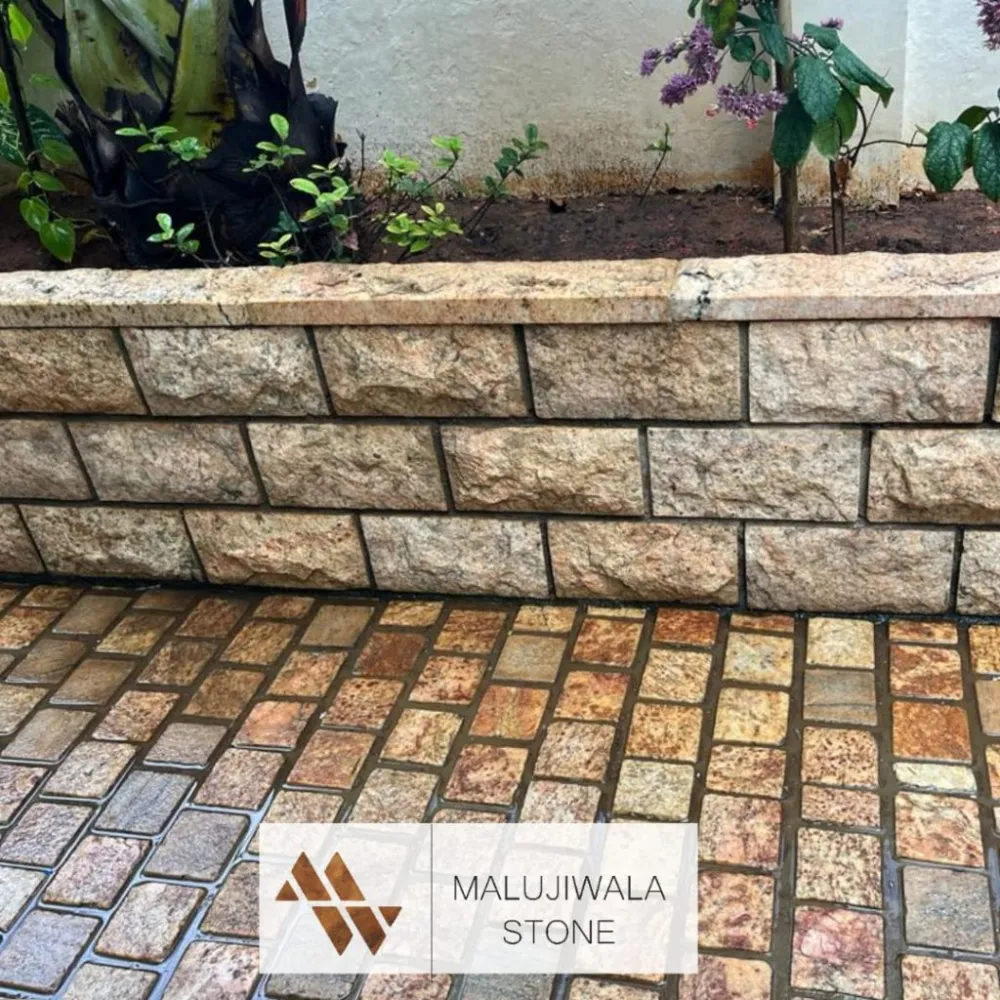
Red and yellow granite for highly decorative, high-contrast schemes.
Angular, hard-wearing borders that frame softer paving.
Care & Maintenance
Once laid and cured, Granite Cobbles need almost nothing from you. An annual jet wash keeps them looking fresh — but keep the pressure low, under about 1500 PSI, or you will blast the jointing straight out and create the very problem you were trying to avoid.
Sweep with a soft broom and wash with a mild, pH-neutral detergent. Spot-clean spills rather than letting them sit. Avoid acidic cleaners: they can etch natural stone, and on limestone-based cobbles the damage is permanent. If a joint washes out over the years, top it up rather than leaving it — open joints let water under the bed and that is how movement starts.
Granite resists most stains, but prolonged contact with acids or strong chemicals can etch the surface — spot-clean spills rather than leaving them. Once cured, granite setts need almost nothing beyond an annual low-pressure wash.
Grey, black, red and yellow as standard — and pink to order. Grey is the most specified; black is popular for large driveways; red and yellow are chosen for decorative, high-contrast work. All are natural granite stone cobbles, not dyed.
Finish is a natural split top surface with all edges hand dressed, and a gradual top-to-bottom tapering that helps the mortar key under each unit. Standard sizes are 4x4x4, 4x4x2, 6x6x4 and 8x4x4 inch, plus the classic 10x10cm. Thickness options are 3-5cm, 4-6cm, 7-8cm and 8-10cm. Custom sizes are processed to specific requirements.
Coverage per 1,000 kg is 40 square metres divided by the thickness in cm — use the middle thickness for the calculation, for example 4cm. For piece counts, divide 400,000 by (L x B x H) in cm: a 10x10x10cm cobble gives approximately 400 pieces per 1,000 kg. Order 10% extra for cuts and breakage.
Wooden crates holding 1,100-1,250 kg each (1.1-1.25 tonnes), with 22-24 crates per container. A 20ft container holds 27.5 MT gross. Loose stuffing directly into the container is also possible.
For sheer durability, yes — granite is the toughest natural stone on the market and handles heavy traffic best. Sandstone cobbles are warmer in tone and often cheaper, and perform perfectly well on a correct base. The honest answer is that base preparation matters more than material choice: a well-laid sandstone drive outlasts a badly-laid granite one every time.
Yes — polished granite cobblestone gets slippery when wet and may cause slips or trips. This is why we supply a natural split top surface as standard. If you want a rough look made safely walkable, we customise the rough stones by levelling them. For polished finishes in high-traffic areas, apply a slip-resistant coating.
Tell us the thickness, quantity and destination — we'll come back with pricing and confirmed lead times. No agents in between.
These are the alternatives buyers most often weigh against Granite Cobbles.
Speak to our team for pricing, samples, MOQ details and shipping options to your country. Direct from India since 1996.