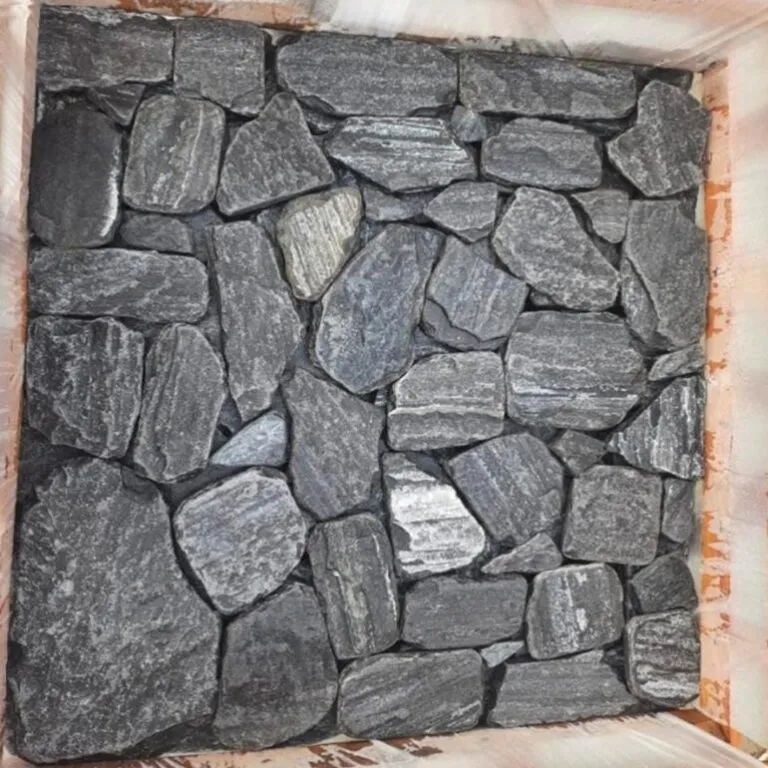
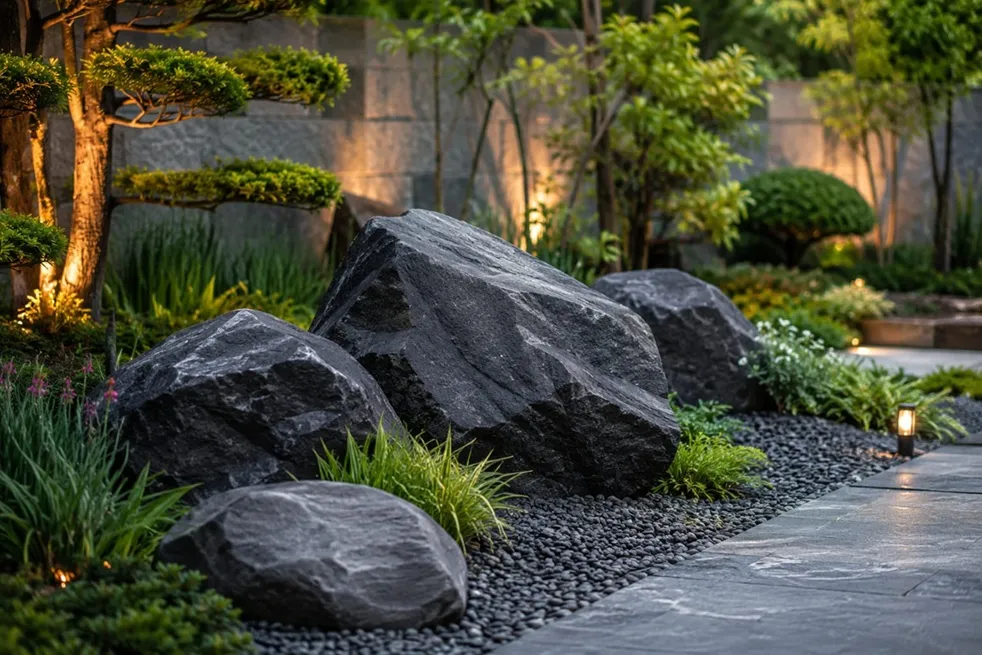
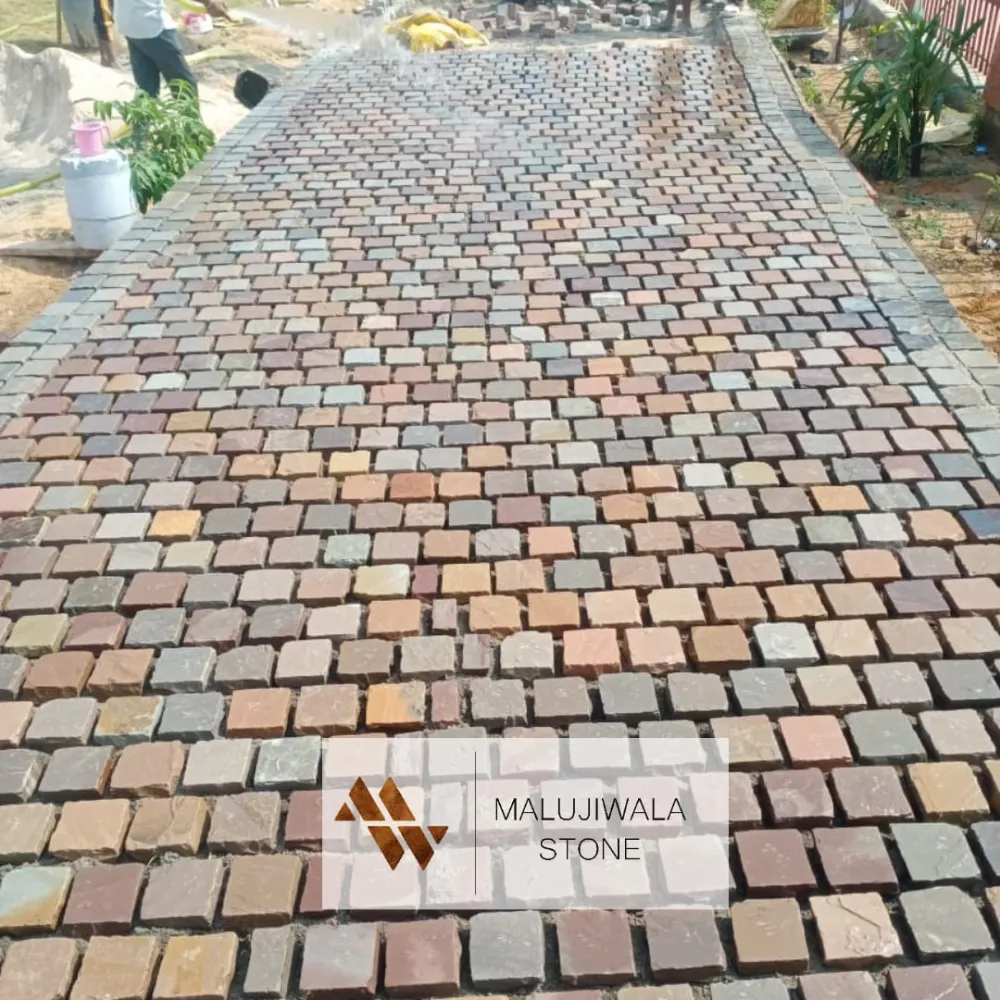
Variety One · Warm Buff
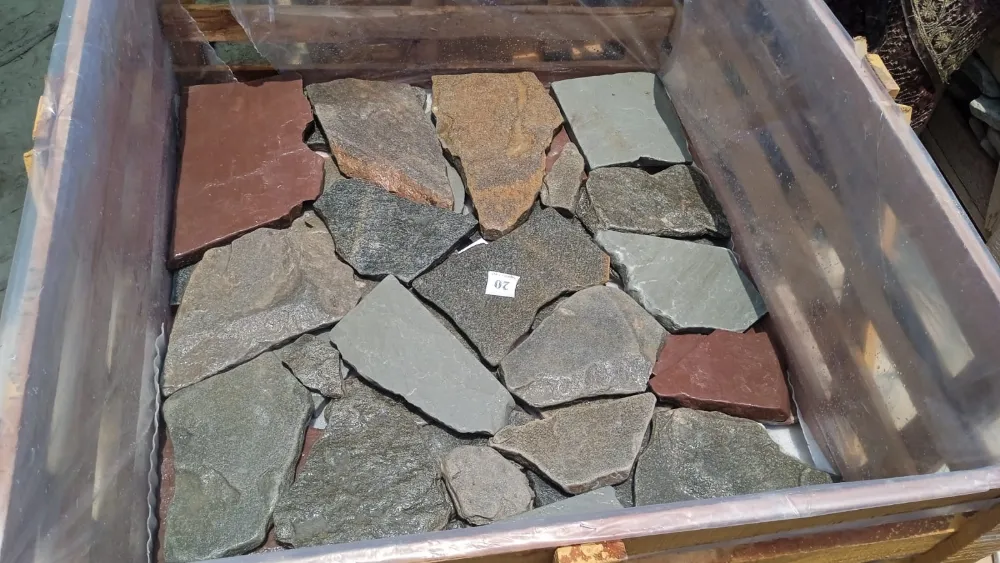
Jurassic Fieldstone RR Cladding
Irregular fieldstone laid with no repeating pattern, calibrated to 22–25mm on the back. Fixed with cement gauged with adhesive, like all four.
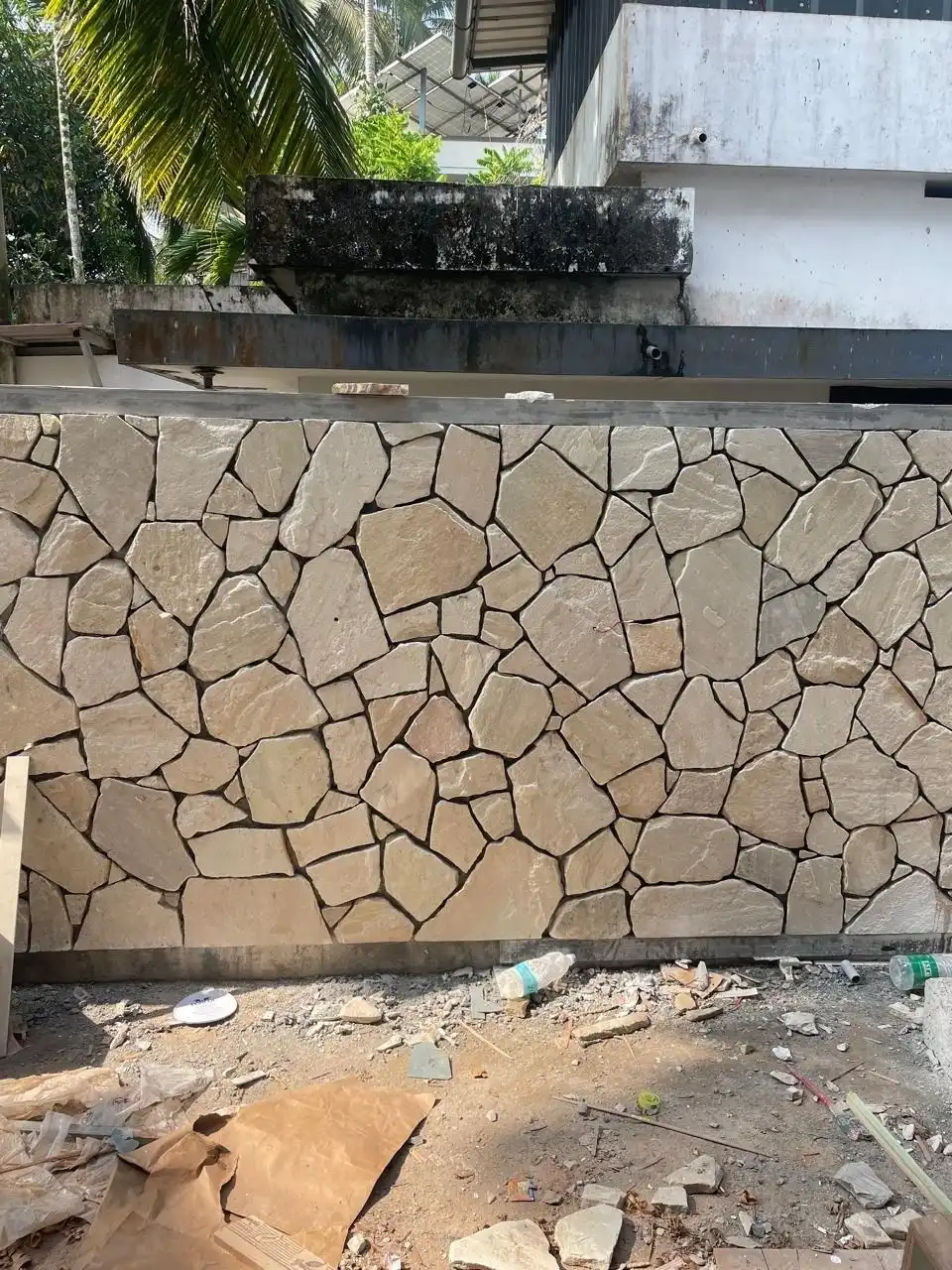
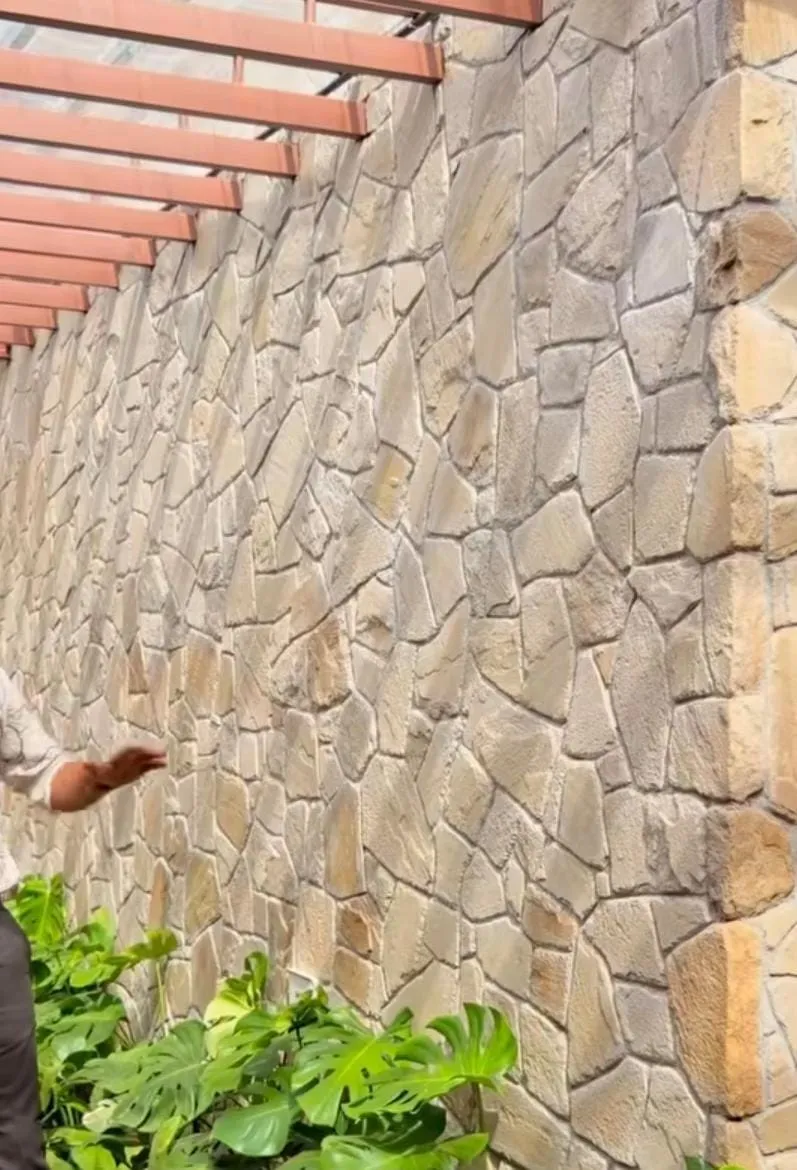
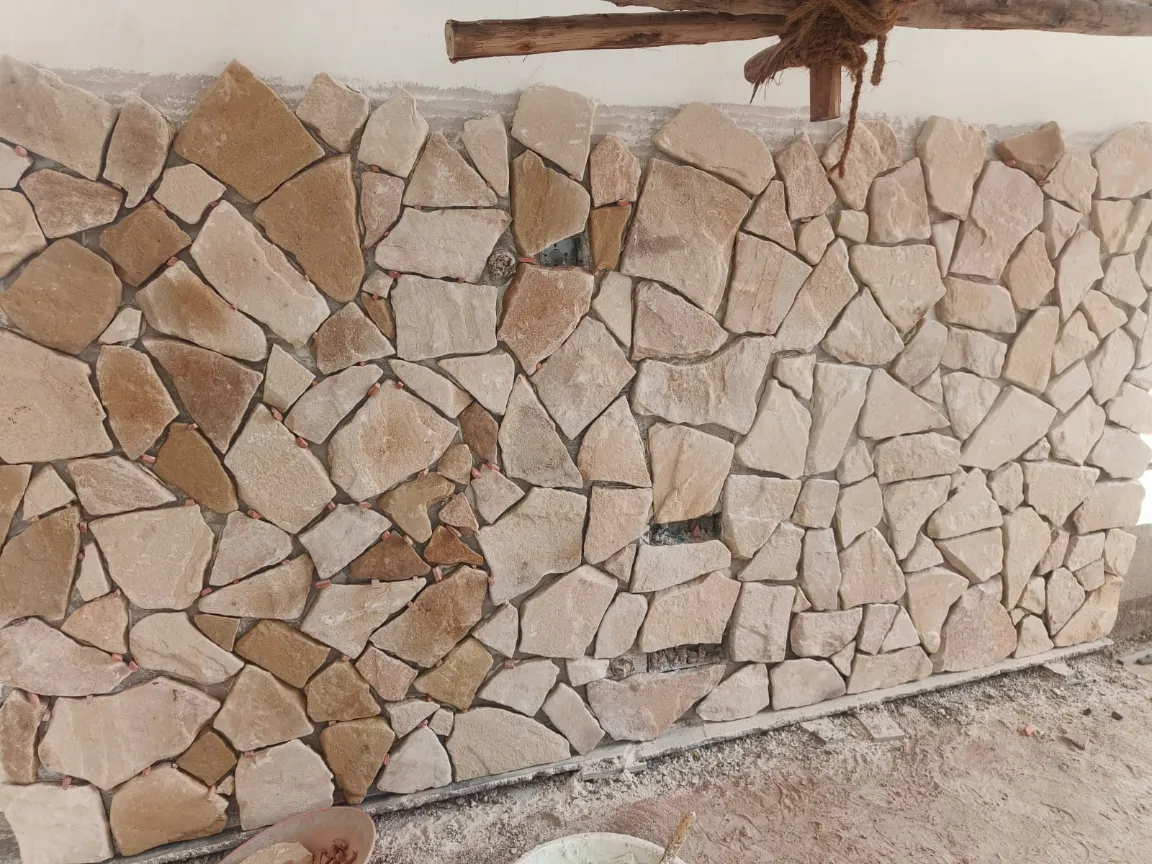
RR Cladding · Random Rubble · 22–25mm Calibrated
Four fieldstone claddings — every piece calibrated to 22–25mm. All the character of random rubble stone masonry, none of the weight. Fixed with cement gauged with adhesive, straight onto the wall, and we walk your fixing team through it.
Every random rubble stone below is supplied as 22–25mm calibrated stone — gauged to a consistent thickness so the face sits flat and the wall takes almost no extra load. Same format, same fixing method, four quite different faces. Tap any photo to open it full size, then use the arrows to move through the range.
Irregular fieldstone laid with no repeating pattern, calibrated to 22–25mm on the back. Fixed with cement gauged with adhesive, like all four.
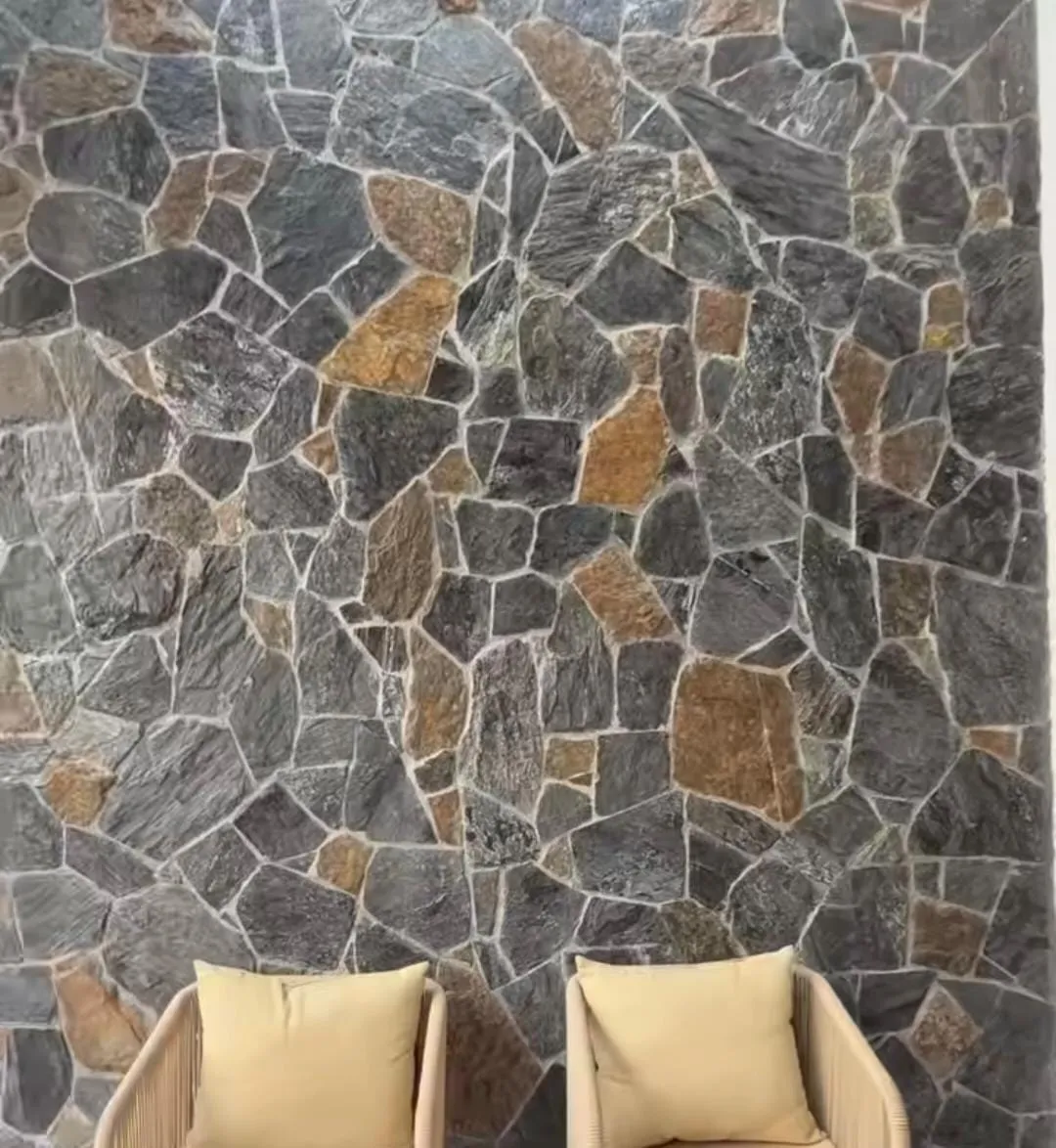
Deep charcoal and black through to weathered browns and rust. The darkest of the four — strong on modern elevations and feature walls.
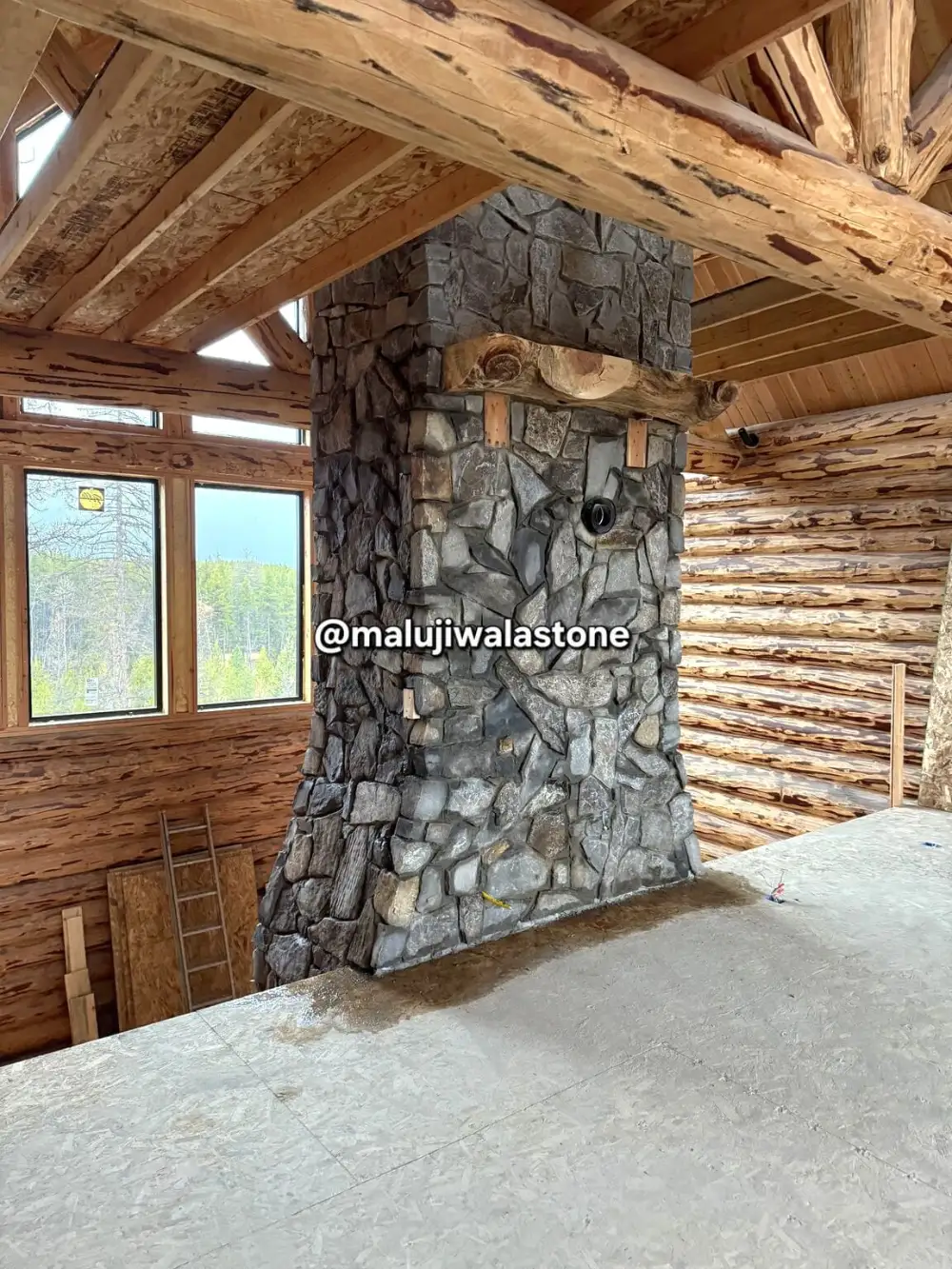
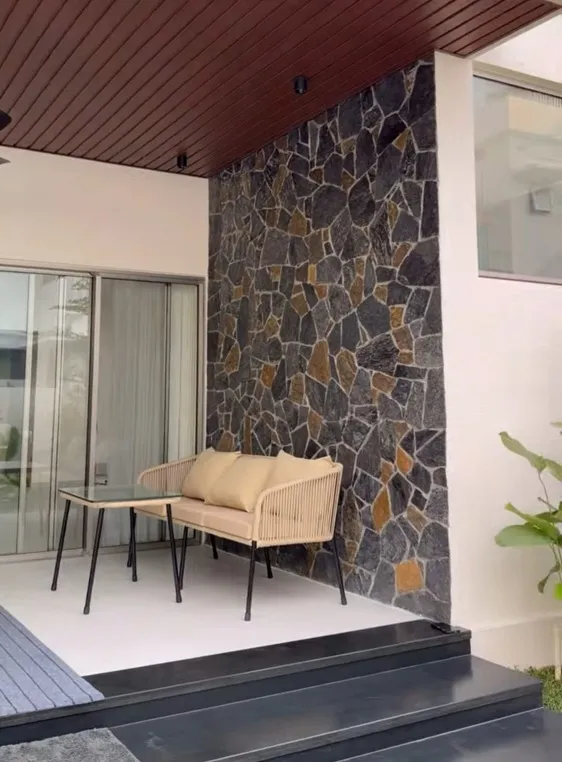
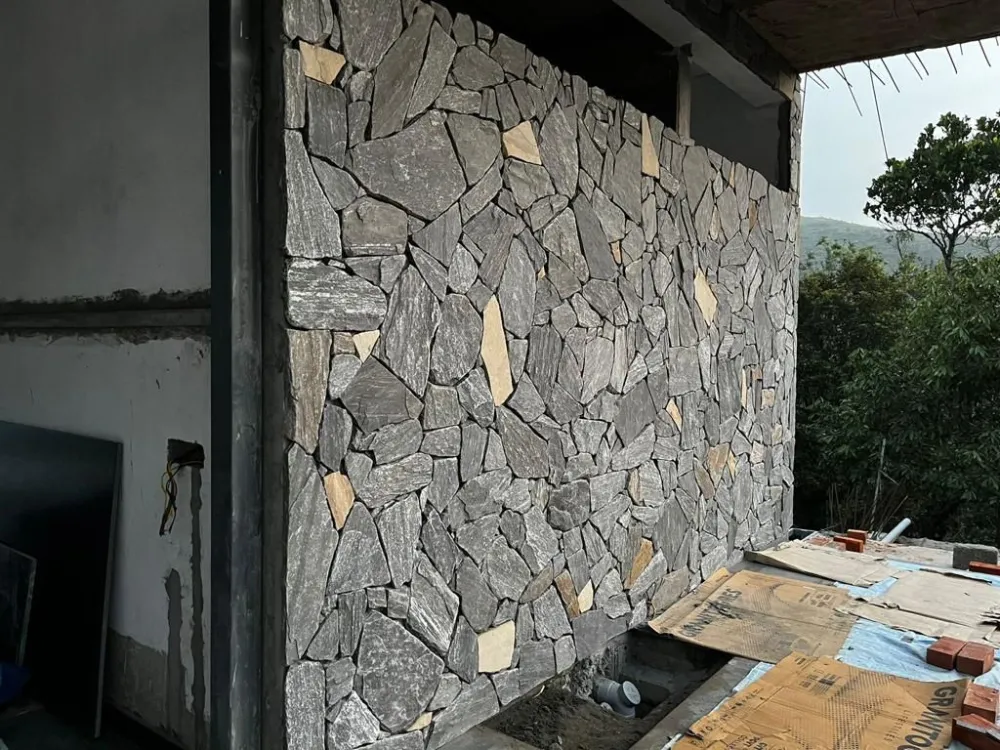
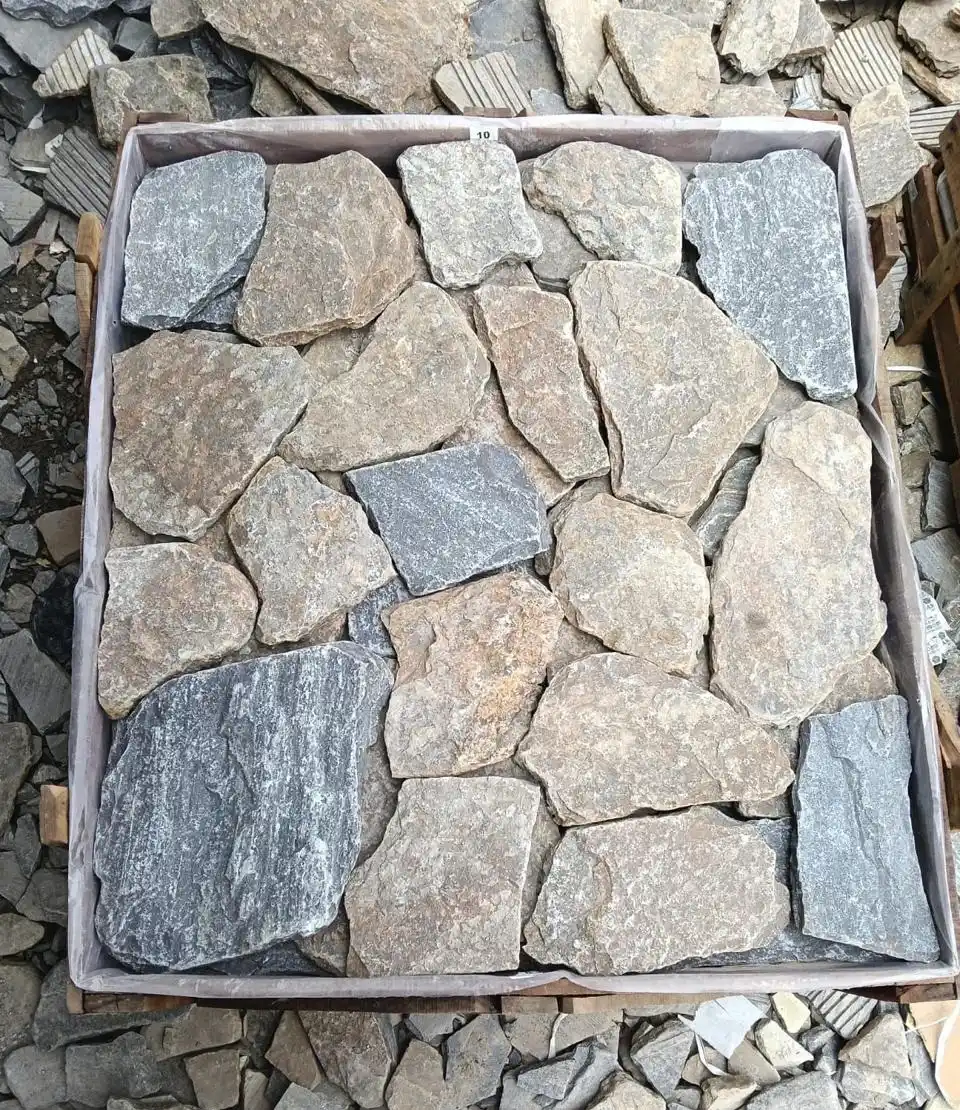
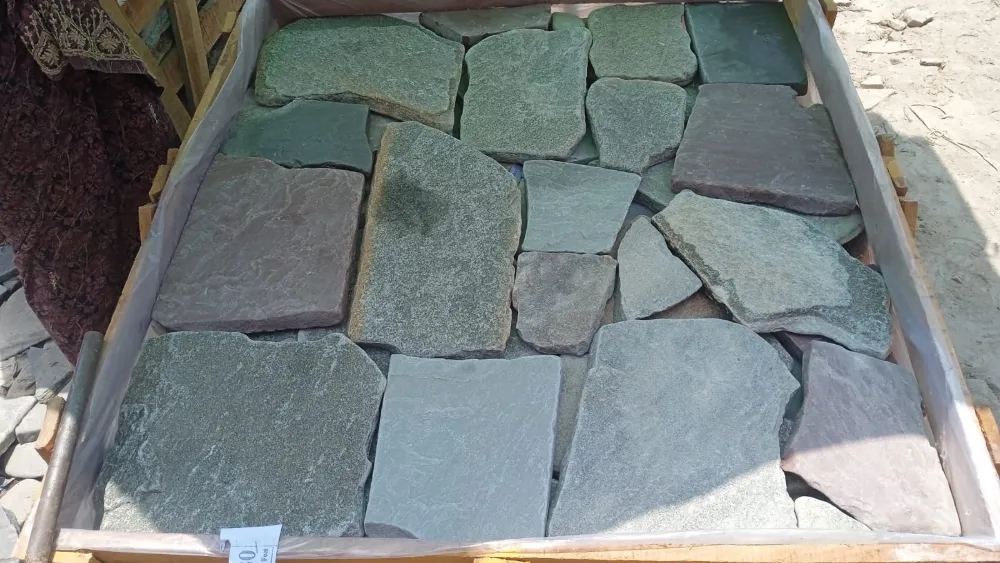
Soft greys shot through with buff, brown and green. The quieter, more traditional face — reads well on boundary walls and period work.
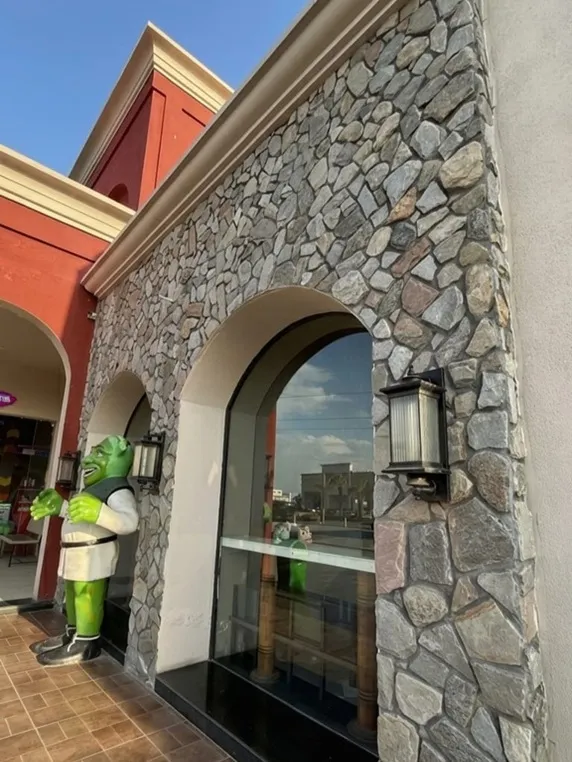
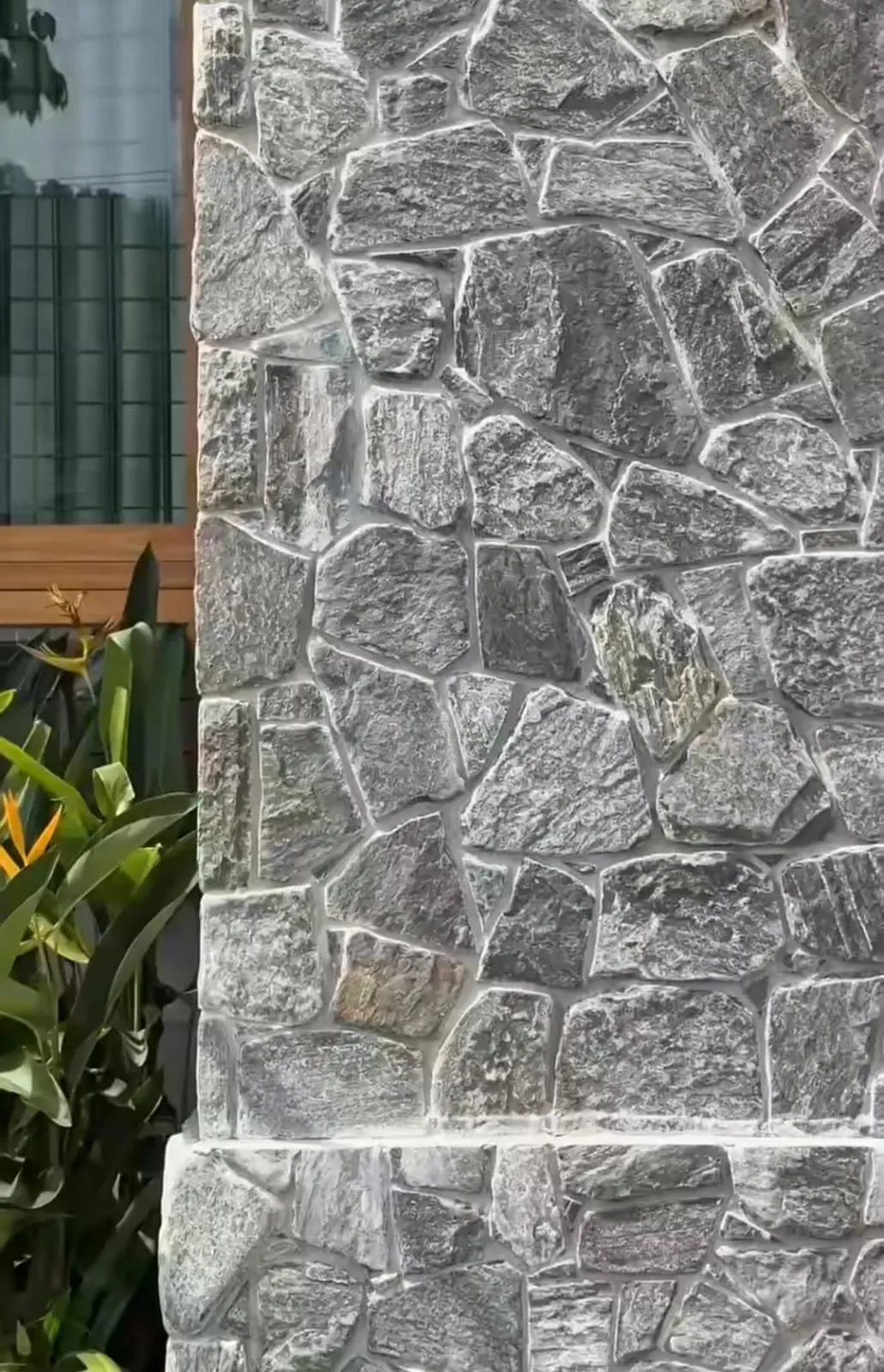
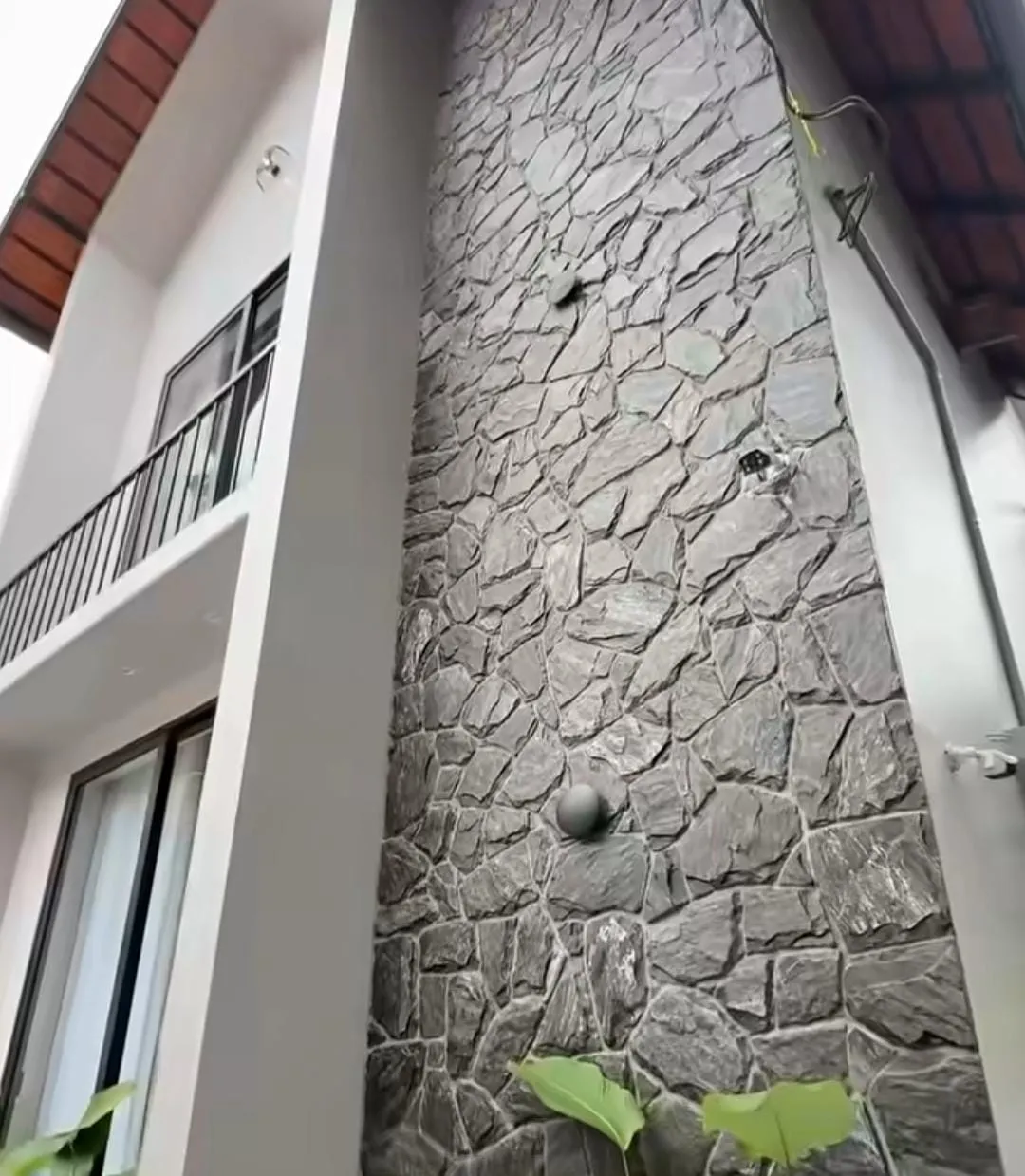
Silver-grey fieldstone with a glinting, crystalline face and the occasional rust-toned piece. Bold and deeply textured — built for tall feature walls, columns and modern façades.
Traditional random rubble is a 4–12″ stone that has to be built, footed and structurally allowed for. This is the same face on a calibrated 22–25mm back — a cladding, not a wall.
Every piece is calibrated to a consistent thickness, so the fixing bed stays even and the face plane comes out flat instead of wandering.
A fraction of the weight of full-depth rubble. No footing, no separate foundation, no heavy structural allowance — it hangs on the existing wall.
Fixed with ordinary cement mortar gauged with a stone or tile adhesive. No specialist trade, no proprietary rail system, no clips.
Send us the elevation and we will talk your fixing team through set-out, mix and pointing — on call or on video, at no charge.
RR cladding (random rubble stone cladding) is natural fieldstone wall cladding, calibrated to 22–25mm and supplied from ₹85 per sq. ft. + GST in four colours — Jurassic, Monsoon Multi, Natural Crest and Rocky Mountain. It gives you the face of random rubble masonry — irregular, angular stone laid without a pattern — without the depth, the weight, the footing and most of the labour.
The character comes from the irregularity. Because no two pieces are the same, no two walls are the same, and the eye reads that as authentic in a way a repeating pattern never can. It is also forgiving to fix: there is no course to keep level, no joint to line up, no cut that has to be exact. Blend across the crates as you go and the wall does the rest.
We stock it in four varieties — Jurassic Fieldstone, Monsoon Multi Fieldstone, Natural Crest Fieldstone and Rocky Mountain Fieldstone — all calibrated to 22–25mm and all fixed the same way: a cement mortar gauged with adhesive, bedded onto a sound substrate. It goes on external elevations, boundary wall faces, pillars, and equally well on interior feature walls. Other stones from our range can be calibrated to the same specification to order.
Sold by area, not by weight. Piece sizes are random by nature — the thickness is what is controlled. Allow around 10% extra on the measured wall area for cutting, blending and the pieces that never find a home.
Because it is calibrated, this is a cladding job, not a masonry job. Any competent tiling or plastering team can fix it — and we will talk them through it.
Start with a sound substrate. Brick, block, concrete or a keyed cement render, clean and free of dust, loose plaster, paint or curing compound. If the background is smooth concrete, key it or apply a scratch coat first. Everything that follows depends on this and nothing later will fix a bad background.
The mix: cement mortar gauged with adhesive. Standard cement and sand mortar with a stone or tile adhesive added — the adhesive gives the grab, the cement gives the body to take up the small variations in the back of a natural stone. Butter the full back of every piece. Never dot-and-dab: voids behind natural stone hold water and are where failures start.
Dry-lay the panel before you fix it. Open several crates at once and set out a few square metres on the ground. Mix pieces across crates, spread the large and small, and keep the darkest and lightest pieces apart. Ten minutes of sorting is the difference between a wall that looks quarried and a wall that looks patchy.
Work bottom-up off a level batten, keep the first course clear of ground or paving level so it is not sitting in standing water, and take the pieces around external corners rather than mitring where you can. Point or leave a butt joint to taste — both read well on a rubble face.
On tall or exposed elevations, add mechanical fixing. Above roughly first-floor level, or on anything exposed to serious weather, back the adhesive up with mechanical anchors. Tell us the elevation and we will advise before you order.
Full house facades and entrance walls — stone face, cladding weight.
Faced over existing brick or block, including gate pillars and copings.
Reception walls, fireplaces, stairwells and restaurant interiors.
Facing existing retaining walls, planters, water features and plinths.
Almost none. Brush down occasionally. In damp or shaded positions an annual wash keeps organic growth from establishing in the joints, though on a rubble face moss and lichen genuinely improve the look and most people leave them. Sealing is optional; on interior walls a breathable impregnating sealer makes dusting easier.
Avoid high-pressure washing, which drives water behind the stone and can loosen pointing. Check the head of the cladding, the coping and any flashing periodically — water getting in behind the top course is how clad walls fail, not water on the face.
RR is short for random rubble. RR cladding is irregular, angular natural fieldstone with no repeating pattern, supplied as a thin calibrated cladding rather than as full-depth walling stone. You get the face of a traditional rubble wall without building one.
Not quite. Random rubble masonry (RR masonry) is a traditional way of building the wall itself — irregular, undressed stones laid in mortar to form a thick, load-bearing wall. RR cladding gives you the same random rubble stone look as a thin 22–25mm calibrated facing fixed onto a wall that already exists, so you get the appearance of random rubble stone masonry without the depth, the weight or the specialist masons it needs.
Our random rubble stone cladding starts from ₹85 per sq. ft. + GST. The rate depends on the variety and the quantity — send us your wall area on WhatsApp and we will confirm today's rate.
Yes. Random rubble walling is one of the most common uses — boundary walls, garden walls, gate pillars and feature walls. The calibrated stone is fixed to the face of a brick or concrete wall rather than built as a structural rubble wall.
Every product on this page is calibrated to 22–25mm. Calibration means the back is gauged to a consistent thickness, so the fixing bed stays even and the finished face comes out flat instead of wandering in and out.
No. At 22–25mm it puts only a light load on the wall — a fraction of full-depth rubble — so there is no footing, no separate foundation and no heavy structural allowance. What it does need is a sound, clean substrate to bond to. On tall or exposed elevations we recommend backing the adhesive up with mechanical fixing.
With ordinary cement mortar gauged with a stone or tile adhesive, buttered across the full back of each piece and bedded onto a clean, keyed substrate. Work bottom-up off a level batten and dry-lay a few square metres first to blend the pieces. No rails, no clips, no specialist trade.
Yes, and at no charge. Send us the elevation and we will take your fixing team through set-out, the mix, corners and pointing — on a call or on video — before and during the job.
Four: Jurassic Fieldstone, Monsoon Multi Fieldstone (dark charcoal through to rust and brown), Natural Crest Fieldstone (grey multi with buff and green) and Rocky Mountain Fieldstone (silver grey with a crystalline face). All four are calibrated to 22–25mm. Other stones from our range can be calibrated to the same specification to order.
Both. The same material goes on external elevations, boundary walls and pillars, and on interior feature walls, reception areas and fireplaces. Interiors are usually the easier job — a flat, dry, sound background and no weather to design for.
Measure the wall area and add roughly 10%. Rubble has more waste than any other format because the whole point is selecting pieces that fit, and you will want the spare for corners and cuts. We quote by square foot or square metre.
Tell us which variety, the wall area and the destination — we'll come back with pricing and confirmed lead times. No agents in between.
Other wall and landscape formats that specify well alongside RR cladding.
Speak to our team for pricing, samples, MOQ details and shipping options to your country. Direct from India since 1996.