Kota Blue Limestone · Quarry-Direct
Steel blue, from our own city.
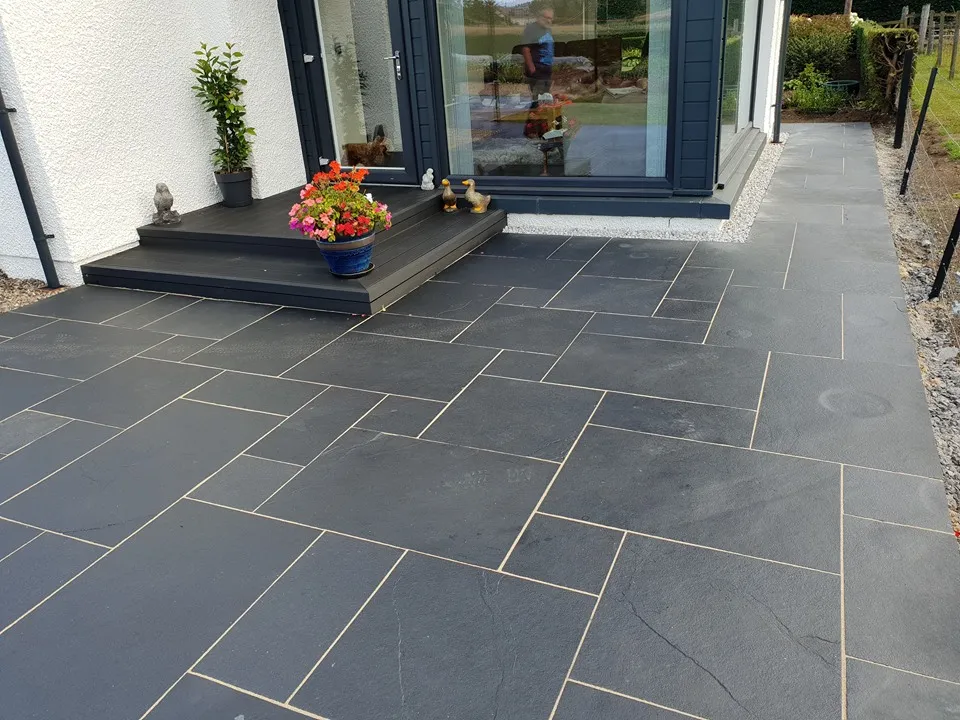
Smoky blue-grey with hints of green and occasional white coral flecks — a naturally flat riven surface with sawn edges. Quarried and processed in Kota, our home ground.
Kota Blue Limestone · Quarry-Direct
Smoky blue-grey with hints of green and occasional white coral flecks — a naturally flat riven surface with sawn edges. Quarried and processed in Kota, our home ground.
A unique blue limestone with a steel effect, subtle shades of grey and green, and occasional white coral flecks. Less riven than sandstone — naturally flatter, and easier to lay.
About the Stone
Kota Blue Limestone is a unique blue-grey limestone with a steel effect, subtle shades of grey and green, and occasional white coral flecks running through the surface. It is quarried and processed in Kota — our own city — which is where the name comes from, and why we have unusually direct control over its quality and consistency.
It reads as smoky-blue, steel-blue or cadet grey, with hints of azure, aquamarine and turquoise. Those bluer hues appear noticeably stronger when the stone is wet. The flecks and veins of blue, grey and white are coral sand particulates — the remains of marine organisms that formed this sedimentary rock on seabeds over millions of years. That is what gives every slab its natural patterning.
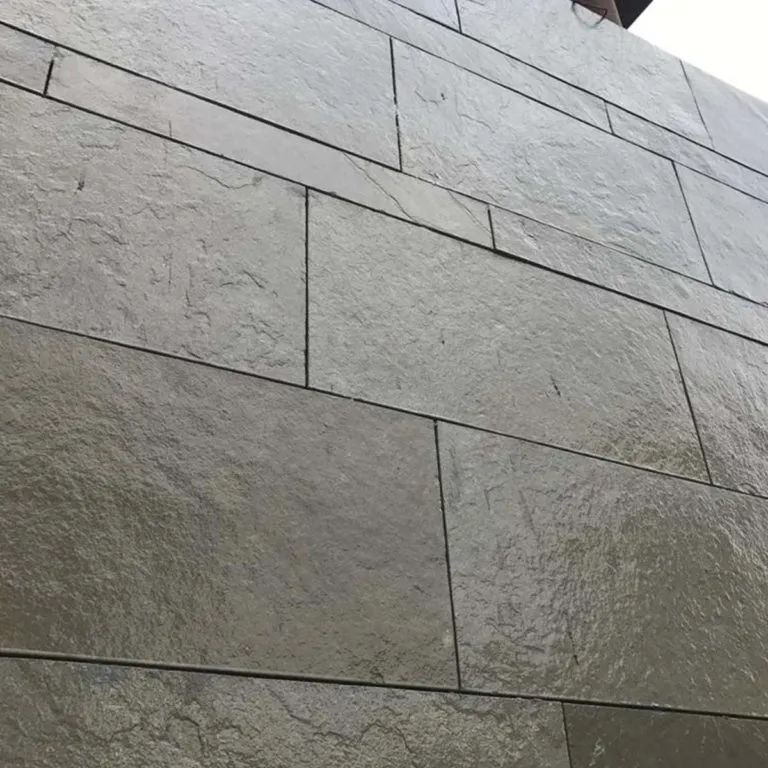
The important practical difference from sandstone: Kota Blue is a riven stone with a naturally flat surface. Limestone carries merely 2–3mm of riven where sandstone has up to 5mm, so the texture reads as a soft, lightly dimpled “orange peel” rather than a pronounced split. Combine that even surface with sawn edges and consistent colour, and you get paving that looks considerably more expensive than it is — and lays fast, because it is calibrated.
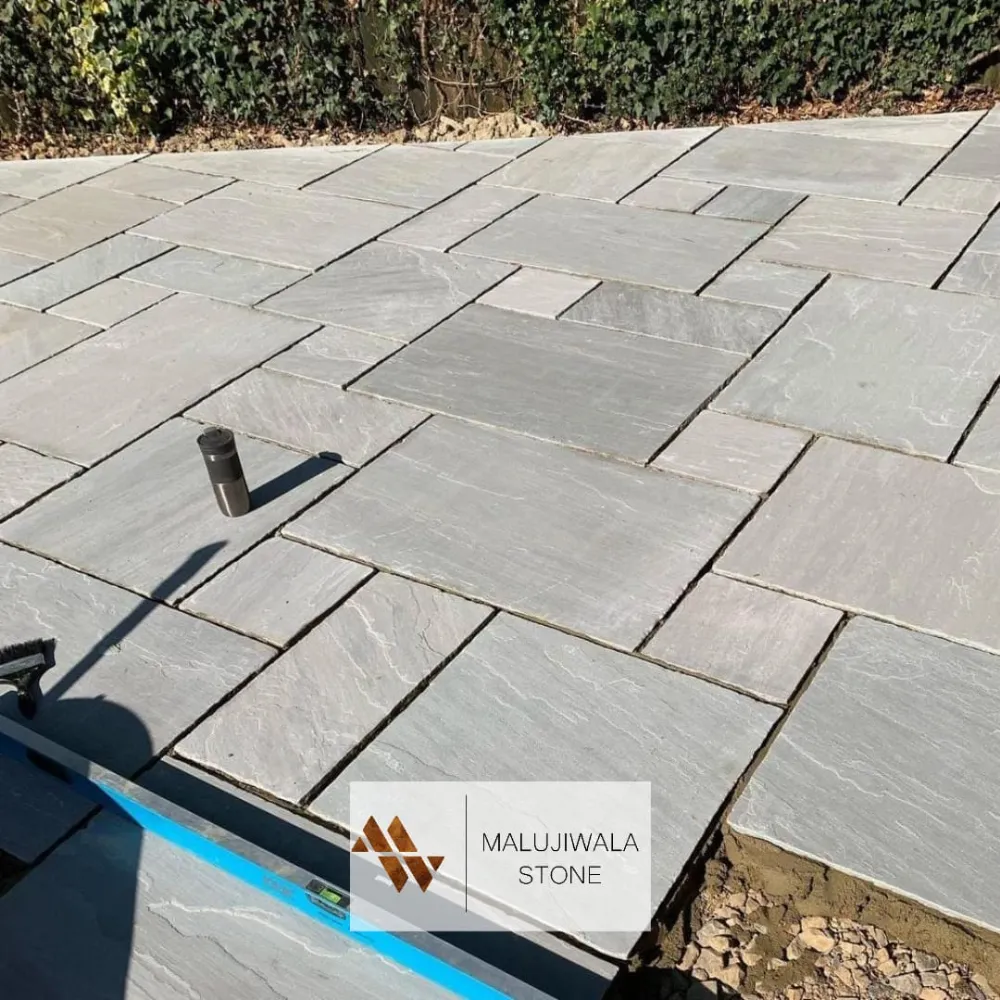
Standard mixed packs cover approximately 15–18.5 m², calibrated to 22mm. 600×900 is the most common single size. Free-length and Opus pattern packs also available.
Limestone behaves differently to sandstone. A few honest notes that will save you real trouble later.
Never use acid on limestone. This is the one rule that matters most. Limestone is calcium carbonate, so acidic cleaners and patio cleaners react chemically with the stone itself — the damage is permanent and irreparable, not a stain you can lift. If you take nothing else from this page: pH-neutral only, on Kota Blue and on every limestone.
It will mellow over time. Kota Blue weathers naturally to a lighter, stylish grey. Many buyers prefer that patina; if you want to hold the original steel-blue, use a colour-intensifying sealer from the start. Either is a legitimate choice — just decide before you lay, not after.
Use a slurry primer underneath. Paint a slurry primer onto the back of each slab before bedding. It prevents salt and mineral staining leaching up from the mortar bed — a common cause of patchy discolouration that appears weeks after laying and cannot be reversed.
Mix your crates. Sort through all crates on arrival and draw evenly from each so colour variation is distributed across the whole area. Set aside any slabs with heavier chipping or markings to use as cuts.
Sawn edges chip — that is normal. Limestone paving has machine-sawn edges rather than hand-dressed ones. Small chips to corners, edges or the back are an unavoidable result of production and transport, and are not a defect. Once laid and pointed, they are almost never visible.
Order 10% extra. Standard for any natural stone — covers cuts, breakage and undercounted measurements.
Contemporary or traditional — the flat surface and sawn edges suit both.
Non-slip and cool underfoot, with the blue deepening when wet.
Limestone is the most widely used indoor flooring option — cost-effective and elegant.
Matching steps, copings and pier caps available to order.
Care & Maintenance
Sweep with a soft broom and wash occasionally with a mild, pH-neutral detergent. Never use an acid-based cleaner on Kota Blue, either as a wash or to shift mortar stains — the chemical reaction between acid and limestone permanently damages the surface of the stone. There is no fixing it afterwards.
Sealing is recommended. A breathable, impregnating sealer helps resist staining and organic growth through wet British winters while letting the stone breathe. Reseal every two to four years depending on exposure.
The surface. Limestone is far less riven — Kota Blue has merely 2–3mm of riven where Indian sandstone has up to 5mm, so it reads as a naturally flat, lightly dimpled “orange peel” texture rather than a pronounced split face. It also has sawn edges rather than hand-dressed ones, which lets you close-joint for a contemporary look.
It will mellow. Kota Blue weathers naturally to a lighter, stylish grey over time — many people prefer that patina. If you want to preserve the original steel-blue tone, use a colour-intensifying sealer from the outset.
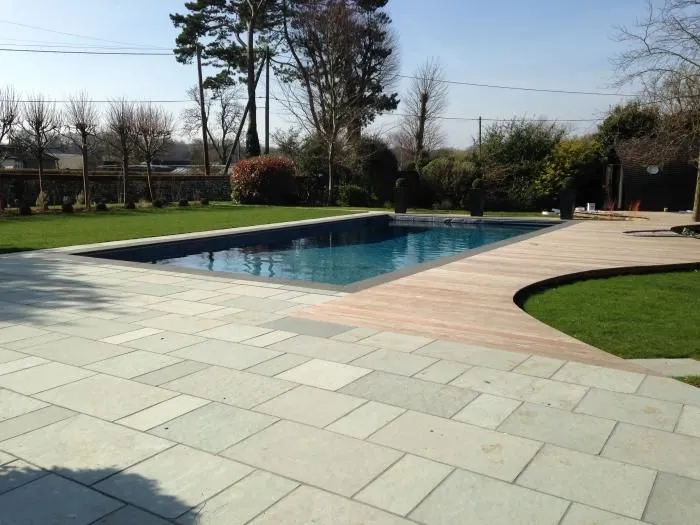
No. Despite the flatter surface, Kota Blue has good natural grip and anti-slip properties, along with excellent abrasion and staining resistance. It is widely used around pools for exactly that reason.
Never. Limestone is calcium carbonate and reacts chemically with acid — the damage to the surface is permanent and irreparable. Use only a mild, pH-neutral detergent, whether washing routinely or trying to shift mortar stains.
600×900mm is the most common single size. We also supply free-length sizes, where slab width stays constant and length varies (for example 600×310, 600×450, 600×600, 600×750, 600×900 in one crate), plus Opus pattern packs and standard mixed patio packs.
It is quarried and processed in Kota — our own city, where all four of our units sit. We are as close to this stone as any exporter can be, which is why we can hold consistency on colour, calibration and packing that traders sourcing at arm’s length struggle to match.
Kota Stone comes in four colours, and each has its own page with photos and rates: Green Kota Stone from ₹21, Kota Black from ₹40 and Kota Brown (Kota Honey) from ₹85 per sq ft + GST. Kota Blue starts at ₹25 per sq ft + GST.
Tell us the thickness, quantity and destination — we'll come back with pricing and confirmed lead times. No agents in between.
These are the alternatives UK buyers most often weigh against Kota Blue.
Speak to our team for pricing, samples, MOQ details and shipping options to your country. Direct from India since 1996.