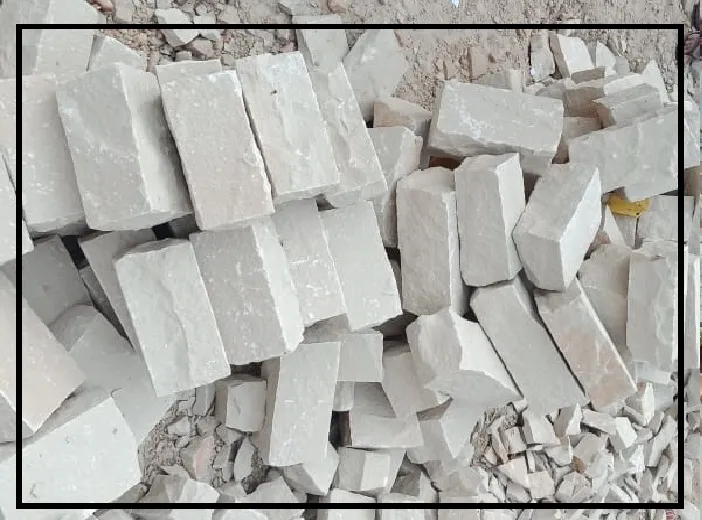
Mint Cobbles · Ivory White Yellow
Ivory white, softly warm.
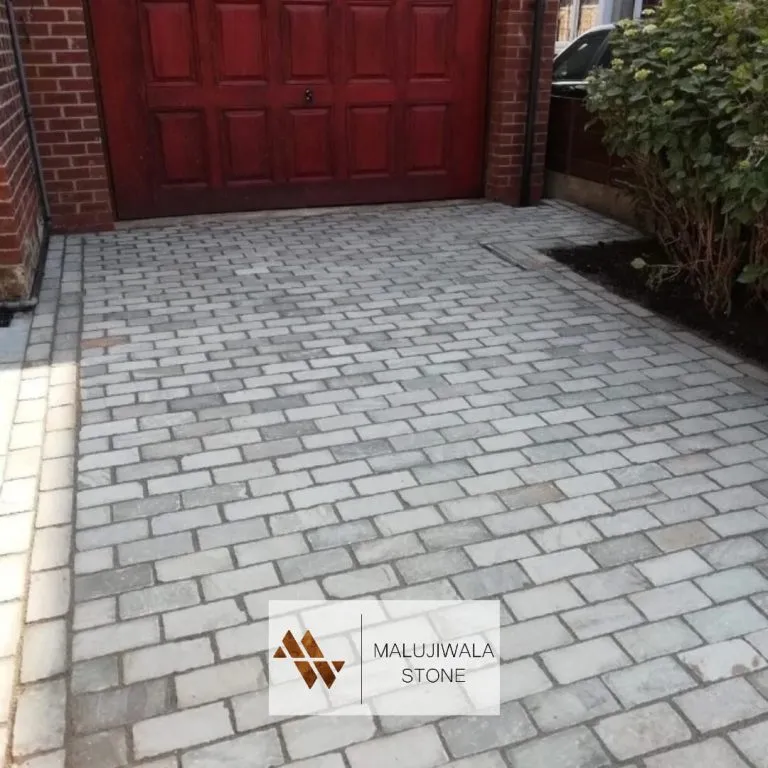
Rajasthan white and yellow cobbles in ivory tones — the palest cobble we make, and the one that lifts a shaded courtyard.
Mint Cobbles · Ivory White Yellow
Rajasthan white and yellow cobbles in ivory tones — the palest cobble we make, and the one that lifts a shaded courtyard.
Rajasthan white yellow cobbles in ivory tones — restrained, calm, and the brightest surface in our cobble range.
About the Stone
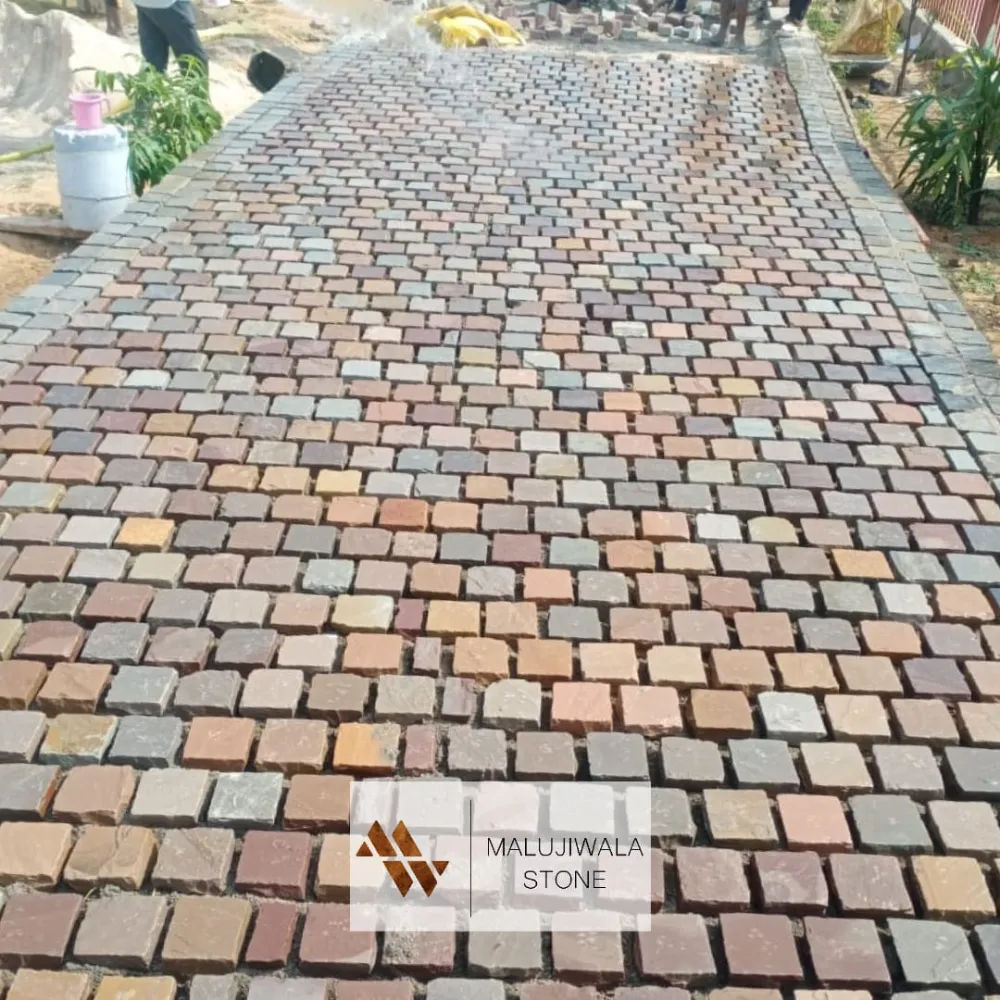
Mint Cobbles — also sold as Rajasthan White Yellow Cobbles or Ivory White Yellow Cobbles — are the palest cobble in our range. The base is ivory white with soft yellow warmth running through, giving a bright, calm surface that lifts shaded spaces in a way cool greys simply cannot.
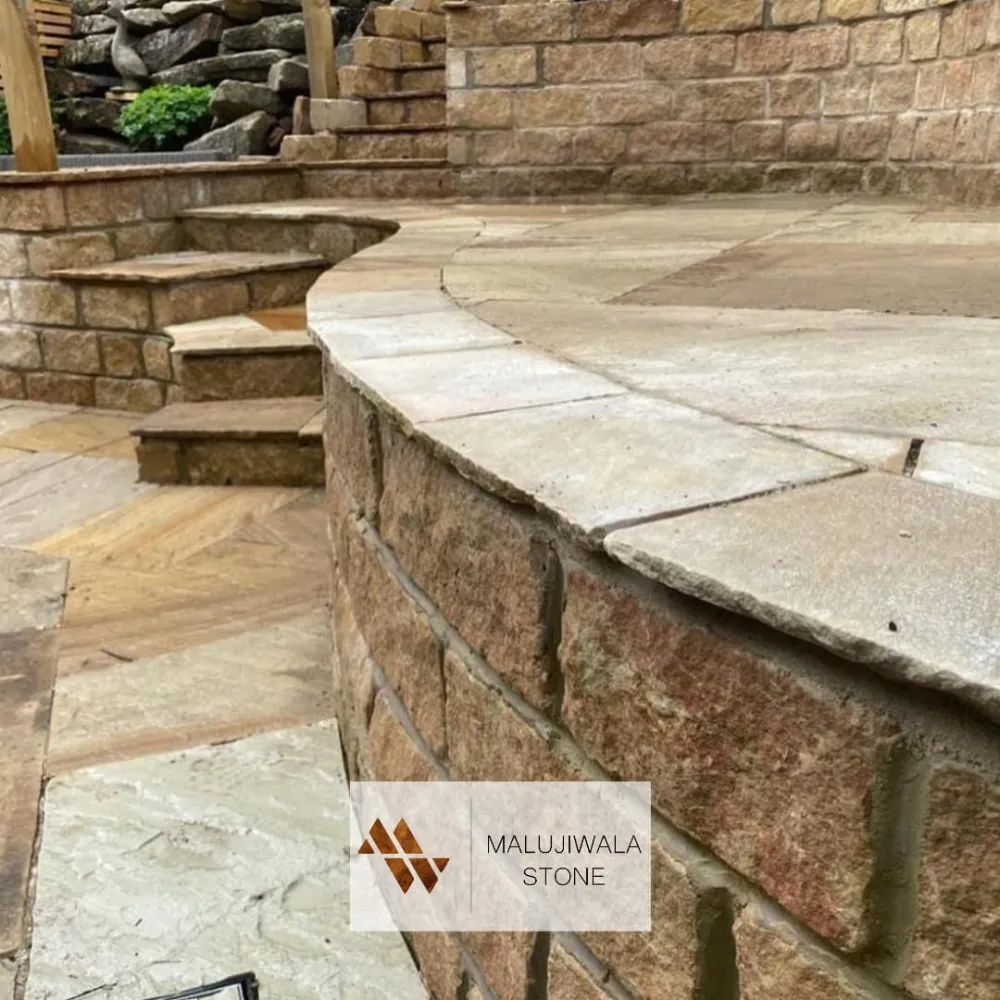
They are cut from the same mint family as our Fossil Mint paving — a tight, dense-grained sandstone that has been a UK favourite since the 1990s. Being pale, the tonal variation reads as gentle rather than dramatic: this is the cobble to choose when you want the texture and character of a cobbled surface without the colour competing with planting or architecture.
A word of honesty about pale stone: it shows marks more readily than dark stone does. That is physics, not a fault — and it simply means jointing and sealing matter more here than on a charcoal or brown cobble. Get those right and Mint holds its ivory tone for years.
Standard sizes 4×4×3 and 4×4×2 inches — and can be customised. Coverage per 1,000 kg is roughly 40 m² divided by thickness in cm.
Cobbles live or die on the base beneath them. A few honest notes that will save you real trouble later.
The base is everything. Cobbles are rigid units — unlike gravel or block paving they cannot shift and settle gracefully. Once a cobble surface sinks or heaves, the whole thing looks wrong and the only real fix is lifting it and starting again. For a footpath, excavate to roughly 200mm and lay 100mm of compacted MOT Type 1. For a driveway, excavate 250–300mm and lay a minimum 200mm sub-base — 250mm on clay soil. Compact in layers of no more than 100mm at a time.
Pale stone shows more — so joint it well. Mint is the lightest cobble we sell, and light stone shows staining more readily than dark. That is not a fault in the stone, it is physics. It means the pointing step matters more here than anywhere: keep the mix on the dry side, keep the face swept clean, and consider a resin jointing compound which leaves the surface totally clean.
Full mortar bed — never spot-bed a driveway. Every cobble must sit on a full semi-dry mortar bed of 30–40mm, mixed around 4:1 sharp sand to cement. Spot-bedding on five dabs is the single most common cause of failed cobble driveways in the UK. Set each unit by hand and tap down with a rubber mallet.
Leave a finger-width joint. Natural split cobbles vary in size by their nature — they are not sawn to identical dimensions like concrete block paving. Trying to butt them tight is next to impossible and looks worse, not better. A finger-width joint (roughly 8–10mm on a driveway, 5–8mm on a border) is the trade guide. Stagger the perpendicular joints.
Point them properly. A brush-in resin jointing compound gives the most durable, weed-resistant result and leaves the stone face clean. Traditional sand-cement pointing is cheaper in materials but far slower, and if the mix is too wet it will stain the stone permanently. Whichever you choose, keep the surface swept clean as you go.
Order 10% extra. Standard for any natural stone — covers cuts, breakage and future repairs. Keep the offcuts.
Brightens shaded courtyards and narrow side returns.
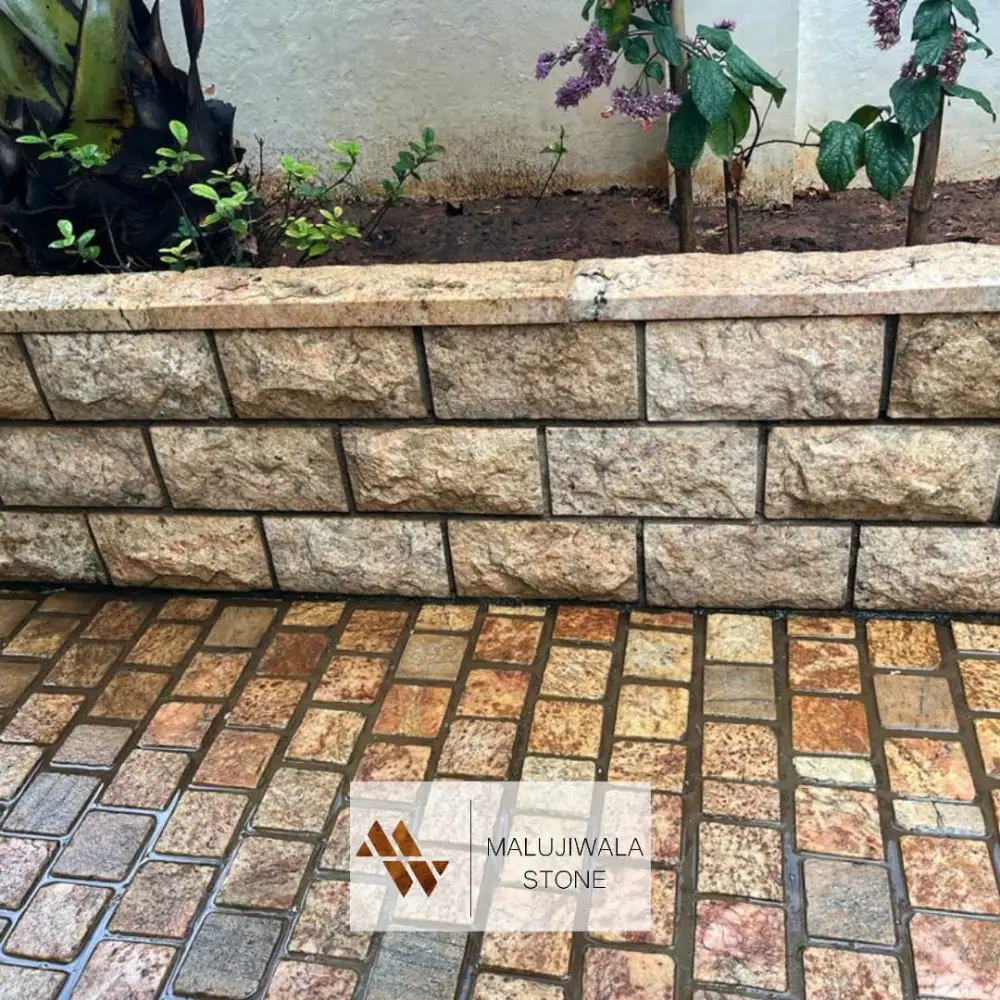
A pale winding path that reads calm against heavy planting.
Ivory framing darker paving — high contrast, softly done.
A bright, warm patio surface where grey would feel cold.
Care & Maintenance
Once laid and cured, Mint Cobbles need almost nothing from you. An annual jet wash keeps them looking fresh — but keep the pressure low, under about 1500 PSI, or you will blast the jointing straight out and create the very problem you were trying to avoid.
Sweep with a soft broom and wash with a mild, pH-neutral detergent. Spot-clean spills rather than letting them sit. Avoid acidic cleaners: they can etch natural stone, and on limestone-based cobbles the damage is permanent. If a joint washes out over the years, top it up rather than leaving it — open joints let water under the bed and that is how movement starts.
Being the palest stone in the range, Mint shows marks more readily than darker cobbles — so stay on top of spills rather than letting them sit, and a good impregnating sealer is worth the effort here more than anywhere else.
Rajasthan White Yellow Cobbles, Ivory White Yellow Cobbles, or simply White Cobblestones. They are cut from the same mint sandstone family as our Fossil Mint and Mint Smooth paving.
They show marks more readily than dark stone — that is simply physics rather than a fault in the stone. It means jointing and sealing matter more here: use an impregnating sealer, keep the face clean while pointing, and stay on top of spills.
Standard sizes are 4x4x3 and 4x4x2 inches, and they can be customised to your specification.
For light domestic use, yes, at the correct thickness on a proper base. Bear in mind that a pale surface will show tyre marks and oil more than a charcoal one — for a heavily-used drive, consider Grey, Multi Brown or granite instead.
Yes. The mint sandstones have a tight, dense grain that resists water ingress, which is what makes them frost-resistant and suited to the British climate. Fossil Mint paving has been laid in UK gardens since the 1990s.
Wooden crates at 1,100-1,250 kg each, 22-24 crates per container, 27.5 MT gross in a 20ft container. Loose stuffing is also possible.
Tell us the thickness, quantity and destination — we'll come back with pricing and confirmed lead times. No agents in between.
These are the alternatives buyers most often weigh against Mint Cobbles.
Speak to our team for pricing, samples, MOQ details and shipping options to your country. Direct from India since 1996.