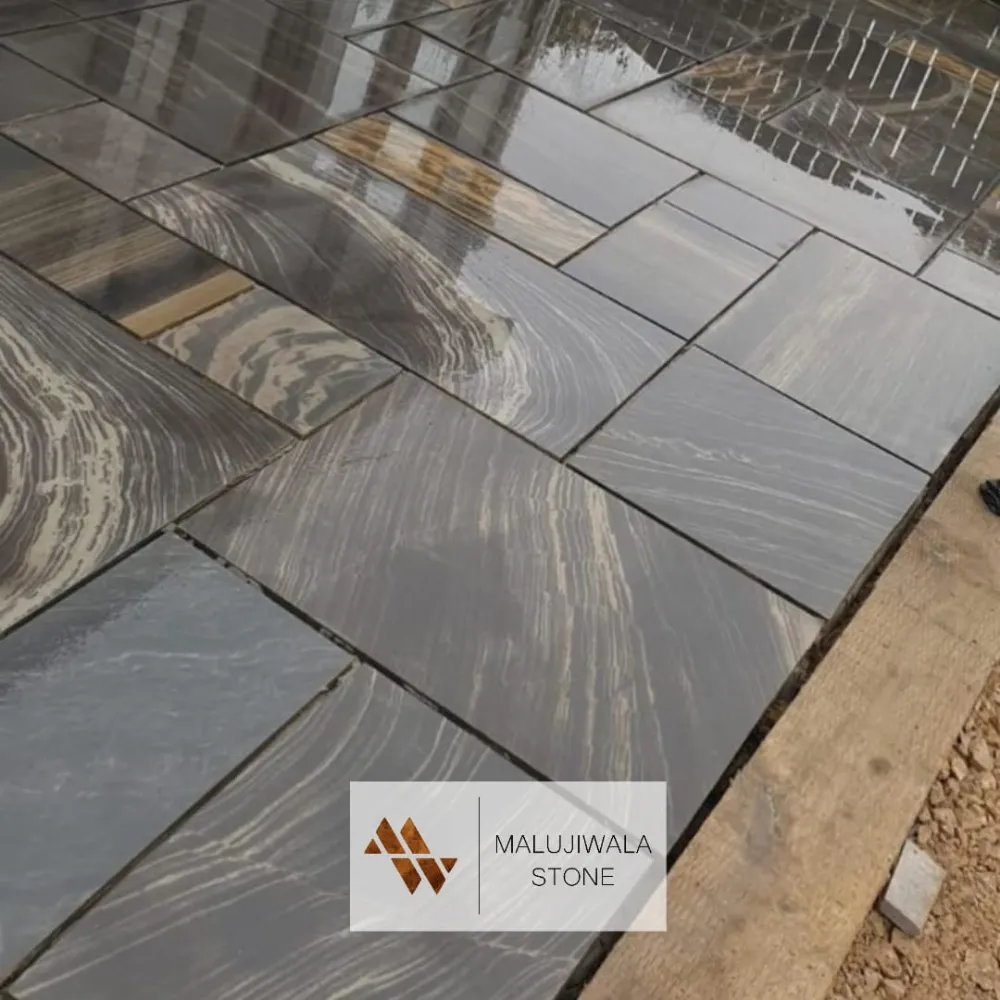
Sagar Black Sawn Honed Sandstone · Smooth
Charcoal, refined.
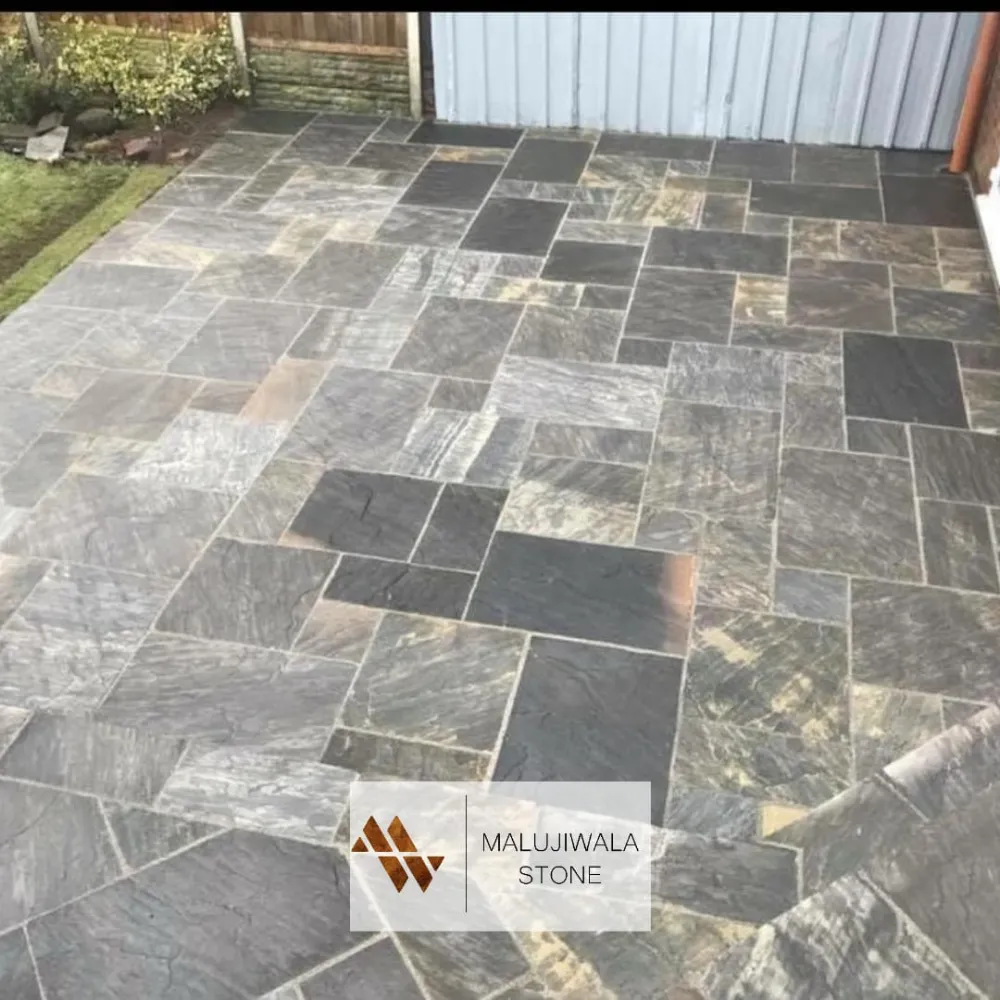
India’s rarest and most expensive sandstone — charcoal interspersed with ochre yellow, sawn and honed to a dark, sophisticated, contemporary surface.
Sagar Black Sawn Honed Sandstone · Smooth
India’s rarest and most expensive sandstone — charcoal interspersed with ochre yellow, sawn and honed to a dark, sophisticated, contemporary surface.
Mainly a charcoal colour interspersed with ochre yellow tones — and honing gives that contrast a depth and sophistication a riven face cannot match.
About the Stone
Sagar Black Sawn Honed is the smooth version of the rarest and most expensive sandstone in our range. It is available from only a very limited number of quarries in India — mainly a charcoal colour, interspersed with ochre yellow tones which add to its variation and create a traditional, rich paving. Sagar Black is very popular across Europe on large landscaping projects, and is the preferred exterior cladding for sea-shore buildings.
Quarried in the Sagar district of Madhya Pradesh rather than Rajasthan, it is known in the trade as Black Sagar, Saugor Black, Kalahari Black and simply Black Indian Sandstone. Sawn and honed, it takes on a character quite distinct from the riven version: where riven Sagar Black reads weathered and traditional — the natural stand-in for reclaimed Yorkstone — the honed surface is smooth, dark and unmistakably contemporary.
It remains the most expensive sandstone paving from India, and for reasons we would rather explain than hide: the stone splits into thicker slabs than other Indian sandstones so requires far more calibration; that heavier processing causes more breakage; and because Sagar is a remote district with no local processing capacity, every block is transported to our Kota units for sawing, calibrating and honing before it is export-ready. Beyond paving, it is available sawn, honed, sandblasted, and sandblasted plus brushed.
Standard mixed packs cover approximately 18.5 m², calibrated. Also produced in sandblast and sandblast-plus-brushed finishes, and as cobbles, thick steps and walling.
Sawn paving behaves differently to riven. A few honest notes that will save you trouble later.
Seal before you lay it. This is the single most important thing with any sawn stone. Sawing opens up the stone’s pores far more than natural splitting does, so Sagar Black Sawn Honed will take a stain quickly if it goes down bare. Seal all six sides — top, bottom and edges — with a quality impregnating natural stone sealer before installation, not after.
Use an SBR bond underneath. Paint neat SBR onto the underside and let it dry fully before laying. It creates a barrier between the sand-cement mix and the slab, which is what prevents the patchy dark staining that shows up weeks later and cannot be undone.
Dark stone, sharper contrast. Any sealing or laying error shows up more starkly on charcoal than on buff. Efflorescence and cement haze are particularly visible against a dark honed face — which is another reason the SBR barrier underneath is not something to skip on this stone.
Sawn edges are sharper — handle with care. Unlike hand-dressed riven edges, machine-sawn edges are crisp and square. That is what gives sawn paving its clean contemporary line, but it also means the arrises can chip if slabs are dragged or knocked. Lift, don’t slide.
Order 10% extra. Standard for any natural stone — it covers cuts, breakage and any undercounted measurement.
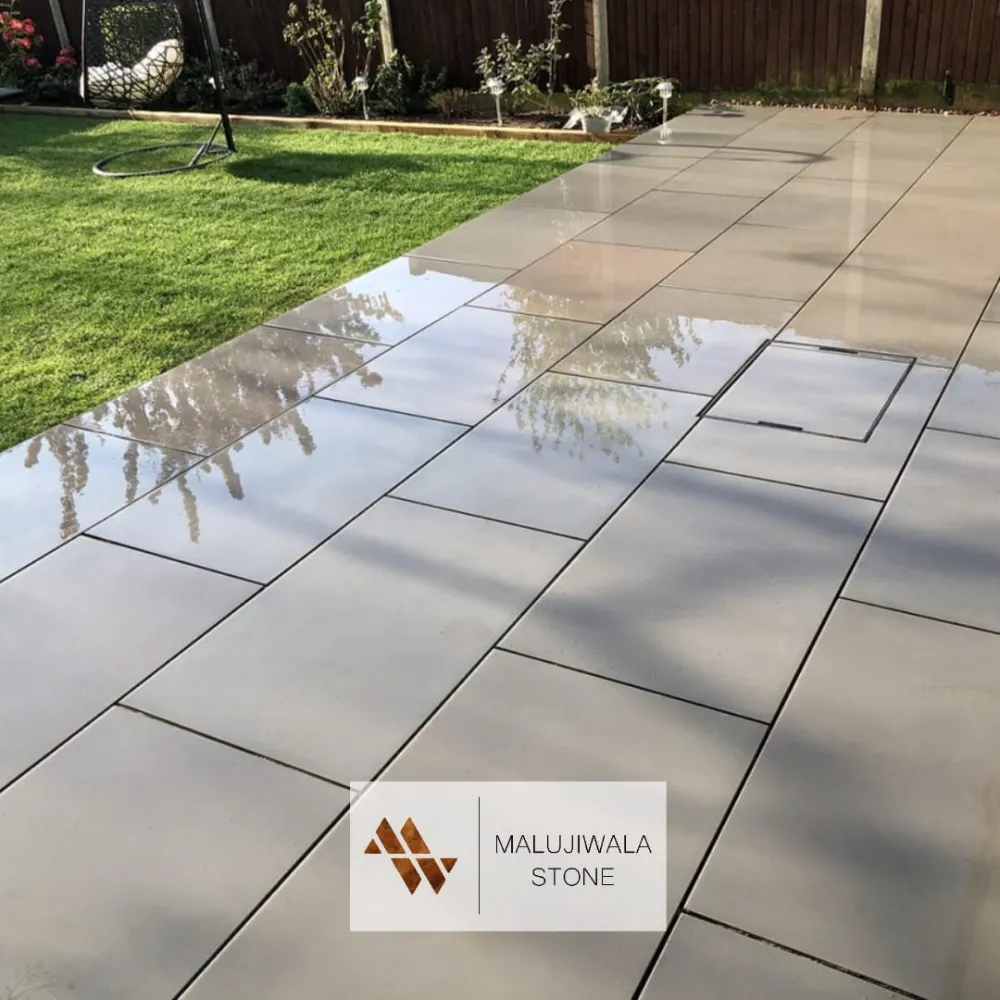
A smooth, dark surface that gives walkways, driveways and patios a sophisticated look.
Sleek and modern — a popular choice for cladding in residential and commercial builds.
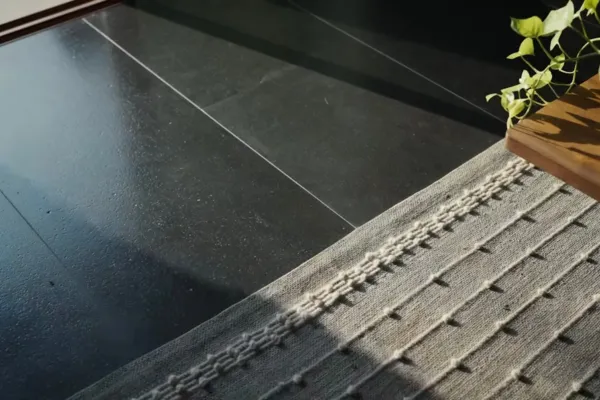
The dark honed surface makes an ideal interior floor when properly sealed.
Saline-resistant — the preferred exterior cladding for sea-shore buildings.
Care & Maintenance
Sweep with a soft broom and wash occasionally with a mild, pH-neutral detergent. Never use acidic cleaners on Sagar Black Sawn Honed — or any natural stone — as they cause permanent, irreparable damage to both the colour and the structure of the surface.
Because it is sawn, keep on top of spills rather than letting them sit; a honed surface shows water marking more readily than a riven one. Reseal every two to four years depending on exposure. Done properly, a good sealer does more than protect — it deepens the natural colour and keeps it reading rich for years.
Three real reasons. It is quarried in very limited locations, making it genuinely rare. It splits into thicker slabs than other Indian sandstones, so needs far more calibration — and that heavier processing causes more breakage. And Sagar is a remote district with no local processing, so every block travels to our Kota units for sawing, calibrating and honing before export. That inland freight is real cost, added before the container is packed.
Same rare stone, two very different characters. Riven is hand-split and reads weathered and traditional — the closest natural match to reclaimed Yorkstone. Sawn honed is cut off the block and ground smooth, giving a dark, sleek, contemporary surface better suited to modern architecture and indoor use.
Yes. It is saline-water resistant and is the preferred exterior cladding for sea-shore buildings across Europe. It also resists alkali and weathering well.
Yes — and it matters more here than on lighter stones. Sawn paving is porous at the cut face, and on a dark honed surface any staining, efflorescence or cement haze shows up starkly. Seal all six sides before laying and use an SBR bond on the underside. For indoor flooring, apply a water-repellent sealer before use.
Beyond riven and sawn honed, we produce it sandblasted, and sandblasted plus brushed. It is also supplied tumbled and antique-finished, and as cobbles, thick steps, bullnose steps and walling.
Black Sagar Sandstone, Saugor Black, Kalahari Black, Havana, and simply Black Indian Sandstone.
Tell us the thickness, quantity and destination — we'll come back with pricing and confirmed lead times. No agents in between.
These are the alternatives UK buyers most often weigh against Sagar Black Sawn Honed — including its own riven version.
Speak to our team for pricing, samples, MOQ details and shipping options to your country. Direct from India since 1996.